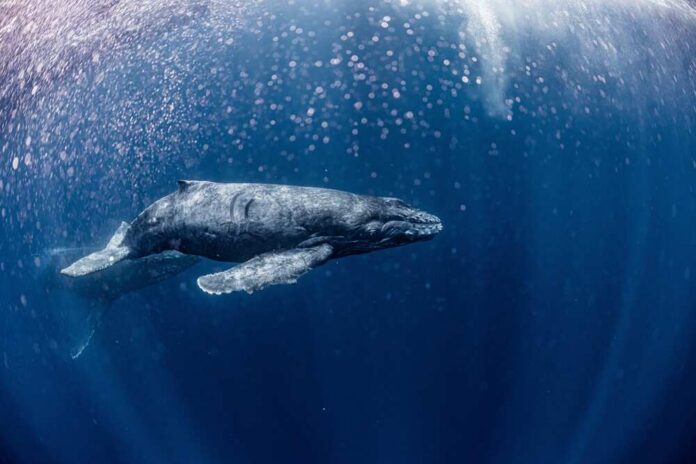
A known humpback whale swam about 60 miles inland and breached near Rio Vista, stunning Northern California onlookers and conservation teams alike.
Story Snapshot
- Video showed a humpback whale breaching in the Sacramento River near Rio Vista.
- The Marine Mammal Center confirmed the whale moved from San Francisco Bay into the Delta.
- Photo-ID linked the whale to a cataloged individual, CRC-11620, nicknamed Rio.
- Officials called the inland visit unusual and urged people to keep distance.
A whale with a name swims far from the surf
Witness video captured a humpback whale surfacing and breaching near Rio Vista, in the Sacramento River, turning a weekday into an event that drew crowds and phones.
Local stations traced the animal’s route from San Francisco Bay into the Sacramento-San Joaquin Delta, with clips that matched the bridge and shoreline features residents know by heart.
The Marine Mammal Center said the whale entered the Bay earlier in the week and continued east through the Delta. The group confirmed the inland movement based on reports and its response network.
Scientists identified the whale as CRC-11620, a known individual nicknamed Rio. Photo-identification relies on unique patterns on the tail and dorsal fin. These markings act like fingerprints for humpbacks. The Marine Mammal Center and partner catalogs matched photos from the Delta sighting to past records.
Media reports noted at least 15 documented sightings of this same whale over roughly two decades along the California and Mexico coasts, supporting the identity match and the animal’s long travel history.
Sixty miles inland, with a curious and careful audience
Associated Press coverage put the sighting about 60 miles from the Pacific Ocean when the whale appeared near the Rio Vista stretch of river, a figure echoed across outlets.
A local fisherman said he spotted the whale a mile south of the Rio Vista Bridge around noon, giving a clear time and place for one of the day’s best looks.
The number is an approximation, not a river-mile survey, yet it captures the scale: this was not a harbor splash. It was a big animal deep in a complex estuary corridor.
A humpback whale was spotted 60 miles inland in California, deep in the Sacramento-San Joaquin Delta. Watch till the end. #Whale #California #Wildlife pic.twitter.com/HYiwUic0dy
— NTD News (@NTDNews) September 20, 2026
Helicopter sweeps later that day produced no fresh sightings, which often happens when a mobile whale changes course or dives on a long breath-hold. Crews and reporters noted the last confirmed view had been the prior day and hoped the animal had begun heading back toward open water.
That kind of quick turn reduces risk from busy boat lanes and shallow snags. It also limits close documentation, which is fine if the outcome is a safe return to sea.
What experts advised and why it mattered
Marine responders asked boaters to slow down, give at least a football field of space, and avoid herding the whale. They also urged people on shore to enjoy the sight but not crowd landings or launch kayaks to chase a better view.
The Marine Mammal Center said the whale could be passing through on its own or might have an unknown issue; either way, distance gives it the best chance to navigate out without stress or injury. That guidance fits long-standing best practices from earlier Delta cases.
Humpbacks have ventured inland before. Humphrey spent weeks near Rio Vista in 1985 before returning to the ocean. In 2007, a mother and calf known as Delta and Dawn stayed about 20 days in the Delta before heading back out. Those famous episodes shaped how teams talk to the public today: keep space, reduce noise, and let the whale decide the path home.
Why this inland detour happens and what to watch next
Whales can follow food, tide, and sound. The Bay-Delta can tempt a hungry traveler with baitfish and strong tidal currents that feel like a highway. The same forces can also mislead a whale into narrower channels and murky shallows.
Photo-ID proves this is not a random giant; it is a repeat visitor to California waters with a long record. That history suggests Rio knows the coast and can likely find the way back if people do not force close contact or block passages.
🐋 Giant Humpback Whale Spotted Far Inland in California River
https://t.co/Yqn3k2Ohtk— Paul Agyeman✨💥 (@PaulAgyeman4) September 21, 2026
Officials and locals will watch for new surfacings near river junctions where the route turns west. If the whale heads back under the Carquinez and Richmond spans and into the Gate, the story ends the best way: a safe return and a rare memory for many people who looked up from their day and saw a living landmark. Until then, the rule holds: eyes open, engines down, and room to roam for the biggest guest the river will host all year.
Sources:
abcnews.com, yahoo.com, local10.com, kcra.com, cbsnews.com