
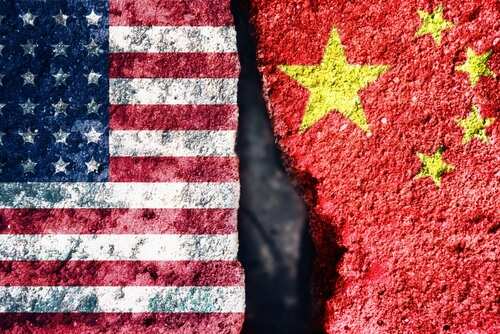
A California woman now faces federal charges that she gathered surveillance in the United States for China.
Story Snapshot
- A federal grand jury indicted Wanying “Heather” Zhang on acting as an unregistered agent and conspiracy.
- Prosecutors say she filmed and photographed outside the Taiwan president’s son’s Seattle-area home.
- The Federal Bureau of Investigation (FBI) arrested her at Los Angeles International Airport.
- Reports describe travel, a rental car, and messages with a suspected Chinese official.
The Charges And The Core Allegations
A federal indictment filed in the Central District of California charges Wanying “Heather” Zhang with conspiring and acting as an unregistered agent of the People’s Republic of China. Prosecutors allege she ran surveillance on the son of Taiwan’s president near Seattle. The indictment mirrors an earlier criminal complaint. Both outline the same basic plan: capture photos and video, log license plates, and send that material to a contact tied to the Chinese government. Zhang has pleaded not guilty, and the case continues.
The Associated Press reported that the FBI arrested Zhang at Los Angeles International Airport on October 5, 2026, and she appeared in court the next day. Judges later ordered her held while she awaits trial, citing flight risk concerns reported by national outlets. The timeline in news accounts shows a steady build: complaint, arrest, detention, and then an October 9 indictment. That step-by-step march signals a standard national security prosecution path.
How Prosecutors Say The Operation Worked
Prosecutors describe a defined window in 2025. During that time, Zhang allegedly traveled to Washington state and filmed the home believed to be the residence of Lai Ting-yu, son of Taiwan’s President Lai Ching-te. Taiwan’s state news outlet reported that officials in Taipei condemned the alleged surveillance. That detail underscores why the target matters: public figures’ families often serve as pressure points for authoritarian states. The claim centers on real streets, real plates, and real images, not a hazy spy story.
Focus Taiwan, summarizing the Federal Bureau of Investigation complaint via other outlets, reported specific moves. On September 1, 2025, Zhang and an unnamed “Individual 1” allegedly flew from Las Vegas to Seattle, rented a black Nissan Rogue, and drove to the target’s neighborhood. NBC News reported that Zhang exchanged messages with a former classmate believed to be a Chinese official. The messages allegedly arranged the surveillance task and laid out what to capture. That sequence, if proven, links travel, collection, and tasking into one chain.
What Stands Out In The Evidence And Why It Matters
The most concrete claims involve simple but telling pieces: photos, video, license plates, and travel records. Those items are common in counterintelligence cases because they are easy to gather and verify. The Associated Press summary notes that prosecutors say Zhang sent the material to a Chinese government contact. That allegation, if supported by device records or cloud backups, can meet key elements of acting as an unregistered foreign agent under federal law.
This case also fits a known pattern of transnational repression. Analysts and researchers have documented how the Chinese state pressures critics and tracks targets abroad, including people linked to Taiwan. Freedom House has described the government’s broad view of authority over Taiwanese people and supporters, even beyond China’s borders. Those patterns do not prove Zhang’s guilt, but they explain why the FBI and the Department of Justice treat this allegation as a national security priority, not a one-off dispute.
The Stakes For Security, Sovereignty, And Courts
Law enforcement treats surveillance near a high-profile relative as a warning sign. It can set conditions for later coercion or harassment. American conservative values emphasize rule of law, national sovereignty, and protection of families from foreign intimidation. On those terms, the charges track with common sense: you cannot collect intelligence in the United States for a foreign power without declaring it. The indictment is not a conviction, but it demands a serious courtroom test of the facts.
Sources:
nbcnews.com, feeds.nbcnews.com, nbcchicago.com, apnews.com, thenews.com.pk, scmp.com, nbclosangeles.com