
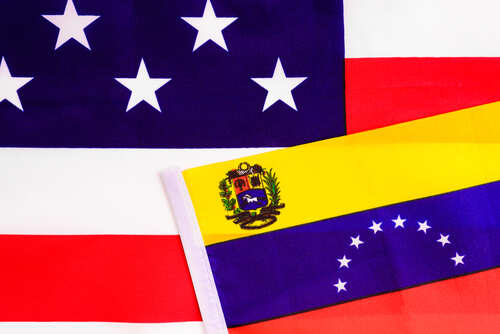
President Trump says the United States just locked in majority control over more than 65 billion barrels of Venezuelan oil, at no cost to taxpayers.
Story Snapshot
- Trump announced a deal for U.S. majority control of over 65 billion barrels of oil.
- He said taxpayers will not pay for it, pointing to private investment.
- Secretary of State Marco Rubio and Secretary of War Pete Hegseth helped broker talks with Venezuelan officials.
- State ownership rules and U.S. sanctions shape how the deal can work.
What Trump Announced And Why It Matters
President Trump called it the biggest oil deal in world history. He said the United States secured majority control of more than 65 billion barrels of Venezuela’s proven oil reserves.
He credited Secretary of State Marco Rubio and Secretary of War Pete Hegseth for working with Venezuelan negotiator Delcy Rodríguez and private companies. He stressed that the deal does not cost American taxpayers. Major outlets carried the announcement and its key figures on Friday, underscoring the scale of the claim.
Trump says US has entered deal with Venezuela to take control of 65 billion barrels of oil reserves https://t.co/LZiLr2ysCY
— Boston 25 News (@boston25) August 29, 2026
The headline number rivals the oil endowment of leading producers. Trump also framed the deal as an insurance policy for energy prices at home. He said the agreement would more than double U.S. accessible reserves and support energy security.
Coverage described plans for private capital to drive development, with talk of tens of billions in investment over time. Financial press reports echoed the “no taxpayer cost” claim and the majority-control language from Trump’s post.
How Control Works Under Venezuelan Law
Venezuelan law keeps ownership of underground oil with the republic. The constitution and hydrocarbons law require the state to hold the core of the industry and Petróleos de Venezuela, S.A., the national oil company.
Private firms can join in certain contracts and joint ventures, but the legal owner of the resource remains the state. Any claim of “control” must fit inside that framework, which blends state custody with licensed private roles at the wellhead and beyond.
That structure has shaped every foreign deal in Venezuela for decades. It sets guardrails on equity splits, operating control, and revenue sharing. It also requires government approvals and, in some cases, legislative oversight.
The practical meaning of “majority control” often comes down to project-level operating rights, off-take deals, and cash flow terms. Legal guides and prior reforms show that even when private partners lead operations, the republic’s ownership and state company stake stay in place.
Sanctions, Waivers, And The Path To Oil Flows
United States sanctions sit over the entire oil relationship. The Department of State explains that the Treasury designated Petróleos de Venezuela, S.A. in 2019, which restricted transactions and exports tied to the sector. Any new commercial activity typically needs licenses or waivers.
In recent years, U.S. policy has used targeted waivers to allow specific companies to operate, while blocking rivals from countries hostile to U.S. interests. That policy track will shape how fast oil can move.
Trump just secured a deal for 65 billion barrels of Venezuelan oil.
He says it will refill America’s Strategic Petroleum Reserve.
Experts: Don’t expect cheaper gas anytime soon.
Biggest oil deal ever or just another headline?#Venezuela #OilDeal pic.twitter.com/C7b02CmhrB
— Anna Zeller (@Az621421) August 31, 2026
Reuters reported that U.S. officials were already nearing a deal for long-term access tied to parts of Venezuela’s reserves, aiming to lower import costs. That aligns with the administration’s focus on multi-year contracts, clear off-take rights, and private funding.
The same reporting pointed to a 25-year horizon for some agreements. Long terms matter in heavy-oil fields that need steady capital, new upgrading units, and better pipelines to reach full output at lower costs.
What Americans Should Watch Next
The next markers are simple and public. Watch for specific project awards, license grants, and shipping schedules. Look for details on which fields and blocks are included, who operates them, and what volumes are booked to U.S. buyers.
Monitor whether U.S. waivers expand to cover more companies and services. Track refinery compatibility and upgrades, since Venezuelan crude is often heavy and sour and needs the right equipment to run well and meet fuel standards at home.
Common-sense tests also apply. A deal that brings private money, not taxes, to boost supply lines up with lower costs and stronger national security. A framework that keeps America, not hostile regimes, in the front of the off-take line also makes sense.
The law in Venezuela still sets the rules of the field, and sanctions law sets the rules of the road. If contracts respect both, barrels can flow, reserves can rise on paper and in pipelines, and consumers can benefit.
Sources:
cnbc.com, abcnews.com, youtube.com, reuters.com