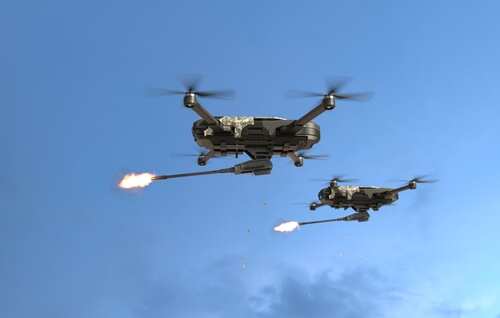
Half of Russia’s biggest diesel refineries faltered in September after Ukrainian drones punched holes in the heart of its fuel machine.
Story Snapshot
- About half of Russia’s top diesel refineries cut or halted output after strikes.
- Shut or curtailed units equaled at least 17% of national processing capacity.
- Kirishi, a core complex, halted key crude units after fires from drone hits.
- Moscow weighed tighter diesel export controls to protect home supply.
What Was Hit, When It Broke, and Why It Matters
Ukrainian drones forced half of Russia’s six top diesel refineries to cut or stop output in September, knocking offline units that matter most for turning crude into road-ready fuel. The immediate pain came from damaged crude distillation units, the first stage in refining.
When those go down, the whole plant starves. Fires at the Kirishi complex, one of Russia’s largest, pushed operators to shut major equipment and brace for repairs measured in weeks, not days.
Ukrainian officials and Russian regional authorities both acknowledged strikes that reached deep into Russian territory. One mass raid sent hundreds of drones across multiple regions and sparked a blaze at Kirishi, a vast site near Saint Petersburg with heavy diesel output.
Follow-on reporting detailed shutdowns of Kirishi’s largest crude unit, known as CDU-6, and suggested the restart would take about a month after an October fire compounded damage from September hits.
How Capacity Loss Turned Into Fuel Stress
Calculations pegged disrupted facilities at at least 17% of Russia’s oil processing capacity in early September, or roughly 1.1 million barrels per day equivalent.
Diesel production relies on stable crude runs and downstream hydrotreating. Damage to inter-unit piping and power also cascades across a plant.
Russia considered or extended curbs on diesel exports to keep pumps wet at home, a clear sign that supply margins tightened fast under the string of attacks.
Markets react more to operational constraints than to pictures of twisted steel. A unit can stand unbroken yet sit idle if a drone strike cuts utilities or control systems. That is why analysts focus on throughput lost, not just buildings burned.
The headline number—half of the top diesel refineries curtailed—lands because these are the complexes that make the clean, on-spec fuel Russia needs for farming, freight, and the military. Shut them, and trucks, trains, and tanks feel it first.
This morning, Ukraine successfully targeted Russia’s Syzran oil refinery in Samara Oblast.
The Rosneft facility has capacity to process around 8.5 million tonnes of crude annually, roughly 170,000 barrels per day, producing large quantities of diesel and gasoline.
Syzran has… pic.twitter.com/6wXYJ3bSwG
— SPRAVDI — Stratcom Centre (@StratcomCentre) September 15, 2026
Kirishi Is the Case Study Everyone Should Watch
Kirishi shows how a single point of failure can ripple through a nation’s fuel map. Sources said operators halted a key unit after a drone-triggered fire in mid-September, then later stopped the site’s most productive distillation train, CDU-6, after another blaze on October 4.
Each outage clipped the plant’s ability to feed downstream units that make diesel. If the largest crude train stays cold for weeks, regional supply tightens and railcars must haul fuel from farther away, raising costs and delays.
Other refineries in central Russia also faced shutdowns or cuts during the campaign, compounding the issue. Outlets traced repeated hits on major plants from the Moscow area to the Volga basin in late summer and fall, as operators cycled units off to inspect, repair, and prevent fires from spreading.
Officials have framed these moves as temporary, but normal runs only return when crude fronts are stable and safety checks clear, which can take weeks per strike cycle.
The Strategic Picture: Drones Versus Spare Capacity
Russia has leaned on spare refining capacity and flexible runs to cushion the blow in earlier waves, holding average oil processing down only a few percent at times despite large attacks. That playbook works until multiple large diesel hubs lose core distillation at once.
What Comes Next for Prices, Policy, and Risk
If repair crews restart big crude units on schedule, domestic pressure can ease before winter peaks. If more drones hit key plants, Russia will likely tighten export limits, reroute crude to undamaged sites, and pull fuel from storage.
Markets will watch Kirishi’s CDU-6 restart window, any new curbs on diesel exports, and signs of longer repair times after repeat hits. One more strike wave across multiple major units could quickly turn a tight market into a shortage.
Sources:
reuters.com, thehindubusinessline.com, english.nv.ua, babel.ua, themoscowtimes.com