
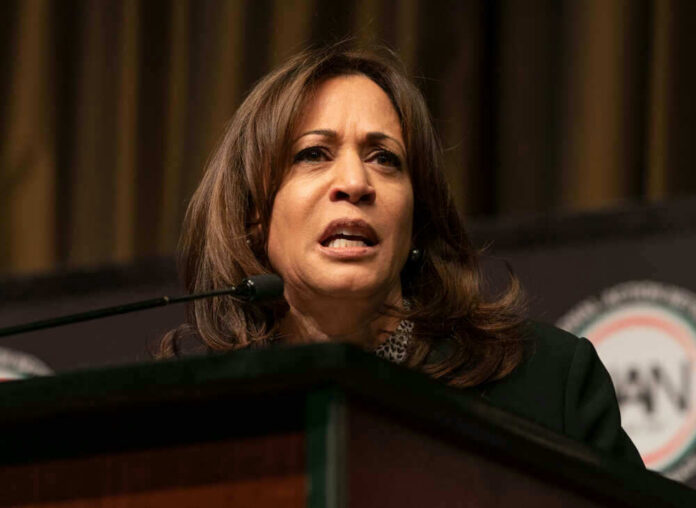
Gavin Newsom said he will not run for president in 2028 if Kamala Harris runs, and he said it on camera.
Story Snapshot
- Newsom told CNN, “I wouldn’t run if she ran,” giving Harris first claim on 2028.
- He framed a head-to-head as a waste of time that helps the other party.
- Major outlets confirmed the on-the-record pledge and his reasoning.
- The move signals party unity and donor peace more than final retirement.
Newsom’s On-Camera Pledge, In His Own Words
California Governor Gavin Newsom told CNN’s Jake Tapper he would not run for president in 2028 if former Vice President Kamala Harris runs. He said, “I wouldn’t run if she ran,” during a filmed interview released September 14, 2026.
He added that such a primary fight would be a “waste of everyone’s time,” and a gift to opponents, according to subsequent reports that quoted his comments in full. “Of course not. Why would I?” Newsom added.
Gavin Newsom says he will NOT run for president in 2028 if Kamala Harris runs: "I wouldn't run if she ran. I wouldn't do that to her." pic.twitter.com/DEQAgRu5wq
— TheBlaze (@theblaze) September 14, 2026
The setting helped the message land. The interview unfolded on a fly-fishing outing in Montana, where Newsom used the setting to stress calm, confidence, and clarity. He did not hedge with lawyerly language or leave a back door. He spoke as if drawing a boundary for allies, donors, and staff.
That clarity matters more than the trout. Campaign pros know that on-camera pledges shape expectations among fundraisers, consultants, and activists who must pick sides early.
What The Pledge Actually Does Inside The Party
The statement hands Harris de facto first refusal on the Democrat field. It lowers the odds of a California-versus-California brawl that would split donors and staff with the same Rolodex.
That choice keeps peace with top Democrats who dislike intraparty knife fights near a general election. It also spares the party months of negative ads that hand the right easy clips.
Scholars and strategists warn that family feuds hurt parties more than they help. Research and recent cycles show that open challenges drain money, bruise brands, and turn off the middle. Voters punish parties that look messy when they should look ready to govern.
Analysts have called these fights “high risk” because they hand opponents a narrative and footage they can run on loop in the fall. Newsom’s move tracks with that basic math.
Signals, Not Surrender: Reading The Fine Print
Public “I won’t run if X runs” lines are rarely only about feelings. They are coalition management. They tell donors where to park money, tell staff where to seek jobs, and tell interest groups how to plan. They also frame a politician as loyal and disciplined rather than hungry and divisive.
Newsom’s pledge checks each box. It wins unity points today and keeps room to move later if the field shifts and Harris sits out, which several outlets framed as the implied path.
NEWSOM SAYS HE WON’T RUN IN 2028 IF HARRIS ENTERS RACE
California Governor Gavin Newsom, who has said he is thinking of running for President in 2028 says he won't fun for the White House if former Vice President Kamala Harris decides to get into the race: “I wouldn't run if she…
— Worldwide News Network (@WorldwideNNX) September 15, 2026
Some commentators cast this as chivalry, others as strategy. The strategy case is stronger. The facts align with party interests: avoid a civil war, protect scarce dollars, and keep the message focused on policy contrasts with President Trump’s agenda instead of Democrat infighting.
On that score, Newsom’s argument that a duel with Harris is “a gift” to the other side matches how general-election voters react to drawn-out primaries and friendly-fire.
Sources:
theguardian.com, cnn.com, ijr.com, washingtonpost.com, dailymail.co.uk