

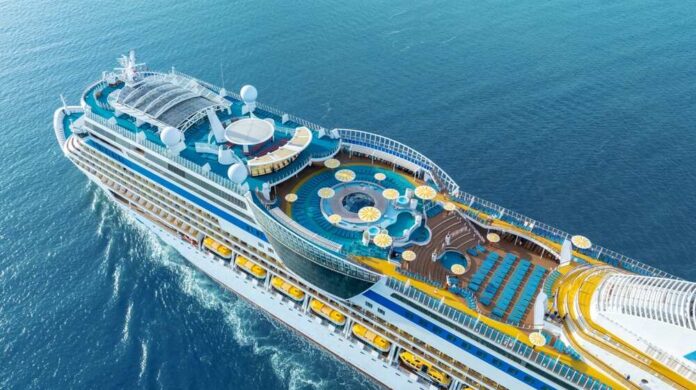
A luxury cruise through Antarctica’s pristine wilderness turned into a floating death trap when a rodent-borne virus claimed three lives and left passengers quarantined off the coast of Africa.
Story Snapshot
- Three passengers died and seven fell ill from suspected hantavirus aboard the MV Hondius during a South Atlantic expedition cruise
- The Dutch-flagged vessel carrying 147 people from 23 nationalities remains moored off Cabo Verde as health officials coordinate international response
- WHO confirmed two cases through lab testing, linking the outbreak to potential rodent exposure during stops at remote islands including Antarctica and South Georgia
- The rare maritime outbreak marks the first known hantavirus cluster on a cruise ship, raising questions about wildlife protocols on expedition voyages
- Passengers face 45-day monitoring periods while one critically ill British man fights for his life in a South African ICU
When Paradise Turned Deadly
The MV Hondius departed Ushuaia, Argentina, on April 1, 2026, promising passengers an unforgettable journey through some of Earth’s most remote territories.
Five days into the voyage, a 70-year-old Dutch man developed fever, headache, and diarrhea. His condition deteriorated rapidly. By April 11, he was dead.
His body remained aboard until the ship reached Saint Helena on April 24, where authorities finally removed it. What passengers didn’t yet know was that this death marked only the beginning of a medical crisis that would trap them at sea.
The Virus That Strikes From the Shadows
Hantavirus lurks in rodent droppings, urine, and saliva, waiting for unsuspecting humans to disturb contaminated areas.
The virus causes two devastating conditions: hantavirus pulmonary syndrome, which floods lungs with fluid, and hemorrhagic fever with renal syndrome, which triggers kidney failure and internal bleeding.
What makes this pathogen particularly terrifying is its rarity and lethality. Most Americans never encounter it, yet when they do, mortality rates can reach 38 percent.
The virus gained tragic celebrity status when Gene Hackman’s wife succumbed to it, proving that wealth and status offer no protection.
The Casualties Mount
The first victim’s wife, a 69-year-old Dutch woman, developed symptoms on April 24 at Saint Helena. Health officials evacuated her on a flight to Johannesburg the next day.
Her condition spiraled during the journey. She died on April 26. A 69-year-old British man presented with fever and shortness of breath on April 24 and was airlifted to a South African intensive care unit on April 27, where he remains in critical condition.
South African labs confirmed his hantavirus infection on May 2 through PCR testing, providing the first definitive proof of the outbreak.
A suspected outbreak of the rare hantavirus on a cruise ship in the Atlantic kills 3 people pic.twitter.com/OqYAyGUbcA
— News 5 Cleveland (@WEWS) May 4, 2026
A fourth passenger, an adult female, developed symptoms on April 28. Despite medical intervention, she died on May 2 as WHO officials were being notified of the cluster.
By May 4, the official count reached seven cases: two confirmed through laboratory testing, five suspected based on clinical presentation. Three passengers with milder symptoms remain aboard the ship, isolated from other passengers.
Two crew members also reported symptoms, though their conditions remain unclear. The vessel sits moored off Cabo Verde, a floating quarantine zone in the Atlantic Ocean.
The Mystery of Patient Zero
How did rodent-borne illness infiltrate a modern cruise ship? The MV Hondius followed an itinerary that reads like an explorer’s dream: Antarctica, South Georgia, Nightingale Island, Tristan da Cunha, Saint Helena, and Ascension Island. Each stop offered passengers opportunities to experience untouched wilderness.
Each stop also potentially exposed them to rodent populations carrying deadly pathogens. WHO investigators cannot yet pinpoint where passengers encountered infected rodents.
The incubation period ranges from one to five weeks, making it impossible to identify a single contaminated location. The ship may have harbored infected rodents, or passengers may have carried the virus aboard after shore excursions.
A Coordinated Global Response
The World Health Organization mobilized an unprecedented international response involving health authorities from the United Kingdom, Cabo Verde, the Netherlands, South Africa, and Spain. The UK’s International Health Regulations Focal Point first notified WHO on May 2.
Teams descended on the ship and implemented strict isolation protocols. Passengers retreated to their cabins, adhering to social distancing measures. Crews intensified cleaning and ventilation systems.
Health officials warned against dry sweeping, which aerosolizes virus particles. Contact tracing extended beyond the ship to include passengers on the Johannesburg flight that carried the second victim, potentially exposing dozens of additional people.
Apparent hantavirus outbreak kills 3 on cruise ship, sickens at least 3 more, health officials say
https://t.co/5kJC0U0FiA— CBS Sacramento (@CBSSacramento) May 4, 2026
Oceanwide Expeditions, the Dutch operator, scrambled to repatriate symptomatic crew members while maintaining cooperation with health authorities.
The company’s reputation hangs in the balance as investigators examine whether adequate rodent-control measures were in place. The outbreak raises uncomfortable questions about expedition cruise protocols.
These voyages market themselves on authentic wilderness experiences, but authentic wilderness includes authentic pathogens. The industry now faces scrutiny about whether adventure tourism has outpaced safety protocols designed for traditional cruising.
The Long Shadow of Uncertainty
Everyone aboard the MV Hondius faces 45 days of monitoring from their last potential exposure. The virus rarely spreads person-to-person, but rarely does not mean never.
Each passenger and crew member represents a potential vector for international transmission. South Africa continues treating the British survivor, whose outcome remains uncertain.
Laboratory teams work to sequence the virus strain, hoping to identify its geographic origin and transmission pathway. The answers may reshape how expedition cruises operate in ecologically sensitive areas where humans and wildlife intersect.
Sources:
WHO Disease Outbreak News – Cluster of hantavirus infections