
Russia lost a Cold War workhorse in seconds, and six trained airmen with it.
Story Highlights
- A Tu-95 strategic bomber crashed during a training flight in Russia’s Amur region, killing six
- One crew member survived and was hospitalized, according to the Defense Ministry
- The aircraft went down in an unpopulated area and was not carrying weapons, reports said
- An investigation and military commission are underway to determine the cause
What Happened In The Far East
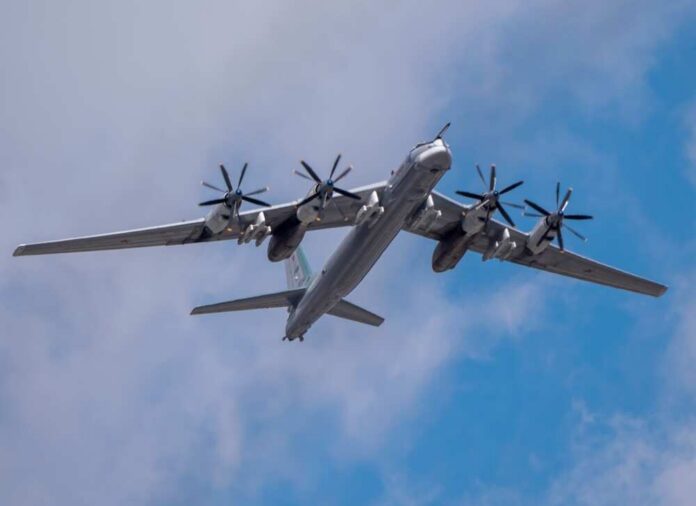
Russia’s Defense Ministry said a Tu-95 bomber crashed during a training flight in the Amur region, a vast stretch of the country’s Far East. The ministry reported six crew members died and one survived with injuries. Officials said the bomber went down in an unpopulated area.
The flight was routine training, not a combat sortie, and reports indicated the aircraft was not armed at the time. The basic facts came quickly; the cause will take longer to nail down.
Wire services and state media carried the same core details: type of aircraft, location, death toll, and the survivor’s evacuation. The Associated Press cited the Defense Ministry’s statement and noted the bomber’s nuclear-capable role in Russia’s long-range force.
The emphasis on an unpopulated crash site points to a standard safety claim, common in official Russian reports after accidents. That pattern fits years of similar briefings that confirm losses but save causes for later.
A Russian Tu-95MS Bear heavy bomber crashed on takeoff in Amur this evening during a training flight.
The airframe is a total loss, with no survivors reported. pic.twitter.com/tbujV6RVP5
— OSINTtechnical (@Osinttechnical) September 29, 2026
Why The Tu-95 Still Matters
The Tu-95 is a four-engine turboprop strategic bomber that entered service in the 1950s and still flies front-line missions. It can launch modern long-range cruise missiles, which has kept it relevant long after its debut.
The airframe’s age and complexity demand strict maintenance and skilled crews. Russia fields modernized Tu-95MS variants, but the core design and its Kuznetsov turboprop engines trace back to Cold War engineering. When something goes wrong on a training flight, there is little margin for error.
Russia’s leadership prizes the Tu-95 as a visible tool of power. These bombers fly patrols that project reach across the Pacific and Arctic. They also support the country’s nuclear deterrent. That mission set means constant training, even far from combat.
The Amur region hosts major bomber bases, so traffic in and out is steady. Training flights test crews on takeoff, navigation, systems checks, and emergency drills. The more you fly aging aircraft, the more you expose weak parts and human limits.
A Fleet With A Hard History
Tu-95 accidents have marked several decades. Public records and past reports show repeated incidents tied to engine failures, fires, and crashes during routine training.
In 2015, engine trouble and a runway fire at Ukrainka air base led to fatalities and a temporary grounding of the fleet, a response that showed both risk and caution in managing an old but vital platform.
The current crash matches the known profile: training flight, remote region, sparse early details, and rapid launch of a formal probe.
BREAKING: Russian Tu-95 Bomber Crash Kills 6 in Amur Oblast
Read more : https://t.co/djh5z1ZwHz
A Russian Tu-95 strategic bomber crashed during a training flight in the Amur region on September 29, killing six crew members. One crew member survived and was hospitalized.
The… pic.twitter.com/Ebpj6L0BIq
— AirMedia24 (@AirMedia24) September 30, 2026
Russian outlets reported that an Aerospace Forces commission is on site to investigate. That is consistent with how Moscow handles major military accidents. A criminal case or formal inquiry can run in parallel with internal safety reviews.
European reporting said preliminary assessments point to a technical malfunction, a line often seen early when crews are experienced and no combat is involved. That may hold up, or it may shift as investigators gather wreckage and cockpit data.
What This Signals For Readiness
Training is supposed to sharpen crews, not claim them. Losing six airmen in peacetime training hurts readiness and morale. It also reduces a finite fleet. The Tu-95 is not in production, so each loss has weight.
If the cause is mechanical, leaders will face a hard choice: fly less and risk skill fade, or fly more and risk another failure. Common sense favors strict maintenance, clear safety margins, and honest reporting to the public about risks borne by service members.
Russia’s long-range aviation remains central to its defense strategy. A transparent, fact-based accident report would serve both the crews and the mission.
When a legacy bomber crashes, the public deserves to know what broke, who responded, and what will change before the next flight.
Families should see more than a press line about an “unpopulated area.” They should see proof of lessons learned, parts replaced, checklists updated, and standards enforced. That is how a nation honors the dead and protects the living.
Sources:
nbcnews.com, abcnews.com, apnews.com, migflug.com