Positano’s mayor says the Amalfi Coast fires look deliberately lit—and the pattern backs her up.
Story Snapshot
- Positano’s mayor points to deliberate ignition across multiple sites.
- Winds and steep slopes turned scattered starts into a coastwide emergency.
- Evacuations hit tourist spots; homes stayed safe as crews held lines.
- Cause investigators will track each origin to confirm or rule out arson.
Officials cite clustered starts, timing, and spread
Positano Mayor Gabriella Guida told the national wire service that the blaze above the town was probably set on purpose, not sparked by chance. She pointed to fires breaking out in several places at once, which made a natural cause seem unlikely.
Local reports echoed her account and linked the pattern to suspicious human action. Strong winds and rugged, dry fuel helped small fires grow fast. The timing hit tourism and transport at once, raising the stakes for the entire coast.
🚨 Positano, Italy 🇮🇹
What has happened in these days is horrifying
The Amalfi Coast, the Positano area, and other small villages, has been hit by numerous fires that appear to have been deliberately set
The mayors are furious
The territory is extremely fragile
Hectares of… pic.twitter.com/Uz6tHbeI0B
— Mambo Italiano (@mamboitaliano__) September 16, 2026
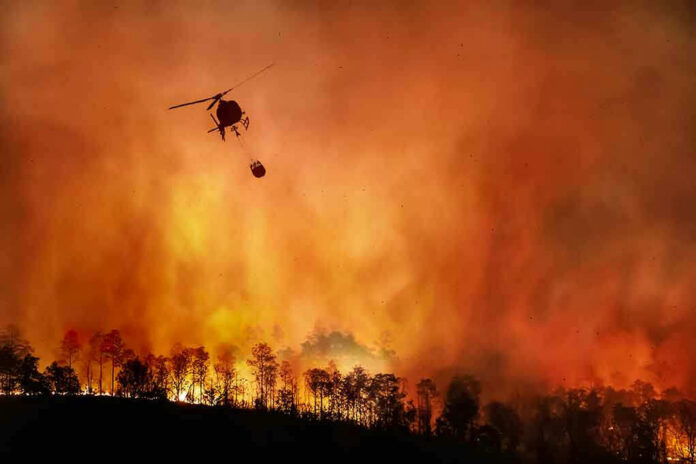
Fire crews faced a classic Mediterranean challenge: steep terrain, brush and pine, and tight roads that limit access. Helicopters and ground teams worked against gusts that pushed embers ahead of the main fronts, forcing rolling closures and tactical retreats.
Emergency staff cleared some tourist facilities to reduce risk, while local leaders urged calm and cooperation. Officials said homes remained safe as lines held, but warned that flare-ups could test defenses through the night.
What “multiple fires” really means in an investigation
Wildland fire investigators follow a clear method. They start at the fire’s edge and work backward, tracing burn patterns upslope and upwind to find each origin area. They test whether all patterns point to one cause or to separate starts.
Manuals in North America and Europe treat multiple ignitions as a red flag, but not proof on its own. Before reaching a final call, each origin must show evidence that fits arson, accident, or natural causes.
Training guides used by wildfire teams lay out this approach in simple steps: define the problem, collect facts, analyze patterns, then form and test a working hypothesis.
The guidance explains how to separate ember spotting from independent starts, and how to weigh burn indicators against physical evidence. That is how teams move from early suspicion to a documented cause that can stand up in court and in public briefings.
Why mayors lean hard on the arson alarm
Local leaders often speak before lab reports arrive, because speed shapes outcomes on the ground. When fires pop in different places at once, the safest bet is to assume a human hand and surge patrols, closures, and arrests if possible.
The broader record in southern Italy shows why suspicion rises fast. Prior surveys by forestry authorities found a large share of wildfires traced to arson across the region’s landscapes.
That history does not decide this case, but it sets a context for strong words from mayors who have watched hillsides burn before. Investigators will now map every advance back to each source. Their findings will confirm or narrow the claims as evidence comes in.
What comes next for the coast
Cause teams will walk the slopes above Positano, Nocelle, and nearby valleys once it is safe. They will flag origin points, bag debris, and compare burn angles and char patterns. They will rule out power faults, lightning, equipment use, and ember spotting where possible.
If they find separate origins with signs of a device, accelerant, or a repeat route, they will build an arson case. If not, they will report a different cause with the same clarity.
Tourism operators will push to reopen, but rains could trigger slides on scorched hills. Crews will cut check lines, clear drains, and drop mulch to hold soil. Residents will watch for rockfall above the coastal road.
Leaders will press for patrols and cameras on trailheads and lay-by spots. That is how you harden a paradise against the next match—by removing easy chances and moving faster than the wind when alarms ring.
Sources:
foxnews.com, ilmattino.it, merkur.de, climate-adapt.eea.europa.eu