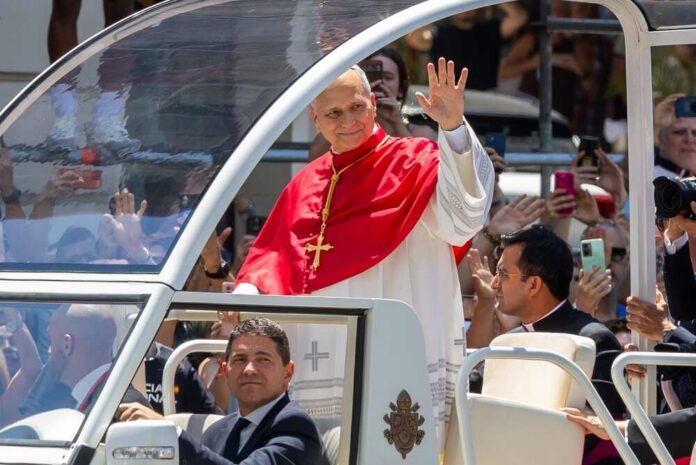
Pope Leo the Fourteenth told a packed care home in Argentina that people with disabilities are “not a burden on society” but “a blessing,” hours before celebrating Mass for roughly 2.5 million people in Buenos Aires.
Story Snapshot
- Pope Leo the Fourteenth visited the Pequeno Cottolengo Don Orione in Claypole, Argentina, a home caring for more than 400 people with disabilities.
- He told residents and staff that disabled people are “a blessing,” not a burden, and tied a nation’s progress to how it treats people with disabilities.
- Hours later he celebrated his first Mass in Argentina, drawing a crowd the Vatican estimated at 2.5 million people.
- Coverage linked the visit to tension over President Javier Milei’s austerity measures affecting health and social services.
A Pope’s Words Land Inside A Home Built On Care
Pope Leo the Fourteenth did not deliver his message on disability from a stage or a balcony. He walked into the Cottolengo Don Orione, a sprawling 123-acre residence south of Buenos Aires that has sheltered disabled Argentinians for decades. There, surrounded by residents, staff, and volunteers, he said plainly that people with disabilities are “not a burden on society” but “a blessing”. The setting mattered as much as the words.
Leo went further than a simple compliment. He said a country’s progress “is also measured by how it welcomes all people with disabilities and particular needs”. That is not a soft sentiment. It is a direct challenge to any government that treats disability care as an expendable line item in a budget, and it puts moral weight behind a policy question that Argentina is currently wrestling with in real time.
A Blessing, A Testimony, And A Nation Watching
During the visit, Leo greeted residents individually and blessed guests, including Marta Torres, a disabled woman who shared her personal testimony with him directly. Moments like these do more than generate a headline quote. They put a human face on a theological claim, reminding a global audience watching the apostolic journey that the pope’s words were not abstract theology aimed at a general audience, but a direct address to specific people in a specific room.
This was not the first time a pope has framed disability in this way. Pope Francis once said people with disabilities are “a gift for the family and an opportunity to grow in love, mutual aid and unity,” and Catholic teaching has increasingly pushed past pity toward full participation and inclusion for disabled people in community life. Leo’s Claypole remarks fit that same arc, built on decades of Church teaching rather than a sudden break from it.
A Record Crowd Gathers For The Pope’s First Argentine Mass
Hours after leaving the care home, Leo celebrated his first Mass on Argentine soil, drawing a crowd the Vatican estimated at 2.5 million people, with other reports crediting local authorities for a figure above two million. Whatever the precise number, it marked one of the largest public gatherings of his young papacy, and it placed his disability message squarely in front of an enormous audience in the country where he chose to deliver it.
Austerity Debate Shadows The Disability Message
Argentina has been reshaping disability assistance under President Milei’s push for administrative efficiency and spending cuts, a shift advocates describe as putting rights and recognition at risk. Coverage of Leo’s visit noted that broader tension, framing his remarks as a pointed response to austerity policy touching health and social services. Readers deserve to know that political backdrop, even as the pope’s core message about human dignity stands on its own.
That backdrop should not overshadow the simpler, harder truth Leo was pressing on his audience: a society’s worth shows up in how it treats its most vulnerable members, not in a spreadsheet of savings. For conservatives who prize subsidiarity and the responsibility of communities and families to care for their own, that is not a partisan talking point. It is a restatement of principle that predates any current government in Buenos Aires.
What The Visit Leaves Behind
Leo’s words at Claypole will not by themselves change a budget line or a staffing ratio at any care home. But the images from that visit, a pope blessing a disabled woman who told her own story, a crowd of millions gathering hours later to hear him preach, carry their own weight. They set a marker for how a nation ought to measure itself, and they leave Argentina’s leaders, and readers everywhere, to decide whether they will meet it.
The apostolic journey continues across South America, but the scene at the Cottolengo Don Orione is likely to be remembered as one of its defining moments, a reminder that dignity for disabled people is not a side issue to be managed, but a measure of a nation’s character.
Sources:
abcnews.com, dw.com, cathstan.org, twincities.com