
Twenty-five spy flights in a few months off Cuba isn’t routine patrolling—it’s a message delivered at 40 miles out, loud enough for Havana to hear without a single word spoken.
Story Snapshot
- Public flight-tracking data shows at least 25 U.S. intelligence-gathering missions near Cuba since February 4, 2026.
- U.S. Navy and Air Force aircraft reportedly flew as close as 40 miles from Cuba’s coastline, a sharp break from the prior pattern of rare overt missions.
- The flight surge lines up with a Trump-era pressure campaign that includes an oil blockade and expanded penalties aimed at Cuba’s security, finance, defense, and energy networks.
- The visibility looks intentional: surveillance can collect data, but it can also signal escalation without firing a shot.
What Changed After February 4: A Surge You Can Count, Not Just Feel
Publicly available aviation data became the unlikely narrator of this story. CNN’s analysis, built on commercial tracking tools such as FlightRadar24 and adsb.exposed, points to at least 25 U.S. surveillance missions off Cuba since February 4, 2026, with platforms operating about 40 miles from the coast.
That proximity matters because it turns intelligence collection into theater—detectable, trackable, and hard for Cuban military watchers to ignore.
Frequency creates its own pressure. A mission every so often can be dismissed as background noise; a steady drumbeat forces planners to assume purpose.
The reporting frames this as a major departure from recent historical patterns, when overt surveillance so close to Cuba was far rarer. When activity jumps that sharply, Cuba’s leadership has to decide whether it’s seeing preparation, deterrence, or a staged reminder of American reach.
The Pressure Campaign: Blockade, Sanctions, and the Politics of Visibility
The timeline described in the research reads like a coordinated squeeze. January 2026 brought rhetoric—Trump reposting talk of visiting a “free Havana” before leaving office.
Early February was followed by an oil blockade order, a direct hit on the island’s energy lifeline. By May, the administration rolled out new penalties targeting Cuba’s security apparatus, financial system, defense establishment, and energy networks. The flights sit inside that arc, not alongside it.
U.S. military intelligence-gathering flights have surged off Cuba's coast in recent months, with at least 25 such missions tracked since Feb. 4, according to an analysis of publicly available aviation data. https://t.co/Kob1N5gnWm
— NEWSMAX (@NEWSMAX) May 11, 2026
Americans say leverage works best when it’s layered: money, fuel, information, and credibility. The flights contribute to that stack by showing that U.S. forces can map what Cuba tries to hide and do so repeatedly.
Voters tend to reward clarity and deterrence, not ambiguity and apology tours. If the objective is to convince adversaries that the U.S. can see and respond quickly, then “visible surveillance” becomes part intelligence operation, part billboard.
Why These Aircraft Matter: Intelligence Collection Has a Signature
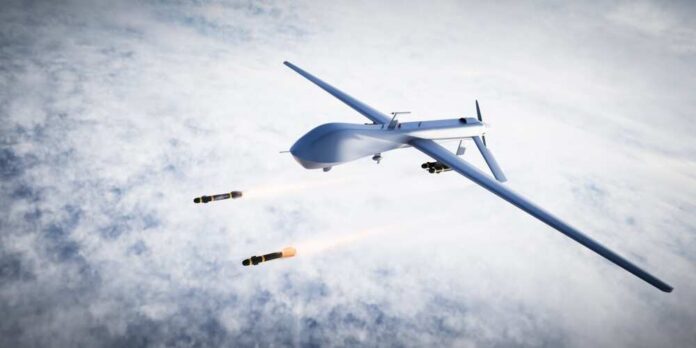
The platforms cited—P-8A Poseidon, RC-135V Rivet Joint, MQ-4C Triton—signal sophistication, not showmanship. These systems specialize in maritime reconnaissance, signals intelligence, and persistent wide-area sensing.
Operating about 40 miles from shore helps maximize collection against radar emissions, communications patterns, and air-defense behavior without crossing into sovereign airspace. The point isn’t simply “watching Cuba”; it’s building a living map of how Cuba’s defenses breathe day to day.
That kind of mapping matters most when a government wants options. Options can mean better-targeted sanctions, smarter interdictions, or tighter force protection if tensions spike.
Options can also mean planning for worst-case scenarios while publicly insisting you don’t want them. The research draws parallels to patterns seen before U.S. posturing tied to Venezuela and Iran. That doesn’t prove a strike is coming, but it does explain why Cuba would treat the signal seriously.
The Real Risk: Miscalculation in a Narrow Strip of Sea and Sky
Escalation often comes from accidents, not speeches. Higher sortie rates create more opportunities for unsafe intercepts, radar “painting,” and overconfident maneuvers on both sides.
Cuba’s military has incentives to demonstrate resolve for domestic audiences and allies; the United States has incentives to demonstrate freedom of operation in international airspace. When both sides chase credibility, small incidents can take on a life of their own, especially under the glare of modern media and real-time tracking.
The oil blockade raises a separate question: pressure on a regime can fall hardest on ordinary people first, especially when energy supplies tighten. Conservatives generally support sanctions when they are targeted, enforceable, and connected to achievable ends.
The closer the pressure campaign moves toward broad economic strangulation, the more it invites arguments about humanitarian consequences and international norms. A strategy that ignores second-order effects usually produces them anyway—often at America’s border.
What to Watch Next: The Tell-Tale Signs Beyond the Headlines
Three indicators will clarify whether this remains a signal or becomes sharper. First, watch whether the mission pace stays elevated or climbs again; persistence suggests a long campaign, while spikes often coincide with specific events.
Second, watch the orbits’ geography—near Havana and Santiago de Cuba, as described—because shifting patterns can reveal new collection priorities. Third, watch Russia and China’s posture, since Cuba’s alliances shape the risk calculus.
READ NOW: US Spy Flights Surge off Cuban Coast — U.S. military intelligence-gathering flights have surged off Cuba's coast in recent months, with at least 25 such missions tracked since Feb. 4, according to a new report of publicly available…https://t.co/ANj82yCkj5
— Top News by CPAC (@TopNewsbyCPAC) May 10, 2026
The most sober interpretation is also the most unsettling: the flights can be both routine intelligence and deliberate warning at the same time. The United States can legally operate in international airspace, but legality doesn’t erase perception.
Havana will read the pattern through the lens of survival; Washington will read it through the lens of deterrence and domestic politics. The open question is whether this pressure campaign produces concessions—or produces a crisis nobody scheduled.
Sources:
https://english.news.cn/northamerica/20260511/7a8970c080f44c0cb29f453810a50972/c.html
http://www.china.org.cn/world/Off_the_Wire/2026-05/11/content_118487571.shtml