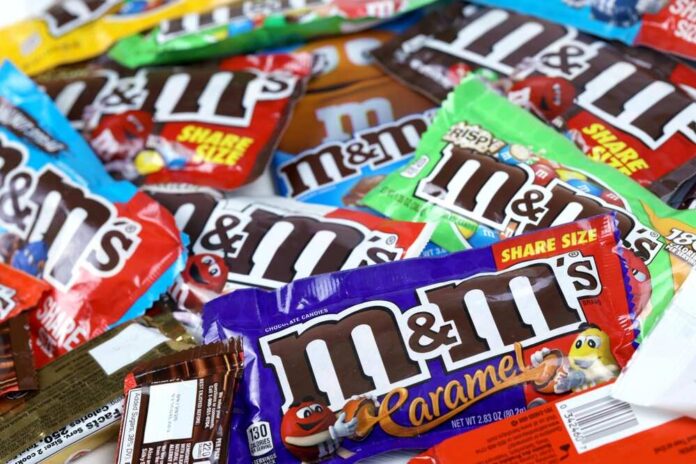
Blue and brown M&M’s are missing from the first bags of dye-free candy Mars just put on shelves.
Story Snapshot
- Mars Wrigley started selling new versions of M&M’s, Skittles and Starburst made without artificial food dyes.
- The new colors come from beet juice, turmeric, spirulina and other plant-based sources.
- The first M&M’s batch skips blue and brown because those shades are harder to make naturally.
- Classic candies with synthetic dyes are staying on shelves alongside the new options.
A Candy Giant Changes Its Recipe
Mars Wrigley confirmed new versions of M&M’s Chocolate, Skittles Original and Starburst Original became available to shoppers without synthetic food dyes, starting with online sales on Amazon.
The company first announced the plan last summer, saying products across four categories would drop what regulators call FD&C colors, the certified synthetic dyes long used in packaged food. The move lands as Mars marks its 85th anniversary and as pressure builds nationwide to pull artificial dyes from popular snacks.
Some of the country's most recognizable candies are getting a makeover.
Starting Thursday, new versions of M&M's, Skittles and Starburst made without artificial food dyes are available to consumers on Amazon. https://t.co/FZfuqmNznz
— ABC News (@ABC) August 13, 2026
Bloomberg first reported the shift, and Mars Wrigley North America described the new items as “product options” rather than a full replacement of its classic lineup.
That distinction matters. Nobody is forcing grown-ups to give up their familiar bag of M&M’s. Mars is testing whether shoppers will pay for a naturally colored version while keeping the original formula on store shelves for anyone who prefers it.
What’s Actually In The New Bags
The ingredient swap is the real story here. ABC News reported the new colors include beet juice for red, turmeric for yellow, and a blend of turmeric, beet juice and spirulina for green, plus beta-carotene and carotenal extracts for orange and other shades.
These are the same natural coloring agents already used in organic and “clean label” foods sold at health-focused grocery chains for years. Mars is simply bringing that approach to mainstream candy aisles.
Getting there wasn’t cheap or fast. One industry report says Mars poured millions of dollars into the project and assigned roughly 100 employees across facilities in New Jersey, Tennessee and Kansas to crack the natural-color formula for M&M’s alone.
That kind of investment signals this isn’t a marketing gimmick. Reformulating a product eaten by millions of Americans daily, without changing its taste or shelf life, takes real food science.
Why Blue And Brown Are Missing
The new M&M’s launch has a noticeable gap. Reports say Mars is selling the dye-free version without blue or brown pieces, because those colors have proven harder to replicate using plant-based ingredients.
A tracker maintained by the Food and Drug Administration reportedly lists Mars as “in progress” on its transition plans for M&M’s, Skittles, Starburst and Extra Gum, suggesting this is an ongoing regulatory process rather than a finished product.
That gap is worth watching. Consumers who buy the natural version today are getting a four-color bag instead of the classic six. Mars hasn’t said publicly when, or if, blue and brown will join the lineup.
For a candy built on its rainbow of colors, leaving two out is a visible reminder that natural dye technology still has limits that synthetic chemistry solved decades ago.
A Market Test, Not A Mandate
Some commentary online has cautioned that Mars is treating this as a limited market test rather than a company-wide policy shift, noting the original dyed versions “aren’t going anywhere” for now.
That’s a fair read of the facts. Mars gets to gauge consumer demand for dye-free candy without betting its entire product line on it. If shoppers respond well, wider distribution and more colors likely follow.
For parents wary of artificial dyes and for shoppers who simply want a choice, that’s a reasonable, low-risk way for a company this size to move.
It respects consumer choice instead of forcing a change nobody asked for, while still answering growing demand for cleaner ingredient labels. That balance, more than any single ingredient swap, is what makes this rollout worth watching into 2026.
Whether Mars eventually phases out synthetic dyes entirely or keeps both versions on shelves indefinitely will depend on how well the new bags sell.
For now, the classic and the natural sit side by side, giving Americans the rare chance to vote with their wallets on how their candy looks and what goes into it.
Sources:
abcnews.com, facebook.com, saudifoodtech.sa, ts2.tech, thehill.com