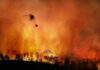
Police say a family fight in a quiet Billings neighborhood ended with gunfire, a burning home, and multiple dead, including children.
Story Snapshot
- Officials reported multiple adults and children dead inside a burned Billings home.
- Police first logged the call as a family disturbance near the city’s West End.
- A male suspect was found with a self-inflicted gunshot wound and later died.
- Investigators are working a crime scene complicated by fire damage.
What Police Say Happened On White Star Circle
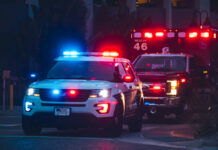
Billings officers and firefighters rushed to White Star Circle after reports of shots fired inside a home. Responders found the residence fully engulfed. Sheriff’s and city officials said multiple adults and multiple juveniles were dead. They did not release names or exact counts, pending next-of-kin and forensic review.
Police described the original call as a family disturbance. The suspected shooter, a man, was discovered outside with a self-inflicted gunshot wound and later died at a hospital, authorities said.
Montana police say multiple children and adults were killed after a shooting and house fire in West Billings End on Sunday.
Authorities say the male suspect is dead. pic.twitter.com/gvZquRjGqp
— Breaking911 (@Breaking911) August 25, 2026
Several agencies worked the scene, including local law enforcement and fire. The house fire complicated immediate rescue and evidence collection.
Crews had to suppress flames before investigators could search for victims and document the interior. Officials emphasized scene safety and methodical processing over speed.
That is standard when gunfire intersects with a structure fire and potential explosive hazards like ammunition or gas lines. The Sheriff’s Office confirmed the area was secured and asked neighbors to avoid the street while teams worked.
Why Fire Turns A Shooting Into A Forensic Puzzle
Fires erase clues. Heat and water destroy fingerprints, DNA, and blood patterns that help tell who did what, when, and where. The National Institute of Justice’s fire and arson guide directs first responders to lock down the perimeter, control entry, and document every movement to protect fragile evidence.
Specialists map burn patterns, trace ventilation paths, and sift layer by layer to locate the fire’s origin. They also separate damage from heat versus bullets. That work takes time and careful cross-checks with autopsies and ballistic tests.
When a suspect dies by apparent suicide at the scene, investigators still need to prove sequence and intent. Forensic medicine warns that differentiating homicide from suicide can be challenging, especially if there are multiple wounds or extensive damage.
In rare cases, offenders ignite fires before or after violence, which further clouds timelines. That does not change the core facts here, but it explains why officials hold back totals and names until the lab work and interviews support a clear narrative.
How This Fits The Known Pattern Of Home Violence
Domestic murder-suicides most often happen in homes, are usually carried out by men, and frequently involve firearms, according to law-enforcement and public-health research.
Medical literature and government studies link these events to family or intimate partner conflicts that escalate fast, sometimes within minutes, and rarely leave time for outside intervention.
Advocacy researchers estimate hundreds of intimate partner murder-suicides annually nationwide, with most involving guns. Those base rates do not excuse anything; they show why the first label on the radio—“family disturbance”—so often foreshadows grim outcomes.
That pattern also supports a common-sense priority: protect the home by acting early on warning signs. Strong family ties and responsible gun ownership go hand in hand with firm boundaries on threats and control.
Families and neighbors should treat explicit threats, stalking, and violent flare-ups as red flags that call for immediate help. Police can only act on what they know.
Churches, schools, and local groups can coach families to set rules, document behavior, and seek orders of protection when needed. That approach respects rights while guarding kids first.
What Investigators Will Work Through Next
Detectives will build the case in layers. First, they confirm identities and causes of death through autopsies and ballistic exams. Second, they reconstruct the house interior to find where the fire started and whether an accelerant was used. Third, they match shell casings, bullet paths, and damage to a timeline.
Finally, they cross-check survivor statements, 911 audio, doorbell video, and phone data. The National Institute of Justice stresses airtight chain-of-custody and meticulous note-taking to withstand court and public scrutiny.
#Now
Multiple adults & children were killed after a shooting & fire engulfed a #Billings, #Montana, #US, home Sunday. Relatives say 8 people were unaccounted for, but authorities have not yet confirmed an exact death toll. Suspected attacker also died. https://t.co/vBw6XEI6Fj— Mexico Times (@mexicotimes) August 25, 2026
The painful part comes after the tape comes down. Affected families face funeral costs, trauma care, and months of questions.
Community leaders can help by focusing resources on the basics: grief counseling for kids, temporary housing for displaced relatives, meal trains that last longer than the first week, and clear updates from authorities without rumor or blame.
Local media have reported the core facts cleanly and without hype. That steadiness gives space for quiet support and a careful, complete report from police when the work is done.
Sources:
cbsnews.com, nbcnews.com, cedarnews.net, youtube.com, ktvq.com, instagram.com