

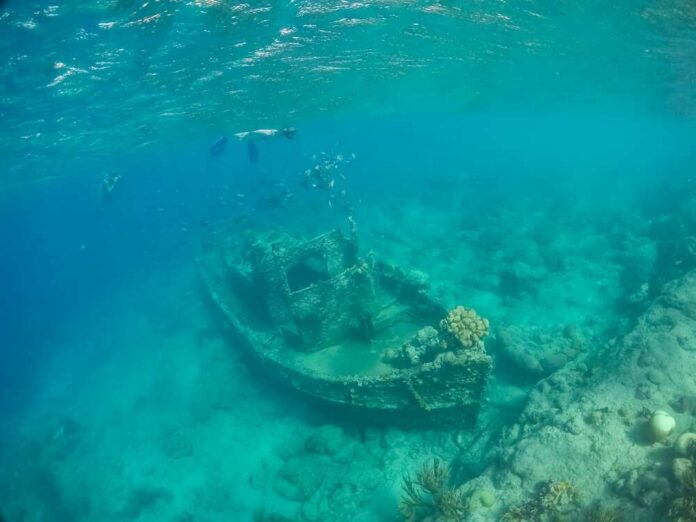
A tight cluster of more than 30 Bronze Age jars and three stone anchors off Turkey points to a 4,400–4,700-year-old shipwreck, a find officials call a time capsule of early sea trade.
Story Snapshot
- Divers mapped over 30 storage jars and three stone anchors near Kekova Island.
- Experts date the cargo to 2700–2400 BCE by pottery style and comparisons.
- Turkey’s culture ministry supports the age range and the site’s location.
- The wreck’s wood is gone, but the cargo scatter still tells a clear story.
A Bronze Age cargo bed that still holds its shape
Archaeologists working off Kekova Island reported a compact field of Early Bronze Age cargo: more than 30 ceramic storage vessels, often called amphorae in the media, aligned with three stone anchors. This is the kind of pattern a ship leaves when it goes down under load. The reported layout suggests one event, not random loss. Network news and children’s news coverage described a coherent cargo scatter rather than stray pots with no link to a vessel.
Professor Hakan Öniz of Akdeniz University led the Mediterranean Archaeology Association team that documented the site and called it a “time capsule at the bottom of the sea.” His team placed the sinking in the Early Bronze Age, about 4,400–4,700 years ago. Media reports named him directly, not as an unnamed source, and quoted his description of the cargo field and the scope of work near Kekova’s sheltered coves and rocky slopes.
How the team estimated the age range
Archaeologists dated the cargo by comparing the jar shapes and decoration with well-dated sets from land sites and other finds. The National reported that the team bracketed the range at 2700–2400 BCE using typology, standard practice when wood is gone. That process builds a time window from known look-alikes and their dig records. The ministry’s public note gave the same age span, echoing the team’s estimate and supporting the basic range.
Turkey’s Culture and Tourism Minister Mehmet Nuri Ersoy announced that underwater work near Kekova revealed amphorae about 4,700 years old. The ministry’s statement described the same 4,400–4,700-year bracket, putting official weight behind the find and its date. When scientists and a ministry align on the basics—what, where, and the time frame—the public gets a stable set of facts to track as more details roll out.
What the cargo says about early sea trade
Large storage jars were the workhorses of ancient trade. Crews packed them with dense, high-value goods that survived long hauls: oil, wine, grain, or resin. Reports suggest these jars likely moved staples across the Eastern Mediterranean. Olive oil and wine are common candidates, but residue tests will decide that story later. Even so, the sheer number of jars implies planned trade, not a fisherman’s cache or a ritual drop. Cargo and anchors together point to a working ship.
Archaeologists uncover what’s left of ancient shipwreck dating back 4,400 years near Turkish island https://t.co/hzZ536emKq pic.twitter.com/CWgkJusrcf
— bulletinindy (@bulletinindy) October 14, 2026
Bronze Age mariners pushed along coasts, hopping from cove to cove to avoid storms. Kekova’s waters sit on a natural route between Anatolia, Cyprus, and the Levant. A wreck there fits the map and matches what we know from later sites like Uluburun, though this find is much older. If the age holds, the site anchors a hard date for when organized cargo runs moved beyond river mouths and into open sea lanes, centuries earlier than many schoolbook stories teach.
Why the “oldest shipwreck” label matters—and how to keep it honest
News outlets framed the discovery as the world’s oldest shipwreck, with careful phrasing like “believed” or “could be.” That claim rests on the cargo’s age and the anchors, not on preserved hull planks. Wood rarely survives. Maritime archaeologists often start with pottery dates, then add checks. A leading study on shipwreck dating warns that ceramic-only ages are approximate and can be wrong; it urges direct dating when possible, such as radiocarbon dating of short-lived materials.
One short caveat belongs here and no more: the wood did not survive, so the team dated the jars, not the timbers. That said, the assemblage and anchor set match a single vessel, and the government and lead archaeologist agree on the range. The conservative approach now is plain: log every jar and anchor location, run residue tests, and add a direct date if any related organic sample turns up. That keeps the headline strong while the science tightens the screws.
What to watch next
Expect a full map of the seabed scatter, a catalog of each jar, and anchor typology details. Look for residue reports that name lipids, plant markers, or proteins that tie to olive, grape, or grain. Watch for independent ceramic reviews to test the 2700–2400 BCE range. If a rope fiber, basket reed, or pitch lump survives inside a jar, a lab can date it and lock the timeline. Each step will turn today’s clear picture into tomorrow’s reference site.
Sources:
cbsnews.com, abcnews.com, bbc.com, aa.com.tr, cnn.com, bbc.co.uk, thenationalnews.com