
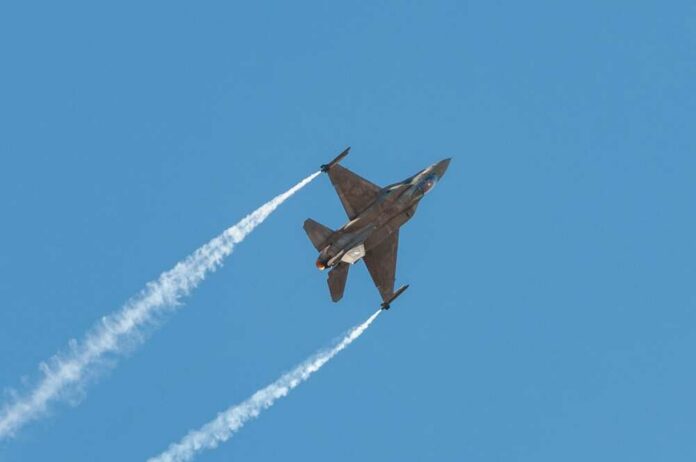
Two F-16s moved fast over Cincinnati after a small plane strayed where it should not while President Trump spoke nearby.
Story Snapshot
- NORAD said F-16s intercepted a general-aviation plane over Cincinnati.
- The jet pilots escorted the aircraft out without force or injury.
- The restricted zone tied to a presidential visit was active at the time.
- Similar mistakes by small planes happen often during event restrictions.
F-16s respond as a rally unfolds across the river
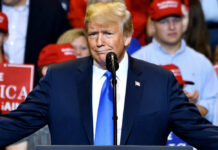
North American Aerospace Defense Command said two F-16 fighters intercepted a general-aviation aircraft that entered restricted airspace over Cincinnati on Saturday as President Trump addressed a rally in northern Kentucky. The command placed the intercept at about midafternoon and said the aircraft was escorted away from the area without further issue. The alert scratched a familiar groove in the region’s weekend soundscape and then ended almost as fast as it began.
The Federal Aviation Administration typically sets temporary flight restrictions around a presidential visit. These restrictions create a ring where only approved flights may enter. Pilots receive notices and route updates through standard briefings and navigation apps. When a plane still wanders in, controllers call the pilot on guard frequency. If the pilot does not respond or comply, North American Aerospace Defense Command sends fighters to intercept and direct the aircraft out.
How an intercept works from call to wing rock
An intercept follows a well-worn script. Air defense controllers assign a pair of jets, which sprint to the track of interest. The lead fighter approaches to visual range while the wingman hangs back to cover. The fighter rocks its wings, which tells the pilot of the intercepted plane to follow. The fighter can also show a message board or fire flares if needed. The goal is compliance and safety, not force. Most pilots follow directions quickly.
Radio calls matter as much as visuals. Controllers broadcast on emergency frequencies and relay simple, clear turns and altitudes. The intercepted pilot must squawk a unique transponder code and fly the assigned route. After clearing the ring, the small plane is often told to land at a nearby airport. Law enforcement or Federal Aviation Administration inspectors may meet the pilot and review certificates, flight plans, and any errors that led to the incursion.
Why these airspace busts keep happening
Temporary flight restrictions move with the president’s schedule and can change on short notice. General-aviation pilots who skip a full preflight briefing can miss them. Older avionics or spotty tablet data feeds also play a role. North American Aerospace Defense Command has documented clusters of these violations around presidential venues in Palm Beach, Bedminster, East Rutherford, and Geneva, with multiple same-day incursions at times. Most end in uneventful escorts, not force, because pilots comply once cued.
Military fighter jets intercepted a plane flying through restricted airspace over Cincinnati, Ohio, while President Trump was speaking at a nearby rally in Kentucky. https://t.co/FOKFoy5mdj
— CBS News (@CBSNews) October 19, 2026
Common sense says national security requires clear red lines and swift response. A fast intercept reassures the public at large events and gives wrong-way pilots a safe exit. Consistent with that, the command’s statement on the Cincinnati case stressed safe resolution. That tone fits a broad record: firm rules, quick action, and a bias for de-escalation. Critics sometimes say the system overreacts; the facts point to restraint backed by speed and skill, which aligns with public safety priorities.
What this means for pilots and the public
Pilots should treat a presidential schedule as a cue to double-check briefings. A five-minute call to flight service or a quick review of official notices can stop a very loud surprise. For the public, the takeaway is simple. The shield works. Fighters launch, identify, and guide the stray airplane away while the event continues. The Cincinnati episode matched that pattern: a short alarm, a clear intercept, and a safe escort out, all while the rally carried on nearby.
Sources:
hoodline.com, cbsnews.com, x.com, norad.mil