
Six unnamed Americans in a remote corner of Congo forced Washington to quietly test whether it learned anything from the last pandemic panic.
Story Snapshot
- Anonymous reports say at least six Americans in Congo had possible Ebola exposure, with one reportedly symptomatic.[1][3]
- Officials confirm a serious Bundibugyo Ebola outbreak, but not the Americans’ status, while insisting U.S. public risk is low.[1]
- The World Health Organization labeled the outbreak a global emergency as deaths mounted in eastern Congo and Uganda.[2]
- The real story is the information gap: media headlines race ahead while governments say almost nothing specific.
What “Exposure” To Ebola Actually Means In This Case
Reports from CBS News and STAT describe at least six Americans in the Democratic Republic of Congo who are believed to have had exposure to Ebola, three of them in a high‑risk category and at least one reportedly showing symptoms.[1][3]
That sounds like the opening scene of a disaster movie. In reality, outbreak responders use “exposure” as a technical label that can apply to anyone who had close contact with a suspected case, even when no test has turned positive and infection is unproven.[3]
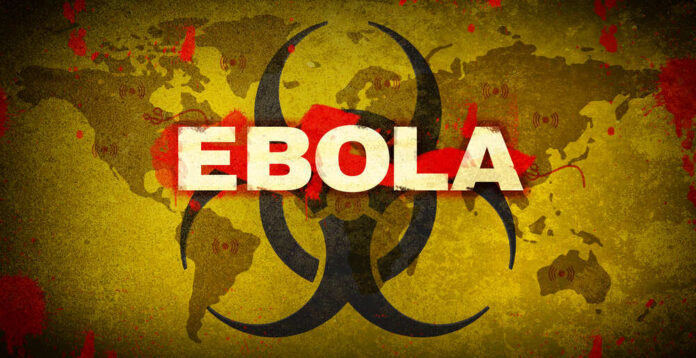
The Centers for Disease Control and Prevention confirmed a serious Ebola outbreak driven by the Bundibugyo strain in Congo’s Ituri province and in neighboring Uganda, with confirmed cases, hundreds of suspected infections, and dozens of deaths.[2][3]
This variant has no approved vaccine or specific treatment, which raises understandable fear.[3] Yet the agency repeatedly stressed that, based on how Ebola spreads, the risk to the American public “remains low,” a phrase that directly undercuts social‑media doom loops.[1]
What Officials Admit, What They Dodge, And Why
The U.S. Embassy in Kinshasa issued a formal health alert acknowledging the World Health Organization’s declaration of a public health emergency of international concern and flagging Ebola activity in Ituri, but it did not confirm any American infections.
The Centers for Disease Control and Prevention went further in one direction and less far in another: it activated its emergency response center, deployed support for surveillance, contact tracing, and labs in Congo and Uganda, yet pointedly declined to confirm whether any Americans had been exposed or infected.[3]
Behind that tight‑lipped posture sit at least three forces. First, medical privacy laws and basic ethics: governments cannot casually announce the health status of named or easily identifiable citizens abroad.
Second, operational security: publicizing the whereabouts of specific Western personnel in a conflict‑affected region of eastern Congo is an invitation to trouble.
Third, political scar tissue from Covid‑19: officials now know that any admission of “Americans exposed” becomes instant ammunition in partisan fights, so they stick to cautious generalities about “low risk” and “ongoing assessment.”[3]
Media Headlines, Fear, And The Instinct To Separate Signal From Noise
The information vacuum lets headlines do what headlines do: compress uncertainty into a dramatic, clickable claim. CBS, STAT, and other outlets reported the same core storyline—at least six Americans with exposure, one possibly symptomatic—using unnamed sources in international aid organizations and outbreak operations.[1][3]
None of those stories provided names, roles, or detailed exposure circumstances. They openly admitted that no positive test had been confirmed and that official agencies would not verify the count.[1][3]
At least six Americans are reportedly being monitored after potential Ebola exposure in the Democratic Republic of Congo, according to US media reports.
No confirmed infections have been announced so far, but the situation is already triggering concern because of what Ebola…
— Rising Time (@RisingTime_) May 18, 2026
Real risk in central Africa gets filtered through Washington bureaucracy and then refracted by media whose incentives favor fear over nuance. The responsible posture is neither blind trust nor conspiratorial rejection.
Treat early outbreak numbers as preliminary. Demand specific evidence when claims escalate. And refuse to let “exposure” headlines be casually equated with “infected Americans boarding flights home tonight.”[3]
Why This Ebola Variant Is Dangerous There But Unlikely To Explode Here
The Bundibugyo strain now circulating in Congo and Uganda is deadly enough to merit the World Health Organization’s global emergency label and the U.S. government’s activation of its emergency machinery.[2][3]
Unlike the better‑known Zaire strain, there is no approved vaccine or targeted drug for Bundibugyo, so treatment focuses on supportive care—fluids, electrolytes, and management of complications.[3]
That sounds primitive, but in previous outbreaks, even basic supportive care significantly improved survival when delivered early and consistently.
The same biological features that make Ebola terrifying in a remote clinic also limit its ability to become a runaway global fire. The virus spreads through direct contact with the bodily fluids of sick people, not through the air like measles, nor through fleeting encounters in a grocery store.[3]
Patients typically become infectious only after symptoms appear, giving health systems a window to isolate and trace contacts.
That is why the Centers for Disease Control and Prevention can simultaneously acknowledge Americans with possible exposure and still conclude that risk to the broader public in the United States remains low.[1][3]
What A Mature Response Would Look Like From Washington
This episode raises an uncomfortable question: has the federal government actually learned how to communicate during high‑consequence outbreaks without resorting to either panic‑baiting or bland reassurance?
A mature response would do three things at once. First, confirm basic facts the public reasonably expects to know: yes or no, have any Americans tested positive; yes or no, are any in medical evacuation or stateside isolation.[3]
Second, it would outline the concrete guardrails already in place: pre‑departure screening, specialized transport protocols, quarantine plans, and designated treatment units, without revealing sensitive personal details.
Third, it would resist the temptation to weaponize the crisis for unrelated agendas, whether that is selling sweeping new emergency powers or, on the other side, dismissing all concern as “media hysteria.”
Sources:
[1] Web – At least 6 Americans in Congo were exposed to Ebola virus, sources …
[2] YouTube – Ebola: Americans reported exposed, DRC boosts control efforts
[3] Web – Ebola outbreak: Americans in Congo believed to have had exposure …