
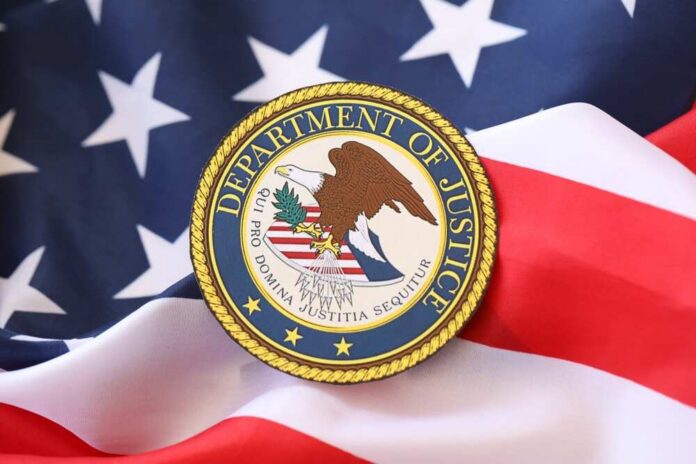
The Justice Department says sixteen people, including an illegal alien, broke federal election law by voting as noncitizens, lying about citizenship, voting twice, or casting a ballot in a dead person’s name.
Quick Take
- The Department of Justice (DOJ) announced charges against 16 individuals on October 12, 2026, for election-related crimes spanning multiple federal districts.
- Alleged offenses include noncitizen voting, false citizenship claims, voting for deceased people, double voting, and lying on citizenship paperwork.
- One case involves an 82-year-old Canadian lawful permanent resident accused of voting in the 2022 general election.
- Historical data shows prosecutors bring voter fraud cases every cycle, though they remain a tiny share of total ballots cast.
What The Justice Department Announced
The Justice Department unveiled charges against 16 individuals on October 12, 2026, tying each case to illegal voting or fraudulent registration. Officials described the group as including an illegal alien, with cases stretching across several federal court districts. The announcement did not describe one single scheme. Instead, it bundled together separate state and local cases that prosecutors say share a common thread: people voting who had no legal right to.
The charges break down into specific categories. Some defendants are accused of voting as noncitizens in federal elections. Others allegedly made false claims of United States citizenship to register or cast a ballot. The list also includes voting on behalf of someone who had died, voting more than once in the same election, lying on citizenship applications, and unlawfully obtaining citizenship itself.
One case highlighted by the department involves Stanley Walton, an 82-year-old Canadian national living in the United States as a lawful permanent resident. Prosecutors charged him with unlawfully voting in the 2022 general election. His status as a legal resident, rather than someone in the country illegally, shows the charges touch a range of immigration backgrounds, not just undocumented migrants.
How This Case Fits A Longer Pattern
Voter fraud prosecutions are not new. The Federal Bureau of Investigation (FBI) notes that the first federal voter fraud indictments date back to January 1937, when a Kansas City case eventually produced 242 guilty pleas or convictions by mid-1938. Election fraud cases have surfaced in nearly every era of American politics, from early twentieth-century ballot stuffing to disputed modern statewide races.
A Bloomberg Law review found prosecutors across the country pursued roughly 200 voter fraud cases nationwide since the November 2018 elections, based on a 50-state canvass of state officials. That number shows fraud prosecutions happen with some regularity, even as they remain rare compared to the hundreds of millions of votes cast in recent election cycles.
Context from the Brennan Center offers a useful scale check. A 2017 study surveyed officials in 42 jurisdictions covering 23.5 million votes cast in the 2016 general election. Those officials referred about 30 suspected noncitizen-voting incidents for investigation or prosecution, roughly 0.0001 percent of the votes tallied in that sample. That figure describes a narrow slice of jurisdictions in one election year, not the current 16 cases, but it shows how investigators have historically sized up this type of fraud.
Why The Charges Matter Politically
Each defendant is presumed innocent until proven guilty in court, a standard protection in the American justice system. The Trump administration has made election integrity enforcement a visible priority, and this announcement follows earlier rounds of similar charges the department brought against smaller groups of defendants in prior months.
Supporters of the crackdown argue that even a small number of illegal votes undermines trust in elections and that enforcement sends a clear deterrent message. That view lines up with a core conservative principle: the integrity of the ballot box depends on consistent enforcement, not on assuming violations are too rare to matter. Prosecuting confirmed cases, regardless of scale, reinforces that voting eligibility rules apply equally to everyone.
The Department of Justice announced charges involving 16 individuals, including a non-U.S. citizen, in cases involving illegal voting, fraudulent voter registration, and other election-related crimes.
The cases include:
-Noncitizens voting in federal elections
-Falsely claiming… pic.twitter.com/NtwVtV5DFb— CRAZY_BITCH_FROM_THA_SLAPAHOE_TRIBE 𖧶🪓 (@TRUMPGIRL_STL) October 13, 2026
The cases now move through federal courts in the districts where they were filed, each proceeding on its own timeline. The Justice Department has signaled these announcements will likely continue as part of a broader election integrity enforcement push heading into future election cycles.
Sources:
justice.gov, yahoo.com, whitehouse.gov, fbi.gov, news.bloomberglaw.com, brennancenter.org