

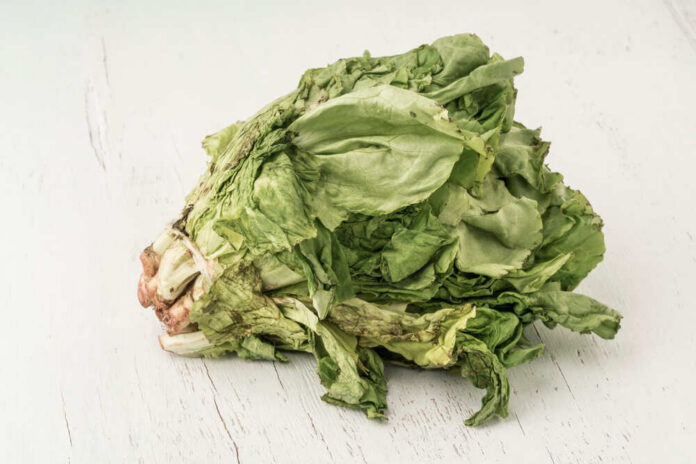
When the nation’s biggest food distributor suddenly cuts off Mexican iceberg lettuce after a parasite outbreak tied to two deaths, every salad starts to feel like a crime scene waiting to be solved.
Story Snapshot
- Sysco halted purchases of iceberg lettuce from Mexico after a massive cyclosporiasis outbreak.
- Federal investigators linked the outbreak to iceberg lettuce from Taylor Farms operations in central Mexico.
- Two deaths in Michigan pushed the crisis from “food scare” into “deadly failure of the system.”
- Officials admit they still lack a single confirmed positive product sample, raising hard questions about proof and precaution.
Sysco’s sudden cutoff and what it really signals
Sysco is not a niche supplier; it helps feed hospitals, school cafeterias, fast-food chains, and mom-and-pop diners across the country. When its chief executive says, “We’re not buying iceberg lettuce from them, and we’re not buying it from Mexico,” that is not a quiet internal adjustment.
That is the food system slamming a door. Sysco halted sales and distribution of Taylor Farms iceberg lettuce from Mexico in mid-July and moved quickly to recall affected products.
Sysco’s shift hits more than one company’s balance sheet. It tells every restaurant owner and grocery buyer that central Mexico is now suspect ground for iceberg lettuce.
Sysco says it is now buying iceberg lettuce grown in the United States and working to diversify suppliers so no single grower or region holds that much power over the menu again.
How a parasite turned tacos and salads into a national health crisis
The outbreak centers on cyclosporiasis, an intestinal illness caused by the parasite Cyclospora that can trigger severe diarrhea, stomach pain, nausea, fatigue, and major weight loss.
Federal health officials say the multistate outbreak is linked to shredded iceberg lettuce served at Taco Bell restaurants and sourced from Taylor Farms operations in central Mexico.
This is not a handful of upset stomachs; cases have run into the thousands, making it one of the largest such outbreaks in recent U.S. history.
Michigan shows how quickly a “foodborne illness” can turn deadly when systems fail. State health officials there say more than eleven thousand people have been sickened and two deaths are tied to the broader cyclosporiasis outbreak, with lettuce or salad greens considered a likely source.
They warn other foods have not been fully ruled out and no single grower has been formally named at the state level, which underscores how difficult tracking this parasite can be.
America’s biggest parasite outbreak forces food giant to ditch Mexican lettuce https://t.co/jK2FlS5fWc
— The Right News, Right Now. (@BradPorcellato) August 5, 2026
The strange gap between federal certainty and missing lab proof
Here is where the story tests everyone’s trust in the system. The Food and Drug Administration says its traceback investigation links the outbreak to iceberg lettuce from Taylor Farms in central Mexico, and that is the basis for recalls and warnings.
Yet Taylor Farms points out, and federal updates confirm, that as of late July there were no confirmed positive product samples for Cyclospora from the recalled lettuce. One highly publicized positive test was later labeled a false positive.
That means the government moved the market and the menus based on patterns, not a smoking-gun test tube. Investigators leaned on exposure interviews, purchase records, and distribution maps that all kept pointing to the same source, even as the lab evidence stayed fuzzy.
On its face, that looks like a classic clash between American instincts about hard proof and the public-health culture of “act fast, verify later.” When two people die and thousands are sick, most officials choose precaution over courtroom-grade evidence.
Taylor Farms, recalls, and the cost of being in the crosshairs
Taylor Farms responded the way a major supplier must when regulators draw a line through its product. The company voluntarily recalled all iceberg lettuce grown in central Mexico that was identified as the potential source of the outbreak and pulled it from the U.S. market.
It stressed that no Taylor Farms-branded salads or salad kits are tied to the outbreak and that its branded kits do not even contain iceberg lettuce.
Sysco, the nation's largest food distributor, will stop buying iceberg lettuce from Mexico as federal health officials investigate a multistate cyclosporiasis outbreak linked to the product, the company's CEO said Tuesday. https://t.co/llIeHRhVtW
— FOX 5 DC (@fox5dc) August 5, 2026
The financial hit is real, but the reputational damage may be worse. Once federal agencies and big distributors repeat “central Mexico” and “Taylor Farms” enough times, the link hardens in the public mind—even if later records show more nuance.
What this means for ordinary shoppers and for a system stretched thin
For the typical shopper, this saga gives two clear lessons. First, “wash your produce” is not enough when the problem is human waste contaminating irrigation water half a continent away.
Second, knowing where your food comes from is no longer a farm-to-table luxury trend; it is a basic safety question. Sysco’s pivot back to U.S.-grown iceberg lettuce shows that supply diversity is not a buzzword. It is the only way to avoid being trapped when one region becomes ground zero for a deadly outbreak.
For the system, the lettuce crisis exposes a deeper tension. Federal agencies are expected to prevent harm, yet are judged by Americans when they act aggressively without perfect proof. Big distributors are expected to protect customers, yet they helped create the risk by leaning on a narrow band of foreign suppliers.
Until investigations become more transparent and sourcing more local and diversified, this kind of outbreak will keep turning simple salads into high-stakes tests of trust.
Sources:
foxbusiness.com, fda.gov, taylorfarms.com, abcnews.com, reuters.com, msn.com, seekingalpha.com, independent.co.uk, facebook.com