
Eight people died when a chartered Cessna 441 crashed near a remote Alaska radar site, and the facts tell a stark story with national lessons.
Story Snapshot
- The military confirmed a crash at Cape Newenham’s radar site airport with no survivors.
- The U.S. Army Corps of Engineers said two of its employees were among the dead.
- Federal data identify the aircraft, operator, flight number, and approach phase.
- The National Transportation Safety Board set the crash time window on August 20.
Crash Facts: Where, When, and Who
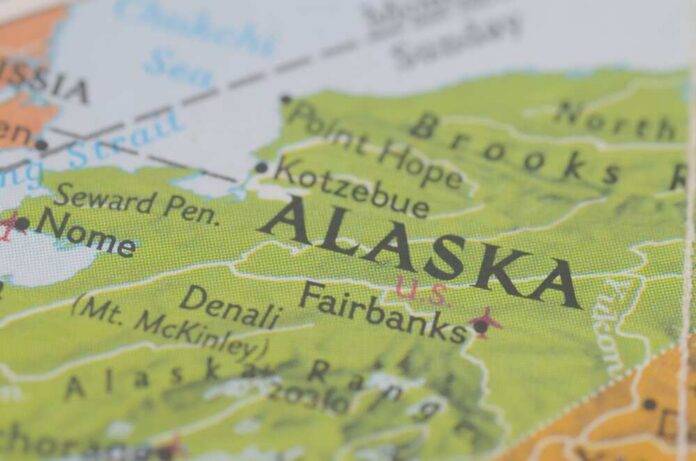
Alaskan Command said a civilian-contracted aircraft went down at the Cape Newenham Long Range Radar Site Airport, about 450 miles west of Anchorage. Military personnel reached the area and confirmed no survivors among the eight aboard.
The U.S. Army Corps of Engineers stated two of its Portland District employees died and that families were notified. Multiple outlets reported the same core facts: two pilots and six passengers were on the flight bound for the remote site.
The Federal Aviation Administration’s early notice, summarized in trade press, identified the airplane as a Cessna 441 operated by Security Aviation as flight SVX45, an on-demand charter under Part 135, in the approach phase when it crashed, with eight fatalities.
The National Transportation Safety Board’s Alaska chief, Clint Johnson, said the accident occurred on August 20 at about 11:45 a.m. local time, and investigators began gathering facts soon after. Officials have not issued a final cause.
The Place: A Hard Airfield at the End of the Map
Cape Newenham’s airstrip serves a long range radar site on Alaska’s far west coast. Terrain, marine weather, and distance challenge pilots and responders. Flights here often depend on instruments and careful timing. When an aircraft goes silent near a strip like this, help is hours away, not minutes.
The military’s statement, combined with early federal details, frames a clear picture: a final approach to a rugged field, a contracted mission, and a loss with no survivors.
All eight people aboard a plane chartered by the Army Corps of Engineers were killed in a crash near a remote radar site on the western coast of Alaska.
Read more at: https://t.co/vcg2PPnNDa
— Stars and Stripes (@starsandstripes) August 23, 2026
Alaska’s air risks run higher than the national norm. The National Transportation Safety Board has reported that from 2008 to 2017, Alaska’s total aviation accident rate was 2.35 times that of the rest of the country, and its fatal rate was 1.34 times higher.
That gap reflects geography, weather, and the heavy use of smaller commercial aircraft to bridge distances that roads do not. Charter operations play a vital role, but they also shoulder a larger share of exposure in these conditions.
The Flight: What Officials Say So Far
The early Federal Aviation Administration summary, carried in aviation press, placed the airplane on approach when it crashed, which aligns with reports of poor visibility near the site that day. The National Transportation Safety Board placed the time window late morning on August 20 and began recovery and documentation soon after.
Newsrooms converged on the same facts: eight aboard, two pilots, six passengers, and the crash near the Cape Newenham radar airfield. A full sequence will come from the board’s report.
The U.S. Army Corps of Engineers confirmed two of the dead were its employees traveling for official work, a painful reminder that federal projects rely on charter flights to reach isolated sites.
That model is common sense in Alaska, where the mission demands do not pause for weather windows or summer fog. The takeaway is clear: critical infrastructure hinges on routine flights into hard places, so safety investments and disciplined decision-making are not luxuries; they are the job.
Alaska’s Pattern: Why This Matters Beyond One Crash
The board has pressed for Alaska-focused safety steps for years, citing the state’s higher accident burden and the need to push risk down through better equipment, training, and information sharing.
Charter flying under Part 135 carries unique pressures: variable strips, fast-changing weather, and complex logistics. Families, workers, and communities pay the price when risk compounds. Strong oversight, transparent reporting, and operator culture that rewards go/no-go discipline support both lives and livelihoods.
What Comes Next: Process and Prudence
Investigators will document the wreckage, flight history, maintenance, crew experience, and weather data. They will look for instrument approach details, missed approach attempts, and any signs of mechanical failure or spatial disorientation.
They will check company procedures and training. A preliminary National Transportation Safety Board summary often arrives within weeks; a final report can take many months. Until then, the established facts stand: a charter approach to Cape Newenham ended with eight lives lost.
Sources:
alaskasnewssource.com, alaskapublic.org, poa.usace.army.mil, airwaysmag.com, abcnews.com, reuters.com, nbcnews.com, youtube.com