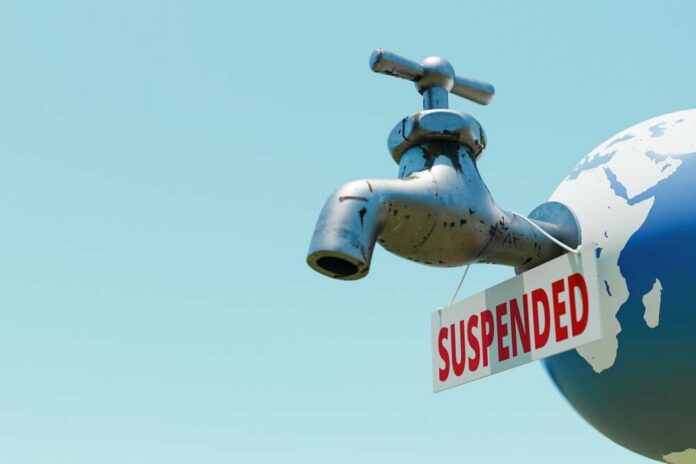
More than 180,000 people across San Juan and nearby towns are now losing running water for 48 hours straight, every few days, as Puerto Rico’s worst dry spell in years overwhelms an already crumbling system.
Story Snapshot
- Puerto Rico’s government began rotating water shutoffs Friday for more than 180,000 customers around San Juan, Carolina, Canóvanas, Gurabo, Loíza, and Trujillo Alto.
- Governor Jenniffer González Colón signed executive orders declaring a state of emergency over the drought and water shortages.
- More than 82% of the island was under abnormally dry or drought conditions in late July, drought trackers reported.
- Puerto Rico has faced similar rationing crises before, including in 1994, 2015, and 2020.
Rotating Shutoffs Now Hit Thousands Of Households
Puerto Rico’s water authority started rolling blackout-style shutoffs on Friday, cutting service to homes and businesses for 48 hours at a stretch. The rationing follows an alternating schedule meant to stretch shrinking reservoir supplies across the San Juan metro area and surrounding towns without draining any single source dry all at once.
The Carraízo Reservoir, which feeds roughly 180,000 customers in Carolina, Canóvanas, Gurabo, Loíza, San Juan, and Trujillo Alto, has approached rationing thresholds as rainfall keeps missing normal levels.
Officials later added Río Grande to the emergency order, expanding the list of towns forced onto restricted schedules within days of the first cutoffs.
July was the driest month on record for San Juan in more than 120 years. https://t.co/bBPPGl1dDn
— Orlando Sentinel (@orlandosentinel) August 5, 2026
Governor Declares Emergency As Drought Data Worsens
Governor González Colón signed executive orders declaring the drought a formal state of emergency, giving her administration authority to fast-track water deliveries and coordinate agencies.
Federal drought monitors backed up the severity, finding more than 82% of the island under abnormally dry or drought conditions in late July, with rainfall deficits spreading from the northeast into the south-central and southwest farming regions.
Agricultural users in those southern regions already faced rationing before the current cutoffs reached city residents. That timeline matters. It shows the crisis built gradually over months, starting with crops and reservoirs, before spreading to household taps in the capital region where most Puerto Ricans actually live.
This Is Not Puerto Rico’s First Water Crisis
Puerto Rico has run through this exact cycle before. Rationing hit the San Juan metro area in 1994 and 1995, again in 1997 and 1998, then in 2015 during what many called the worst drought in decades, and once more in 2020. Each time, officials cited falling reservoirs and dry weather as the trigger.
The 2015 drought alone forced roughly 400,000 utility customers onto a schedule receiving water only one day in three. Businesses closed early, schools cut breakfast service, and residents lined up for public water distribution points. The pattern repeating now suggests something beyond bad luck with weather is at work.
Aging Pipes And Reservoir Sediment Make Droughts Worse
Engineers who study Puerto Rico’s water system point to a deeper problem than rainfall totals. Reservoirs like Carraízo have lost storage capacity to decades of sediment buildup, and the aging aqueduct network loses huge volumes of treated water to leaks before it ever reaches a faucet.
A 2020 engineering white paper concluded that dredging alone cannot protect the San Juan area from future rationing, and argued that only new management strategies, not just rain, will end the cycle for good.
That distinction matters for anyone judging the government’s response. Drought is real and measurable. But treating it as the sole cause lets decades of deferred maintenance and underinvestment escape scrutiny.
National Guard Steps In While Residents Wait For Rain
With reservoirs low and pipes rationed, the Puerto Rico National Guard has stepped in to distribute potable water directly to residents. The Guard reported delivering more than 505,000 gallons as of late July, a stopgap measure while officials wait for meaningful rainfall that forecasters say may not arrive soon.
Starting Friday: Puerto Rico governor announces water rationing plan due to low water levels at Carraízo https://t.co/ACDUh8sVFi
The plan will affect seven municipalities and includes alternating 48-hour water service interruptions— Jose A.B. Nolla 🌻🇵🇷 (@JoseABNolla) August 5, 2026
Some residents report going five days or more without any water reaching their homes, well beyond the announced 48-hour cycle, raising questions about how evenly the rationing schedule is actually being enforced on the ground.
Officials have not disputed individual complaints, though the broader rationing plan remains in effect. For families juggling work, school, and basic hygiene, the emergency is not an abstraction. It is a daily calculation of when the water will run and for how long.
Sources:
abcnews.com, riotimesonline.com, youtube.com, english.elpais.com, elnuevodia.com, digitalcommons.usf.edu