

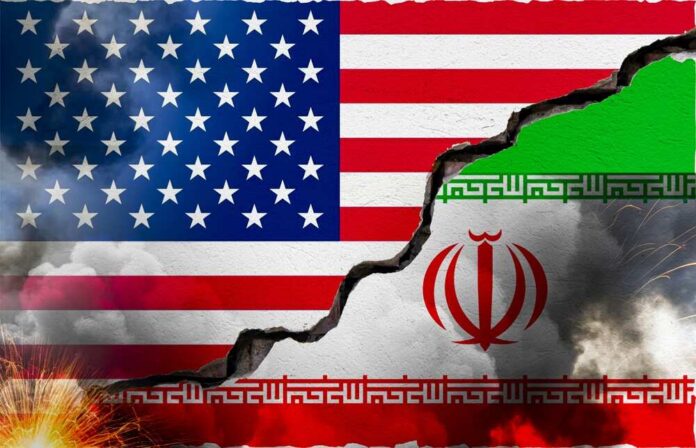
President Trump put a 48-hour clock on Iran to reopen the Strait of Hormuz—an oil chokepoint that can hit American families right in the wallet if the regime keeps playing games.
Quick Take
- Trump warned Iran, “all Hell will reign down” if shipping through the Strait of Hormuz is not restored by a 48-hour deadline.
- The ultimatum follows weeks of shifting deadlines, ongoing U.S.-Israel strikes, and failed movement toward reopening the waterway.
- Iran’s military leadership rejected the warning and issued its own “gates of hell” rhetoric back at the U.S.
- With roughly 20–30% of global oil trade tied to the strait, any prolonged disruption risks higher fuel prices and broader economic pain.
Trump’s 48-hour ultimatum raises the stakes
President Donald Trump used Truth Social on Saturday, April 4, to reissue a 48-hour ultimatum to Iran: reopen the Strait of Hormuz or face major consequences. The post echoed earlier threats and used religious language, including “Glory be to GOD,” while warning that “all Hell will reign down” if the route remains closed.
The administration’s message frames the Strait as a red line because closure pressures global energy markets and U.S. consumers.
U.S. President Donald J. Trump in a post Easter Sunday directed at Iran via TruthSocial: “Tuesday will be Power Plant Day, and Bridge Day, all wrapped up in one, in Iran. There will be nothing like it!!! Open the Fuckin' Strait, you crazy bastards, or you'll be living in Hell -… pic.twitter.com/V4nzX1lR7z
— OSINTdefender (@sentdefender) April 5, 2026
Trump’s latest warning fits a pattern of escalating deadlines tied to the same demand. A March 21 threat referenced striking Iran’s power plants if the strait was not opened within 48 hours, according to the reporting.
Two days later, Trump postponed action for five days after what he described as “productive conversations,” effectively moving timelines again. Saturday’s post served as a public countdown, signaling the White House expects compliance soon.
Why the Strait of Hormuz matters to everyday Americans
The Strait of Hormuz is one of the world’s most important energy chokepoints, carrying an estimated 20–30% of global oil trade. When traffic is disrupted, crude prices and shipping costs can jump quickly, feeding directly into gasoline and home-energy bills.
For voters already burned by years of inflation and high energy costs, a prolonged shutdown is not an abstract foreign-policy problem—it is a pocketbook issue with immediate consequences.
Shipping disruptions also ripple beyond the gas pump. Higher fuel costs raise transportation and manufacturing expenses, which can push up prices across the supply chain. The research summary notes that markets have been shaken and key routes cut as the conflict has intensified.
While exact price impacts were not quantified in the provided material, the stakes are clear: the longer the strait stays restricted, the more leverage hostile actors gain over global commerce.
Iran rejects the warning as mediators search for off-ramps
Iran’s leadership did not accept Trump’s terms quietly. Gen. Ali Abdollahi Aliabadi, tied to Iran’s Khatam al-Anbiya Central Headquarters, reportedly dismissed the U.S. threat as “stupid” and responded with his own “gates of hell” warning.
That exchange underscores the risk of miscalculation when both sides rely on public ultimatums. The available research does not confirm any reopening as of the Saturday reminder.
At the same time, mediation efforts were described as ongoing, with Pakistan, Turkey, and Egypt seeking talks in Pakistan. No agreement was confirmed in the research provided, and the status of any backchannel diplomacy remains unclear.
That uncertainty matters because the deadline-driven approach can box leaders into corners, especially when domestic politics and credibility are on the line for both Washington and Tehran.
Domestic politics: deterrence versus escalation
Sen. Lindsey Graham praised the ultimatum and pointed to “Operation Epic Fury,” described as crippling Iran, as proof that pressure works. Supporters see the threat as leverage intended to restore global shipping and curb Iranian brinkmanship.
Critics, not detailed in the provided material, generally worry about escalation. What is documented is that the administration has paired hard public warnings with intermittent pauses, suggesting a mix of deterrence and negotiation.
Sources:
Trump reminds Iran ultimatum: Reopen Strait of Hormuz or “all Hell” will reign down