

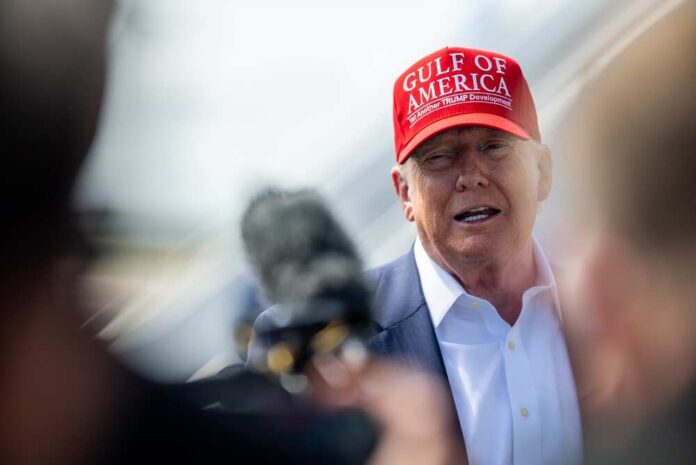
Donald Trump’s endorsement of Ken Paxton turned a close Texas Senate runoff into a loyalty test that could reshape the Republican Party’s path to November.
Quick Take
- Trump publicly backed Texas Attorney General Ken Paxton over incumbent Senator John Cornyn in the Republican runoff [1][2]
- Trump described Paxton as a “true MAGA warrior” and criticized Cornyn for not supporting him earlier [1][2]
- The endorsement landed in a race that reporting described as extremely close, with early voting already underway [1][2]
- Vice President JD Vance echoed Trump’s case, saying Paxton had been there “for the country” when it mattered [3]
Trump’s Endorsement Changes the Race’s Center of Gravity
President Donald Trump endorsed Paxton on social media after months of pressure from Texas Republicans who wanted him to pick a side. Trump praised Paxton’s record and labeled him a fighter aligned with his agenda, while also taking a swipe at Cornyn for being slow to back him.
Reporting from the runoff suggests Trump’s message reached voters during early voting, giving the endorsement immediate symbolic force even if many ballots had already been cast [1][2].
That timing matters because Republican primaries in the Trump era often reward the candidate who best captures the movement’s energy, not just the one with the deepest résumé.
In this case, Trump’s backing was widely treated as a major boost for Paxton in a contest that had already been tight. Coverage also noted that Cornyn finished first in the initial round, which shows the race began with a real incumbent advantage before Trump stepped in [1].
Cornyn’s Electability Argument Runs Into Trump’s Influence
Cornyn’s side has argued that Paxton could be a liability in a general election and a drag on down-ballot Republicans. That case is rooted in the ordinary logic of incumbency: seniority, broader name recognition, and a safer profile can matter in a competitive November race.
But the material provided here does not establish that argument as proven fact. It shows a political fight over whether party loyalty or general-election caution should decide the runoff [4][6].
Reporting around the race also says polling was close enough that the endorsement could matter, which is exactly why it became a national story.
When a sitting president weighs in on a contested Senate primary, the race stops being local in any normal sense. It becomes a test of who controls the party’s identity and whose voters show up.
That is one reason some Republicans privately worried that backing Paxton could make the seat more vulnerable later [1][6].
What the Endorsement Signals About GOP Power in 2026
Trump’s choice reflects a broader reality in the modern Republican Party: the president’s endorsement can outweigh establishment preferences, especially when the fight is framed in terms of loyalty, border policy, and cultural alignment.
Paxton’s supporters can now claim the party’s central figure is on their side, while Cornyn’s allies must argue that experience and broader appeal still matter. Vice President JD Vance reinforced that message by saying Paxton had been there when it counted [3].
Trump Gives Ken Paxton ‘Complete and Total Endorsement’ in Texas Senate Primary Against John Cornyn
Well maybe we're just tired of being the political equivalent of the Washington Generals. I can't think of any issue I could compromise on with the current crop of democrats.— papu (@papu19747338) May 20, 2026
The larger story is not just about one Texas race. It shows how much of American politics now runs through personal allegiance, media amplification, and distrust of party elites.
Many voters on both the right and the left see Washington as a system that protects insiders while ordinary people absorb the cost of bad decisions.
This runoff puts that frustration on display: one side calls it loyalty, the other calls it governance, and voters will decide which word matters more [4][6].
Sources:
[1] YouTube – Trump Endorses Ken Paxton In Texas GOP Senate Primary Runoff
[2] YouTube – Trump endorses Ken Paxton in Texas GOP Senate runoff
[3] YouTube – VP Vance on President Trump Endorsing Ken Paxton in …
[4] Web – Trump endorses Ken Paxton in Senate GOP runoff
[6] YouTube – Trump Taps Paxton Over Incumbent Cornyn in Texas Senate Race