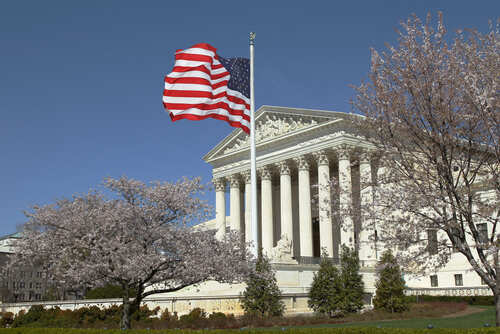
The Supreme Court delivered a unanimous victory for law enforcement on January 14, 2026, affirming that police officers can enter homes without warrants during genuine emergencies—a crucial win that protects officers from second-guessing when lives hang in the balance.
Story Highlights
- Supreme Court unanimously backs Montana police who entered home without a warrant during a suicide threat call
- Justice Kagan’s opinion requires only an “objectively reasonable basis” for emergency entries, rejecting a stricter probable cause standard
- Montana Attorney General Austin Knudsen hails the ruling as “a huge win for law enforcement,” enabling officers to keep communities safe
- Decision resolves nationwide confusion over Fourth Amendment emergency exceptions, standardizing reasonable entry protocols
Supreme Court Clarifies Emergency Entry Standards
The Supreme Court’s unanimous decision in Case v. Montana establishes clear guidelines for police emergency entries, rejecting demands for probable cause standards that would paralyze officers during life-threatening situations.
Justice Elena Kagan wrote the opinion affirming that officers need only an “objectively reasonable basis” to believe someone inside requires emergency assistance. This sensible standard prevents bureaucratic red tape from blocking potentially life-saving interventions while maintaining constitutional protections against unreasonable searches.
🚨BREAKING🚨
The Supreme Court just ruled 9-0 that a warrantless "welfare check," where police shot Trevor Case in his own home, was justified in Case v. Montana.
Apparently, police DO NOT need probable cause to break into gun owners' homes WITHOUT WARRANTS & shoot them. https://t.co/S2KHSx3Mos pic.twitter.com/hWrTWu7UqT— Gun Owners of America (@GunOwners) January 14, 2026
Montana Case Background Exposes Constitutional Balance
The case originated in 2021 when Anaconda police responded to a 911 call from William Case’s ex-girlfriend reporting suicide threats. Officers found blood-like substances and received no response to knocking, prompting their warrantless entry.
Case emerged from a closet, pointing a gun at officers, leading to a shooting that wounded him and his subsequent conviction for assaulting a peace officer. His challenge claimed Fourth Amendment violations, but the Court recognized legitimate emergency circumstances.
Law Enforcement Leaders Praise Practical Ruling
Montana Attorney General Austin Knudsen celebrated the decision as providing essential tools for officer safety and community protection. “This is a huge win for Montana law enforcement,” Knudsen stated, emphasizing how the ruling “allows officers to keep communities safe.”
Anaconda Police Chief Bill Sather echoed these sentiments, expressing relief that the Supreme Court “makes it easier for officers to do their job” without fear of constitutional violations during genuine emergencies.
Fourth Amendment Protection Remains Strong
The Court’s decision reinforces rather than weakens constitutional protections by establishing objective standards that prevent abuse while enabling legitimate emergency responses. The ruling builds on the 2006 Brigham City v. Stuart precedent, which first articulated the emergency aid exception to warrant requirements.
This approach protects citizens from arbitrary police intrusion while ensuring officers can respond effectively to suicide threats, domestic violence, and other life-threatening situations without bureaucratic obstacles.
The unanimous nature of this decision demonstrates bipartisan recognition that reasonable emergency protocols serve both public safety and constitutional principles. By rejecting extreme positions that would either eliminate warrant protections or paralyze emergency responses, the Court struck a balanced approach that empowers law enforcement to save lives while maintaining judicial oversight of police conduct.
Sources:
Court finds police properly entered man’s home despite absence of a warrant
Supreme Court backs warrantless entry in emergencies
Supreme Court Opinion Case v. Montana