

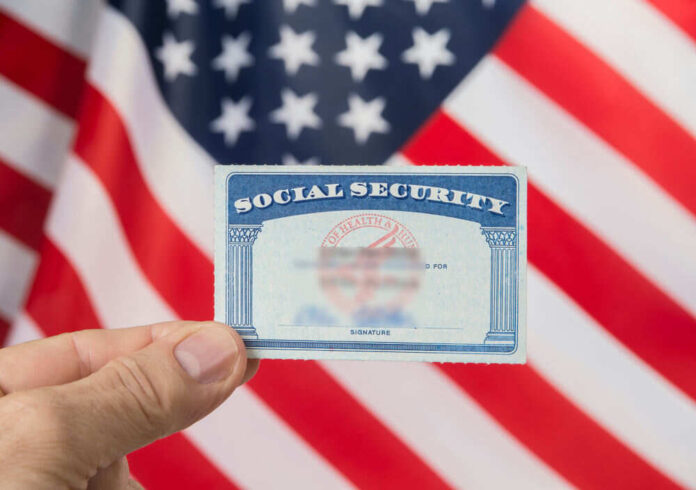
The federal government will stop issuing paper checks for Social Security and all other federal payments in just 13 days, forcing millions of Americans into a digital-only system whether they want it or not.
See the video below.
Story Overview
- The September 30, 2025, deadline eliminates all federal paper checks, including Social Security benefits.
- Executive Order 14247 mandates a complete transition to electronic payments across all agencies.
- Recipients still getting paper checks face immediate payment disruption without urgent action.
- The government claims fraud reduction and cost savings justify forcing digital adoption.
Government Forces Digital Payment Transition
President Trump’s administration inherited this sweeping mandate from the previous White House, which issued Executive Order 14247 on March 24, 2025.
The order requires every federal agency to eliminate paper checks by September 30, 2025, affecting Social Security beneficiaries, veterans, tax refund recipients, and federal contractors.
Treasury Secretary Scott Bessent now leads implementation of what officials call the largest modernization of federal payment systems in decades.
The transition impacts anyone still receiving paper checks from any federal source. While Treasury claims the vast majority of Americans already receive electronic payments, those who haven’t made the switch face an immediate crisis.
Recipients must enroll in direct deposit through their bank, sign up at GoDirect.gov, call 800-967-6857, or obtain a Direct Express Debit Mastercard for those without traditional banking relationships.
Fraud Claims Drive Policy Justification
Treasury officials justify this forced transition by citing mail theft complaints that have increased substantially since the COVID-19 pandemic.
They claim Treasury checks are 16 times more likely to be reported lost, stolen, returned undeliverable, or altered compared to electronic transfers. The department estimates paper check processing infrastructure costs taxpayers over $657 million annually in Fiscal Year 2024 alone.
While fraud reduction sounds reasonable, forcing elderly Americans and others comfortable with paper checks into digital systems raises legitimate concerns about government overreach.
Many of these citizens built this country and deserve payment methods that work for them, not bureaucratic convenience. The administration should have provided more transition time and support rather than imposing arbitrary deadlines that create unnecessary hardship for vulnerable populations.
Unbanked Americans Face Greatest Hardship
The policy particularly impacts unbanked and underbanked Americans who may lack traditional banking relationships or digital literacy skills.
Rural communities with limited banking access and elderly recipients unfamiliar with electronic systems face the steepest learning curves. Federal agencies report increased call volumes as the deadline approaches, suggesting many Americans remain unprepared for this mandatory transition.
The American Bankers Association provided recommendations through Treasury’s feedback process, indicating banking industry cooperation with expanding their customer base. However, this raises questions about whether financial institutions adequately serve all populations or if some Americans will be left behind by forced digitization.
The Taxpayer Advocate Service encouraged public participation in the feedback process, acknowledging potential challenges for specific groups.
Constitutional and Practical Concerns
This mandate represents another example of federal agencies dictating how Americans must conduct their financial affairs rather than preserving individual choice.
While the current administration inherited this policy, it highlights how government bureaucrats impose one-size-fits-all solutions without considering diverse citizen needs and preferences.
The Constitution never envisioned federal agencies forcing Americans to adopt specific technologies to receive benefits they’ve earned through decades of contributions.
Recipients who fail to transition by September 30 face payment delays and potential disruptions to essential income streams. The government created this crisis through poor planning and insufficient transition time.
Americans deserve better from their federal agencies, especially those who’ve faithfully contributed to programs like Social Security throughout their working lives and now face technological barriers to accessing their own money.
Sources:
American Bankers Association – Federal Electronic Payment Mandate
Treasury Department Press Release SB0223
Taxpayer Advocate Service – Electronic Payment Transition Comments
White House Executive Order 14247
Federal Register – Transition to Electronic Payments
Social Security Administration Advocate News
Treasury Executive Order Resources
Department of Labor FECA Payment Transition