

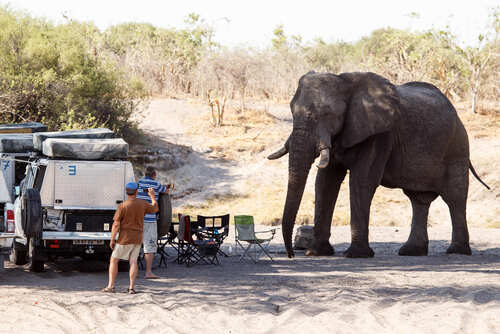
A notorious wild elephant named Oyewan has now claimed its third human life in Thailand’s Khao Yai National Park, raising urgent questions about prioritizing endangered animals over innocent tourists’ safety.
Story Highlights
- A 65-year-old Thai tourist was trampled to death by repeat-offender bull elephant Oyewan during a morning walk in Khao Yai National Park.
- This marks the third confirmed fatality by Oyewan, with possible links to additional unsolved deaths.
- Park authorities plan a Friday meeting to decide Oyewan’s fate, weighing relocation or behavior modification.
- Escalating human-elephant conflicts in Thailand have caused over 220 human deaths since 2012 amid wild elephant population growth to 800.
Fatal Encounter in Khao Yai National Park
A 65-year-old tourist from Lopburi province died Monday morning when a wild bull elephant, Oyewan, trampled him during a walk on a park trail with his wife.
Park rangers intervened, scaring off the elephant and allowing the wife to escape unharmed. Khao Yai National Park chief Chaiya Huayhongthong confirmed this as Oyewan’s third known kill. The incident occurred in Thailand’s oldest national park, a UNESCO site popular with visitors seeking wildlife encounters.
Elephant kills tourist at national park in Thailand, third fatality linked to the same animal https://t.co/N3vOddeYpl
— CBS Mornings (@CBSMornings) February 2, 2026
Repeat-Offender Elephant Sparks Management Crisis
Oyewan roams the edges of Khao Yai, drawn to food sources near villages and trails. Park chief Chaiya stated, “He was the third person killed by Oyewan,” hinting at potential involvement in other unsolved cases.
Thailand’s wild Asian elephant population has surged from 334 in 2015 to around 800, fueling human-elephant conflicts across 44% of provinces. Bull elephants like Oyewan often enter musth, a hormonal state that increases aggression, complicating park safety.
Escalating Human-Elephant Conflicts Nationwide
From 2014 to 2023, Thailand recorded 341 human-elephant conflict incidents, resulting in 360 human casualties, including 189 deaths and 171 injuries.
Eastern Thailand near Khao Yai, including Prachinburi and Chanthaburi, recorded 147 cases, peaking in 2018 and 2023 during the rainy seasons, when crops attract elephants.
In protected areas from 2012 to 2018, 107 incidents caused 45 human deaths. Over 220 human fatalities by wild elephants have occurred since 2012, underscoring a rising trend.
Conflicts typically arise from elephants foraging on crops, leading to confrontations. Farm attacks account for 55.56% of human casualties, while forest encounters like this tourist death make up 27.78%. Habitat loss and forest fragmentation since 2000 have driven elephants into human areas, challenging conservation efforts.
Stakeholders Clash Over Solutions
The Department of National Parks, Wildlife and Plant Conservation (DNP) oversees responses, administering contraceptives to control the elephant population boom while tracking casualties.
Chaiya coordinates the Friday meeting to decide if Oyewan faces relocation or behavior modification.
Local farmers from 156,000 families suffer crop damage, pushing for electric fences that cause 42% of elephant deaths. Communities demand stronger protections amid tensions with conservationists favoring coexistence.
Power dynamics pit DNP authority against local pressures, including past poisonings. Farmers endure economic losses from raids that destroy thousands of trees, while tourism revenue is at risk in parks like Khao Yai. Short-term, safety alerts may deter visitors; long-term, escalating conflicts pressure policy shifts toward habitat management and barriers.
Impacts and Expert Views on Prevention
Tourists face rare but high-profile risks, locals grapple with fear and losses affecting 400,000 farmers, and elephants suffer retaliation deaths. Wildlife tourism in Khao Yai is at risk of decline due to safety concerns.
Experts link surges to high elephant density, low forest cover, and the cultivation of rainy-season crops. Peer-reviewed studies recommend habitat corridors and non-lethal deterrents, such as bees, though locals advocate lethal control given the rising number of casualties despite efforts.
Sources:
https://humanelephantvoices.org/en/human-elephant-conflict/
https://pmc.ncbi.nlm.nih.gov/articles/PMC12071072/
https://www.nationthailand.com/blogs/sustaination/40044035
https://en.wikipedia.org/wiki/Elephants_in_Thailand
https://www.bootsnall.com/articles/elephants-attacking-in-khao-yai-national-park-thailand.html