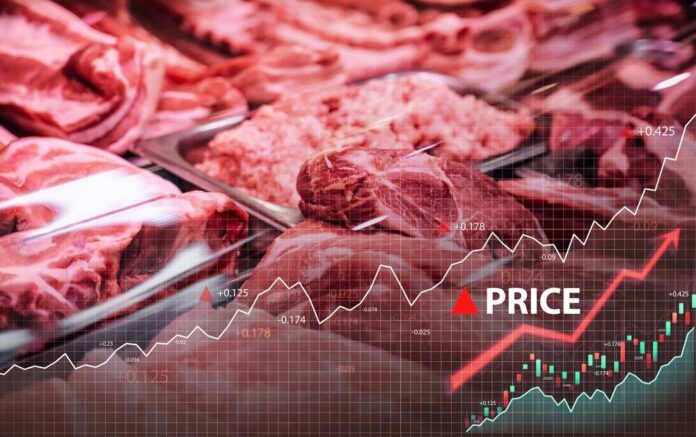
Beef prices have peaked but remain elevated due to tight domestic supply.
International imports continue as U.S. supply struggles to meet demand.
Industry dynamics involving producers and retailers hinder price reduction.
Future relief is anticipated but not immediate, leaving consumers waiting.
Current State of Beef Prices
Beef prices have reached unprecedented levels in recent years, primarily due to deteriorating pasture conditions and shrinking cattle inventory. According to the Farm Bureau, retail beef prices soared to record highs in 2024. The ongoing scarcity of feeder cattle has only compounded the issue, as highlighted in the Department of Agriculture’s “Cattle on Feed” report. With these factors in play, the cost of beef remains a significant burden for consumers.
Despite the peak in prices, there is little pressure to drive them down immediately. Wells Fargo Agri-Food Institute’s Michael Swanson notes that while a slight increase in cattle availability is expected by 2026, the current demand still necessitates reliance on international imports. This indicates that domestic beef supplies are insufficient to meet consumer needs, thereby sustaining higher prices.
Market Dynamics and Industry Challenges
One of the key challenges in reducing beef prices lies within the industry’s supply chain. From cattle producers to retailers, each player in the chain seeks to protect their profit margins. This reluctance to compromise on profits makes it difficult to pass cost reductions onto consumers. Swanson suggests that competitive pressures within the industry may eventually lead to lower prices, but this process is neither straightforward nor immediate.
The recent announcement by Tyson Foods to close a significant beef processing plant and reduce operations at another facility signals a potential turning point. This move has already caused a temporary dip in live cattle prices, hinting at possible future price adjustments. However, the path to lower retail prices remains uncertain and gradual.
Long-Term Outlook and Consumer Impact
Looking ahead, experts like Swanson predict a potential decline in cattle prices, similar to the 10% drop witnessed in 2014. If such a decrease occurs, it could eventually lead to reduced wholesale and retail beef prices. However, the timeline for such changes remains unclear, leaving consumers to bear the burden of high prices in the interim. The frustration among consumers is palpable as they await tangible relief.
While the industry may be at a turning point, the complexities of the beef supply chain and market forces mean that immediate price reductions are unlikely. Consumers, therefore, must prepare for a prolonged period of elevated beef prices, despite the potential for eventual relief.