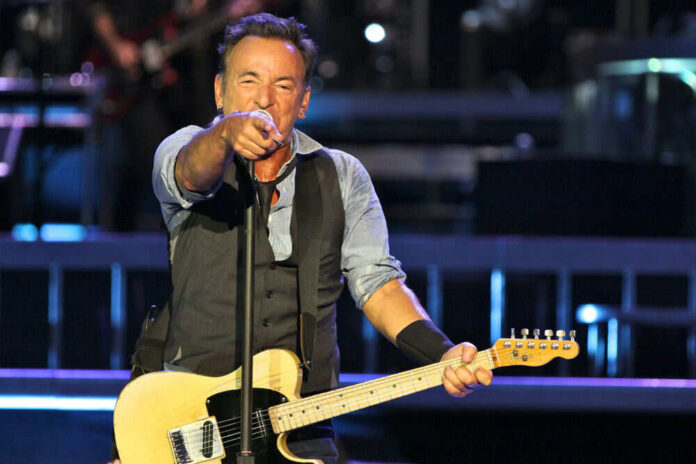
Bruce Springsteen’s rare Senate endorsement lit a fuse under a Michigan race already sparking over an ad many called antisemitic.
Story Snapshot
- Springsteen endorsed Abdul El-Sayed, drawing cheers and sharp backlash from fans and voters.
- A viral outside-group ad blamed grocery prices on U.S. aid to Israel; critics called it antisemitic.
- El-Sayed’s campaign said it had nothing to do with the ad and disavowed any link.
- The fight spotlights three issues: the ad’s content, who authorized it, and what a celebrity owns by endorsing.
What Springsteen Did And Why It Touched A Nerve
Bruce Springsteen endorsed Abdul El-Sayed for the United States Senate in Michigan. The move drew fast pushback from some fans who tied the singer to a controversial online ad that slammed U.S. support for Israel and linked it to high grocery bills. Celebrity nods often feel symbolic, but they can carry heat in close races. Research shows big-name backing can help or hurt, depending on the moment and the messenger. The fan reaction shows the risk side of that ledger.
Dr. El-Sayed is a fighter for our American Constitution, he’s a fighter for our American Democracy, and he’s a fighter against the corrupt, lawless, and anti-American leadership currently in the White House. That’s why I’m in his corner 100%.
Bruce Springsteen pic.twitter.com/pYNOZt2cdF
— Bruce Springsteen (@springsteen) November 2, 2026
The uproar here flows from a clear chain. An outside political group, not El-Sayed’s campaign, produced a video where shoppers say they must set aside money “for killing Palestinians,” then fault U.S. aid to Israel for higher prices. The Anti-Defamation League labeled the ad a “case study in antisemitism,” and major outlets echoed the charge. That is strong language and likely enough to sour swing voters who dislike culture-war shocks in pocketbook debates.
What El-Sayed Said And What The Record Shows
El-Sayed’s campaign said it had nothing to do with the video. His team stated the spot was not affiliated with the campaign and that only the campaign speaks for the candidate. This matches a common pattern in modern campaigns where outside groups spend independently online. The law bars coordination, but voters still connect the dots. In this case, the ad’s sponsor was a left-wing group, not the campaign, even as the message aimed to help El-Sayed.
Reporting also shows El-Sayed’s policy views are sharply critical of Israel’s government. He argues against United States military aid to Israel and disputes that Israel is a United States ally, positions that opponents say rhyme with the ad’s frame. News coverage has cataloged his hard lines on Gaza and aid debates, giving critics ammunition to say the ad and the candidate share a worldview even if they did not share production plans. That logic can move voters even when the facts on authorization are clear.
Why The Ad Matters More Than The Producer Label
Voters judge messages more than disclaimers. Studies show disclosure can soften an attack ad’s punch, but content still sticks in memory. Online, sponsor lines are easy to miss, which lets harsh messages travel farther before the fact-checks arrive. That means El-Sayed faces the shadow cost of a video he did not make, while Springsteen lives with the splash zone from boosting a candidate caught in that storm. Fair or not, politics rarely separates signal from noise for long.
Bruce Springsteen is facing backlash from some longtime fans after endorsing Michigan Democratic Senate nominee Abdul El-Sayed on Election Day.
Read more about Springsteen's endorsement and the heated reaction from fans: https://t.co/kFDNcEVK8t pic.twitter.com/eqGrqTIwqK
— Jonathan Htet (@jonathan_htet) November 4, 2026
Some critics also cite El-Sayed’s response to a streamer’s rant about American Jews and Israel. El-Sayed called the remarks “inappropriate” and stood against rhetoric that puts the Jewish community at risk, but he did not denounce the person by name in stronger terms. That choice fueled claims that he pulls punches on antisemitism. From a conservative lens, the standard is simple: condemn bigotry fast, by name, and without hedging. Precision and moral clarity earn trust; word games lose it.
How Springsteen’s Bet Could Play In Michigan
Celebrity endorsements can boost turnout with the base, but they also can trigger backlash among moderates who dislike culture-war tones and moral lectures from stars. Oprah Winfrey’s 2008 support for Barack Obama likely helped in a Democratic primary; Michigan’s general electorate in a tense year is a different arena. Springsteen’s brand is working-class grit. Aligning with a candidate under fire for a message many see as scapegoating could erode that bond, unless El-Sayed’s team resets the frame fast.
The path forward runs through three firm steps. First, maintain a bright line on outside ads and reject any content that targets a people or faith. Second, explain policy on aid to allies in terms of American interests, not moral blame. Third, focus on inflation with plans that do not pin rising prices on foreign conflicts. Voters reward clear priorities: safety, prosperity, and fairness. When campaigns mix grocery lists with grievance, they buy controversy and return the receipt later.
Sources:
foxnews.com, forward.com, newsweek.com, timesofisrael.com, yahoo.com, politifact.com, clevelandjewishnews.com, jns.org, news.ncsu.edu, sers.fec.gov