

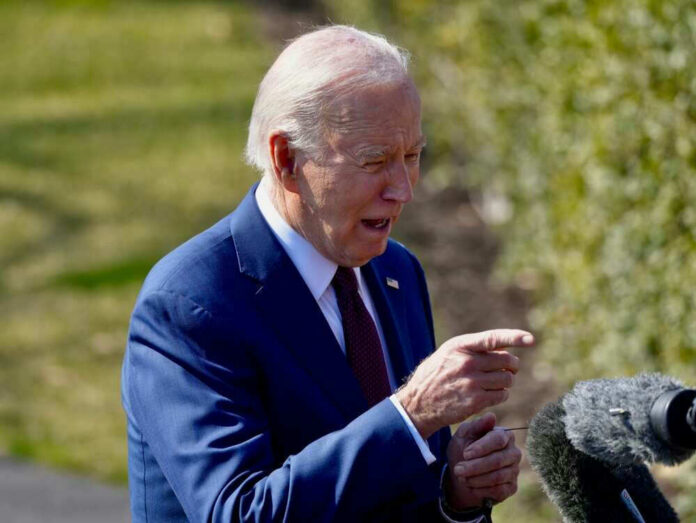
Joe Biden now says his son Hunter’s criminal conviction was eating at him when he walked onto the debate stage against President Trump.
Story Snapshot
- Biden’s new memoir says Hunter’s June 11, 2024 gun conviction weighed on him emotionally during the June 27 debate.
- Biden writes that the prosecution “took a piece out of me,” even though his own Justice Department brought the case.
- Trump brought up Hunter’s conviction on stage, making it a live issue in real time, not just a private burden.
- Biden gave several other explanations right after the debate, including a cold, exhaustion, and jet lag from overseas travel.
Biden’s Memoir Points To A Private Wound
In his memoir “Promise Me, America,” Biden writes that Hunter’s conviction was “something else” on his mind beyond simple tiredness. He says the debate “didn’t feel right from the start.” That phrase suggests Biden felt off before Trump even said a word, pointing to a burden he carried onto the stage rather than one triggered mid-debate.
Biden goes further, writing that prosecutors “failed to break Hunter” but admitting “they took a piece out of me.” That is a striking admission from a sitting president describing his own son’s criminal case. It frames the conviction as personal injury, not political noise he could shrug off before facing Trump in Atlanta.
The timing lines up in a way that is hard to ignore. Hunter Biden was convicted on three federal felony counts tied to a 2018 gun purchase on June 11, 2024. The debate happened just sixteen days later, giving Biden little time to process a guilty verdict against his own son before facing voters on live television.
Trump Raised Hunter On Stage, Turning Private Pain Public
This was not a background detail audiences had to dig up later. Contemporaneous coverage confirms Trump brought up Hunter’s conviction directly during the debate, after Biden criticized Trump’s own criminal conviction. The exchange turned a private legal wound into an on-stage flashpoint in front of tens of millions of viewers.
Biden also calls Hunter’s prosecution unfair, even though his own administration’s Justice Department pursued it. That claim sits oddly next to his broader defense of federal law enforcement, and it invites skepticism from readers who expect consistency between a president’s stated principles and his family’s legal outcomes.
Biden Gave Different Reasons At The Time
Here is the catch. Right after the debate, Biden did not point to Hunter. He told aides and reporters he was exhausted, had not prepared the right way, and was fighting a bad cold. He later said jet lag from trips to France, California, and Italy wore him down before he ever stepped on stage.
A Biden fundraiser, John Morgan, said the president was over-coached and over-practiced heading into the debate, arguing the grueling preparation itself backfired. Other reporting described a compressed travel schedule and Camp David cram sessions that left Biden “worn out” and his thinking “muddled” according to a source close to the process.
Those contemporaneous explanations matter because they came from Biden and his team in the days right after the debate, before a memoir needed defending. A House Oversight Committee report later argued the performance reflected more than a cold or bad prep, pointing to forgotten facts and confused names as signs of something deeper.
A Familiar Tactic, A Harder Question To Settle
Blaming a family crisis for a bad public moment is not new in American politics. Candidates have weathered attacks on spouses, parents, and children going back to Andrew Jackson’s era, and defenders have long argued those attacks unfairly bleed into judging the candidate himself. Biden’s framing fits that long pattern of personalizing political damage through family.
What makes this different is that Biden is not just defending against an attack on Hunter. He is using Hunter’s conviction to explain away his own widely seen stumbling performance against Trump, one that ultimately helped end his reelection bid. Voters can weigh his memoir account against the explanations he gave in real time and decide which rings truer.
Biden’s own words, offered within days of the debate, told a simpler story of illness, fatigue, and bad coaching. His memoir, written with his legacy and reelection decision on the line, adds Hunter’s conviction to the list. Both things carrying weight is possible. But only one version came before the political stakes of defending his record took hold.
Sources:
nypost.com, theatlantic.com, transcripts.cnn.com, us.headtopics.com, economictimes.indiatimes.com, reuters.com, fortune.com, bangordailynews.com, academic.oup.com