

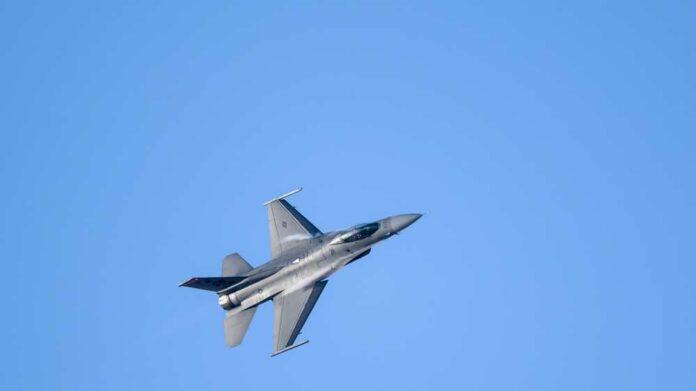
The Army wants to put helicopters back into the tight airspace where 67 people died, but only if the nation’s civil regulator signs off first.
At a Glance
- The Army told lawmakers it aims to restart helicopter training near Reagan National, pending Federal Aviation Administration approval.
- The Federal Aviation Administration said no flights can resume without its formal approval and had not received a request at the time of the reports.
- National Transportation Safety Board leaders say 47 safety recommendations from the crash probe remain open, including collision alerting upgrades.
- Families and lawmakers want proof of fixes and question why training must occur next to a busy airline approach.
What Is Actually On The Table
The Army briefed select members of Congress on a plan to restart helicopter testing and training around the Pentagon and Ronald Reagan Washington National Airport as soon as early December, but not without Federal Aviation Administration approval. The Federal Aviation Administration confirmed any restart requires its approval and said it had not received a formal request when asked, underscoring that discussion is not authorization. That clarity matters. Process signals discipline. In crowded airspace, discipline is safety’s first layer.
Reports described limited test or training hops, not an open-ended return to old traffic patterns. The Army signaled coordination with the Federal Aviation Administration before any flights, which frames this as a regulated, not unilateral, move. That is the right channel, but paperwork alone cannot lower risk. The missing piece in public view is the Army’s detailed safety case: routes, separation rules, weather floors, traffic alerts, and the cut-off triggers for a no-go call.
The Safety Ledger After A Mass-Casualty Crash
The National Transportation Safety Board said systemic failures in airspace design, oversight, and risk management by both the Federal Aviation Administration and the Army contributed to the midair collision, and issued dozens of fixes, including traffic-display and audible alerting requirements. The Board’s chair later stressed that 47 related recommendations remain open, including Automatic Dependent Surveillance–Broadcast equipage and cockpit alerting that crews can hear under stress. Those are not bells and whistles. They are guardrails when judgment and workload collide.
Opponents ask a fair question that any pilot or parent would ask: what has changed? Families and a former Army aviator demanded clear proof that the procedures, equipment, and training now in place would stop a repeat. That concern sharpened after a separate May 2025 near miss that forced two airline crews to wave off landings near the Pentagon, prompting a pause in military helicopter training flights. A system that misses once must earn its way back with receipts, not reassurances.
Congressional Pressure And The Question Of Place
Rep. Don Beyer urged the Army to move training away from the approach to one of the country’s busiest runways, and he backed closing a helicopter route that ran close to DCA’s Runway 33 arrival path. Sen. Mark Warner pressed for more detail before any restart. This is classic oversight: ask for the risk math, then match the venue to the mission. If the Army needs urban, complex airspace to keep crews sharp, show why DCA’s slice is essential and which safer substitutes were rejected, with cost and readiness tradeoffs on the record.
The Federal Aviation Administration’s on-record stance—no restart without approval—aligns with common sense and conservative values: set the rule, enforce the rule, document the risk, then proceed. The Army’s outreach to the regulator is the right lane, but the lack of a public, technical safety case lets rumors fill the gap and feeds mistrust. A tight, transparent package would help: aircraft equipage lists, radio procedures, traffic deconfliction diagrams, and a red-line weather and traffic matrix any citizen can understand.
How To Earn Back Public Trust, Fast
Three steps would change the tone. First, file the formal request and release a readable summary the same day: routes, altitudes, communications plans, and how Automatic Dependent Surveillance–Broadcast and audible alerts will work in the cockpit. Second, stage a joint Federal Aviation Administration–Army simulation of recent DCA traffic with the proposed helicopter tracks and publish the miss-distance results. Third, invite National Transportation Safety Board observers to the test phase and make their notes public. Trust grows in daylight and dies in opacity.
The U.S. Army is looking to resume helicopter training flights near Ronald Reagan Washington National Airport (DCA), less than two years after a midair collision between an Army helicopter and a regional jet killed 67 people. https://t.co/rwX2bydQ1p pic.twitter.com/JJzjGlQ2gQ
— AvWeb (@avwebnews) November 25, 2026
Opponents argue for delaying until every recommendation is complete. That sounds safe but can become a moving goalpost. A smarter bar is measurable risk reduction tied to the top hazards from the crash record, verified by the regulator, with live monitoring. If the Army can show that alerting, separation, and procedures cut collision risk to a level the Federal Aviation Administration accepts, then limited, conditions-based training should resume. If not, shift the venue. Safety is not a vibe; it is a number backed by proof.
Sources:
cbsnews.com, nbcwashington.com, flyingmag.com, avweb.com, adn.com, beyer.house.gov, subramanyam.house.gov