Thousands of bottles of a common blood pressure drug were pulled from the market because the tablets may not break down the way they should.
Quick Take
- The recall covers 11,460 bottles of chlorthalidone tablets sold nationwide.
- The problem is failed dissolution, which can keep a tablet from releasing medicine properly.
- The affected product is 25 milligrams in 100-count and 1,000-count bottles.
- The FDA has not yet assigned a recall class, which leaves some public questions unanswered.
What the Recall Covers
The recall involves chlorthalidone tablets made by Inventia Healthcare Limited and distributed in the United States by Rising Pharma Holdings Inc.[1][4]
The affected bottles are 25 milligrams, with 100-count bottles marked RISA24001 and 1,000-count bottles marked RISB24002.[1][4] The packaging also lists an expiration date of April 2027.[1][4]
That sounds like a dry quality-control issue, but the stakes are plain. If a tablet does not dissolve as intended, the medicine may not enter the body the way it should.[2][4] For a drug used to manage high blood pressure, that matters because patients depend on a steady dose, not a maybe.[2][4]
Why Dissolution Matters More Than It Sounds
Dissolution is the point at which a tablet begins releasing its active ingredient in the body. When that process fails, the pill can look fine and still perform badly.[2][4] That is what makes this kind of recall frustrating. There may be no visible defect, no bad smell, and no clear warning until testing exposes the problem.
That also explains why recalls like this often unsettle patients. A bottle can sit on a shelf, undergo normal use, and still fall short in performance. The core issue is not dramatic contamination or an obvious breakdown. It is the more subtle failure of a tablet to do its job once swallowed.[2][4]
What Patients Should Pay Attention To
The FDA guidance is simple: check the lot number on the bottle and compare it with the recall notice.[14] If your bottle matches, call your pharmacist or health care provider before making any changes.[1][4] That warning matters because people should not suddenly stop taking blood pressure medicine without medical advice.
The public notice does not provide a detailed, step-by-step consumer plan, and it has not yet assigned a recall class.[1][3] That leaves some uncertainty. Still, the basic message is clear enough. Patients need to confirm whether their bottle is included, then ask a professional what to do next.[1][14]
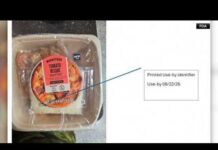
FDA recalls 11,460 bottles of Chlorthalidone after dissolution failures threaten drug effectiveness, prompting a voluntary recall by Inventia Healthcare. What this means for patients and clinicians, and how safety testing squares with access to essential meds. pic.twitter.com/c2BANZm4iV
— Azat TV (@azattelevision) June 22, 2026
Why This Recall Fits a Bigger Pattern
This case is not an isolated oddity. Failed dissolution specifications are a known cause of drug recalls, and the Food and Drug Administration has even highlighted them in recall training materials.[13]
More broadly, quality-assurance problems account for a large share of drug recalls, which shows how often medicine makers struggle with process control rather than headline-grabbing disasters.[11]
That broader pattern helps explain the gap between public fear and regulatory reality. A recall can sound terrifying, yet it often reflects caution rather than proof of harm.
The FDA and manufacturers act early because they would rather pull a weak batch than wait for clear injury. That is the logic at work here, even if the public notice still leaves room for questions.[10][14]
Why the Story Feels Bigger Than the Numbers
On paper, 11,460 bottles is a specific batch problem. In real life, it lands in a public that already worries about drug safety, pharmacy trust, and whether regulators say enough soon enough.
When a recall lacks a class label and detailed consumer instructions, people fill the silence with their own fears.[1][3] That is how a technical quality issue turns into a trust problem.
The strongest reading is also the simplest one: this appears to be a precautionary recall tied to a manufacturing failure, not a confirmed harm event.[1][2][4]
That does not make it trivial. It makes it a reminder that modern medicine depends on tiny details most people never see, like whether a tablet dissolves on schedule. When that detail slips, the whole system has to move fast.
Sources:
[1] Web – Thousands of bottles of blood pressure medication recalled nationwide
[2] Web – FDA Announces Recall of Common Blood Pressure Medication
[3] Web – FDA recalls 11,460 bottles of chlorthalidone blood pressure tablets
[4] Web – The recall applies to 100- and 1,000-tablet bottles of Chlorthalidone …
[10] Web – More than 11K bottles of blood pressure drug recalled
[11] Web – Drug Recall Report – Washington State Local Health Insurance
[13] Web – The FDA recalled 11,460 bottles of chlorthalidone tablets, USP, 25 …