
A New Hampshire bishop’s call for clergy to prepare for a “new era of martyrdom” amidst immigration enforcement sparks intense debate.
Key Points
- Rt. Rev. A. Robert Hirschfeld warns clergy to prepare for potential violence amidst immigration enforcement.
- Hirschfeld’s remarks gained national attention, echoing historical Christian martyrdom.
- The Episcopal Church aligns with Hirschfeld’s stance and supports clergy resistance.
- Bishop’s comments highlight tensions between religious institutions and federal agencies.
Bishop’s Call for Preparedness
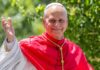
On January 9, 2026, Rt. Rev. A. Robert Hirschfeld, the Episcopal bishop of New Hampshire, delivered unexpected remarks at a vigil in Concord. He urged clergy to brace for what he termed “a new era of martyrdom.”
This call to action came in response to the killing of Renee Good, a mother of three, by an Immigration and Customs Enforcement (ICE) agent in Minneapolis. Hirschfeld’s unscripted remarks have resonated with many, highlighting the tension between religious communities and federal immigration enforcement.
The bishop’s comments invoked historical figures like Oscar Romero and Jonathan Daniels, drawing parallels to modern-day struggles. Hirschfeld emphasized the need for clergy to be ready to stand physically between the vulnerable and oppressive state powers.
This call for readiness has intensified discussions about the role of the church in political resistance, particularly under the Trump administration’s stricter immigration policies.
Institutional Support and Broader Impact
The Episcopal Church has shown support for Hirschfeld’s message, with the Presiding Bishop, Most Rev. Sean W. Rowe, reinforcing the sentiment during an online vigil. This alignment indicates a broader institutional backing for clergy willing to resist ICE actions.
The message has spread beyond New Hampshire, with the Episcopal Diocese of Maine sharing Hirschfeld’s remarks, calling them “powerful.”
Similar sentiments have been echoed by other bishops, such as Rt. Rev. Craig Loya of Minnesota, highlighting the national resonance of Hirschfeld’s warning. This broadening dialogue suggests a potential shift in how religious communities might engage with federal policies, particularly those affecting immigrant populations.
New Hampshire bishop warns clergy to prepare for ‘new era of martyrdom’ https://t.co/QoZ2gtwpNu pic.twitter.com/tKfjn9pbJw
— The Washington Times (@WashTimes) January 18, 2026
Potential Consequences and Future Directions
Hirschfeld’s remarks have not only gained media attention but have also sparked a conversation about the potential consequences for clergy involved in such resistance. While some perceive this as a necessary moral stance, others worry about the implications of clergy confronting federal agents.
The broader impact on church-state relations and the theological justification for resistance will likely continue to evolve as more faith communities engage in this discourse.
As the situation unfolds, it becomes clear that the Episcopal Church’s support for Hirschfeld’s message could set a precedent for other religious institutions. The framing of immigration enforcement resistance as a Christian theological imperative may reshape the way faith communities approach similar challenges in the future.
Sources:
Broadview.org: Rob Hirschfeld & Renee Good
NHPR: Episcopal Church Wills & Immigration Protest
nhepiscopal.org: Bishop Rob’s Reflection
Word and Way: Episcopal Bishops on Resistance