
Americans are now being urged to avoid all U.S. government facilities in Trinidad and Tobago as the region faces escalating threats tied to Venezuela—illustrating just how rapidly foreign instability can endanger U.S. citizens and challenge American security priorities abroad.
Story Snapshot
- The U.S. Embassy in Trinidad and Tobago issued an urgent security alert, warning Americans to steer clear of all U.S. government facilities due to elevated threats.
- Rising tensions between the United States and Venezuela, amplified by recent U.S. military actions against drug traffickers, have turned Trinidad and Tobago into a potential flashpoint.
- A nationwide State of Emergency (SOE) remains in force in Trinidad and Tobago, with law enforcement on high alert and the government working to avoid entanglement in regional conflict.
- Both American citizens and locals are facing increased uncertainty, with serious implications for stability, economic prospects, and security in the broader Caribbean region.
U.S. Embassy Issues Urgent Warning Amid Venezuelan Tensions
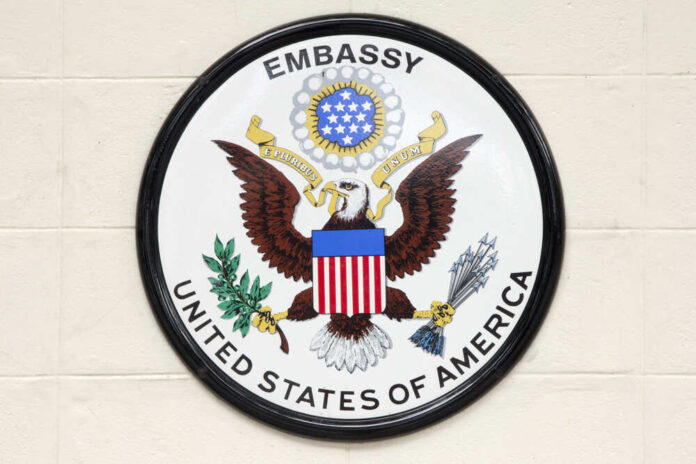
The U.S. Embassy in Port of Spain issued an unusually urgent security alert, instructing all American citizens to refrain from visiting any U.S. government facilities in Trinidad and Tobago.
This extraordinary move comes as tensions between the United States and Venezuela have reached new highs following recent U.S. military operations targeting suspected drug traffickers in the region.
The broad scope of the warning signals the seriousness of the risk, underscoring how quickly international developments can endanger Americans abroad and threaten U.S. interests.
Trinidad and Tobago’s government declared a nationwide State of Emergency on July 18, 2025, citing threats from organized criminal networks and broader regional instability.
Parliament extended the SOE for three months on July 28, maintaining a heightened law enforcement presence and signaling the gravity of the situation.
The government’s actions reflect mounting pressure from both internal criminal activity—some linked to transnational networks with connections to Venezuela—and the external risks posed by the evolving U.S.-Venezuela standoff.
The intersection of these threats places the country at the center of a volatile regional security environment.
Regional Security, Internal Stability, and American Interests at Risk
Trinidad and Tobago shares a maritime border with Venezuela, making it particularly vulnerable to the fallout from Venezuelan instability, including cross-border crime and mass migration.
U.S. military activity throughout the Caribbean—aimed at disrupting drug trafficking networks—has drawn sharp warnings from Venezuelan officials.
They have cautioned neighboring countries, including Trinidad and Tobago, against supporting U.S. actions or allowing their territories to be used for military operations. This geopolitical tug-of-war has left the Trinidadian government balancing its own security needs against the risk of being pulled into a wider conflict.
As the SOE continues, the Trinidad and Tobago Police Service has ramped up operations, deploying additional officers and maintaining a high state of alert.
The Prime Minister, Kamela Persad-Bissessar, addressed the nation on October 19, emphasizing the government’s commitment to domestic security and publicly denying any plans for military involvement with Venezuela.
She stressed that the administration’s focus remains on protecting citizens and avoiding unnecessary escalation, even as foreign and domestic threats converge at the nation’s doorstep.
https://x.com/thehill/status/1979655235564904704
Impacts: Economic Fallout, Social Anxiety, and Regional Ramifications
The immediate effect of these developments has been heightened anxiety among both U.S. citizens and the local population. The travel and tourism sector—critical to Trinidad and Tobago’s economy—faces a sharp downturn as security concerns discourage visitors and investors.
Local officials are bracing for potential spillover effects, including increased migration, strain on public services, and the risk of further diplomatic incidents as tensions persist.
The U.S. Embassy continues to urge Americans to enroll in the Smart Traveler Enrollment Program for real-time updates and support, reflecting the ongoing uncertainty facing citizens abroad.
Security analysts and regional experts agree that the current scenario is highly unusual. The breadth of the U.S. Embassy’s warning—covering all government facilities—points to a genuine concern about both criminal and geopolitical threats.
While some in the region call for calm and diplomatic resolution, others recognize the necessity of a strong U.S. presence to deter crime and uphold stability.
The risk of escalation remains, with Trinidad and Tobago’s strategic location making it a potential flashpoint in the ongoing U.S.-Venezuela standoff.
For Americans and allies alike, this episode is a stark reminder of the need for vigilance, robust border security, and policies that put national interests and citizen safety first.
Sources:
North Platte Post: State of Emergency details for Trinidad and Tobago
Gazette: US Embassy issues warning to Americans in Trinidad and Tobago as tensions escalate
SuccessKnocks: US Embassy warning for Trinidad and Tobago
U.S. Embassy Port of Spain: Official Security Alert
TheTravel: US travel warning for Trinidad and Tobago