
A wingtip met a nose on a Miami taxiway, and the ripple effects began before the metal cooled.
Story Snapshot
- A Copa Boeing 737 and a UPS Boeing 767 made contact while taxiing at Miami International Airport.
- Officials reported two people with minor injuries treated at the scene, no hospital transport needed.
- The Federal Aviation Administration said the Copa wingtip struck the UPS jet’s nose around 9:15 p.m..
- Airport operations continued as flights used alternate taxi routes, avoiding wider disruption.
What Happened On The Ground In Miami
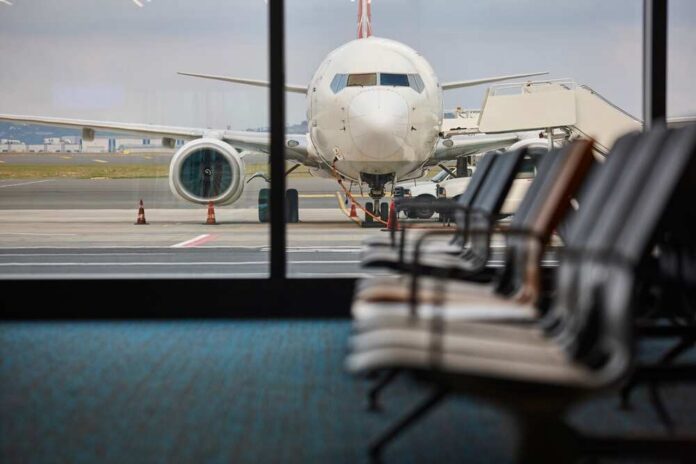
Miami-Dade Aviation Department officials said two aircraft made contact at the intersection of two taxiways at about 9:15 p.m. The Federal Aviation Administration identified the jets as a Copa Airlines Boeing 737 and a United Parcel Service Boeing 767. The agency said the Copa aircraft’s wingtip struck the nose of the UPS aircraft while both were taxiing. Airport fire crews treated two people for minor injuries on scene. No major airport shutdown followed, and controllers rerouted traffic as needed.
Air traffic controllers had instructed the UPS crew to give way to the #CopaAirlines flight, which was heading to its gate after landing, while the #UPScargoplane was preparing to depart for #Bogota , #Colombia , according to the FAA. pic.twitter.com/LbFUynOINh
— SANJEEV CHAUHAN (@SanjeevCrime) November 15, 2026
Copa said its passengers deplaned after the incident, and two received treatment for apparent minor injuries. United Parcel Service said its crew was safe and that it would work with authorities to learn what happened. These statements match the account from airport officials on timing, location, and injuries. The cause has not been assigned. The Federal Aviation Administration opened a standard investigation to determine how two large jets ended up in the same space at the same moment.
Why A Taxiway Bump Matters
Ground collisions sound simple. They rarely are. Most happen when small misses stack up: a clearance readback not heard, a hold short line missed in glare, a wingtip judged an inch too far, or a turn started one second too soon. Investigators will check the ground-control audio, surface radar tracks, and cockpit actions. They will ask which aircraft had the right of way, what each crew saw, and whether lighting, signage, or congestion added friction. That is how modern aviation fixes small cracks before they widen.
Airport managers kept operations moving. That matters more than it sounds. A shut taxiway can trap jets at gates, ripple delays across regions, and push crews to duty-time limits. Miami’s team directed flights to other paths, avoided a cascading mess, and let first responders do their work at the scene. That balance—safety first, flow second—is what air travel depends on in tense minutes after an incident.
Sorting Facts From Blame
Public updates named the jets, the contact point, and the time. They did not assign fault—and they should not at this stage. Early labels often fail under the weight of radio logs and radar replays. Past cases show how two aircraft can both act reasonably yet still converge if taxiways, markings, or instructions leave narrow margins. Responsible reporting keeps the focus on confirmed facts and lets data lead. That approach aligns with common sense and the basic conservative value of due process: get the record, then judge it.
Some outlets highlighted a phrase about the United Parcel Service jet possibly being told to give way in early chatter. That kind of detail, if verified in recordings, would matter later. It still does not settle what each crew actually heard or understood in the noise of a busy ramp. Investigators will time-stamp every call, map every wheel track, and compare them to standard procedures. The fastest path to safer taxiways is a clear-eyed chain-of-events, not a rush to pick a villain.
What To Watch Next
The Federal Aviation Administration will document assigned taxi routes, clearances, and stops. Airport diagrams will anchor measurements of wingtip-to-nose geometry and turning space. Maintenance teams will assess structural harm to the Copa wing and the United Parcel Service nose section. Miami-Dade Fire Rescue will finalize its patient report. If history is a guide, the likely fixes will target procedures, markings, and crew cues more than any single bad actor. Small changes—brighter edge lights, clearer signs, crisper phraseology—pay big dividends.
Air travel works because thousands of small checks fire in sequence. When two heavy jets touch on the ground, one check or more slipped. The good news is the system held where it counted: no serious injuries, no runway jeopardy, and no airport paralysis. The job now is to trace the last few feet and the last few seconds, then lock the door that let a wingtip and a nose shake hands. Miami’s quiet taxiways tonight depend on that work tomorrow.