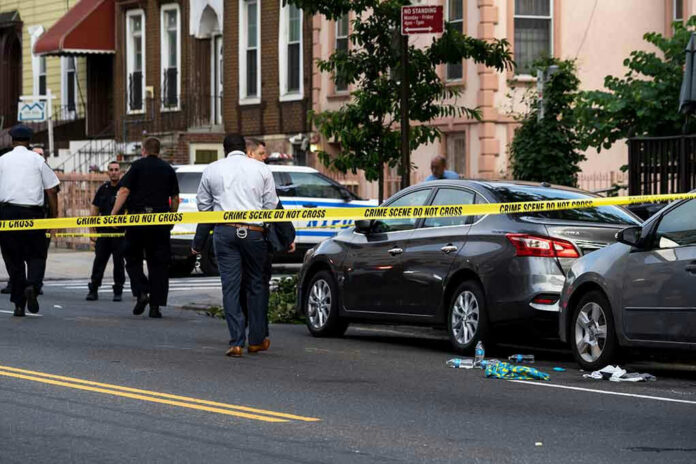
A 12-year-old girl died at a youth football park because two grown men chose bullets over a parking space.
Story Snapshot
- Police say gunfire erupted during a dispute over a parking spot at Leon Day Park.
- A 12-year-old girl was killed; three adults were wounded, police reported.
- Detectives found evidence of at least two guns, suggesting exchanged fire.
- The child appeared to be a bystander near a youth football event, police said.
What Happened At The Park
Baltimore police said a 12-year-old girl was shot and killed at Leon Day Park in West Baltimore on Saturday evening. Three adults were also hit by gunfire and survived, according to initial police reports. The shooting started near the 1200 block of North Franklintown Road during a youth football event. Investigators said an argument between men turned into gunfire. The child was caught in the crossfire and later died at a hospital, officials said.
Police leaders called the dispute “stupid” and pointed to a parking spot as the apparent spark. Officers at the scene found signs that more than one person fired shots. Reporters cited police who said two different types of cartridge cases were collected, which suggests two guns were used. Detectives asked the public for tips and video. No arrests had been announced in early reports.
Where And When The Violence Broke Out
Police placed the shooting at Leon Day Park along North Franklintown Road in West Baltimore. Officers responded shortly after 6 p.m. as families were leaving or arriving around youth football activity. The park’s open layout and nearby parking made the crowd vulnerable once shots began. The 12-year-old girl was described as a bystander near the field and not part of the dispute. Medics took her to a local hospital, where she was pronounced dead.
Officials said three adults were also wounded in the exchange. Early reports identified them as a 25-year-old woman and two men, ages 23 and 28, though exact conditions were not detailed in the first briefings. Police described two suspects who fired at each other and fled. Investigators urged anyone with information to come forward. The motive, tied to parking, was described as apparent and based on early evidence from the scene and witnesses.
Why A Parking Dispute Turned Lethal
Reporters and police linked the violence to a parking argument that grew into a shootout. This type of conflict often escalates when tempers rise in tight spaces with many people close by. Crowds form a tragic backdrop when guns enter the mix. The police commissioner’s plain words matched the facts on the ground: two men drew guns and fired near children and families, and a child paid the price. That conduct defies common sense and basic duty to protect kids.
Wider data on shootings at youth sports and public events shows a clear pattern. Most shootings near games do not happen on the field. They happen in parking lots or just outside, where unrelated disputes spill into the crowd. Children often suffer as bystanders. That is why coaches and parents push for tight parking control, clear exits, and obvious police presence. The lesson is simple: order in shared spaces is not window dressing. It saves lives.
Policing, Accountability, And Community Duty
Police at the scene signaled two active gunmen and gathered shell casings from different guns. That points to an exchange of fire, not a lone shooter. The public should expect a strong manhunt, quick ballistics work, and camera pulls from nearby streets. When suspects are found, prosecutors should bring charges that fit the harm. A girl is dead. Adults were hit. This demands a firm response that values innocent life and deters chaos.
Parents deserve safe sidelines and walkways. City leaders, league organizers, and police can harden these spaces with simple steps: steer cars with cones and volunteers, set no-parking zones near exits, keep patrol cars visible at peak times, and post cameras that cover the lot, not just the field. These do not replace moral duty, but they raise the cost of reckless acts. The standard should be clear: if you bring a gun to a kids’ park fight, you face swift justice.