
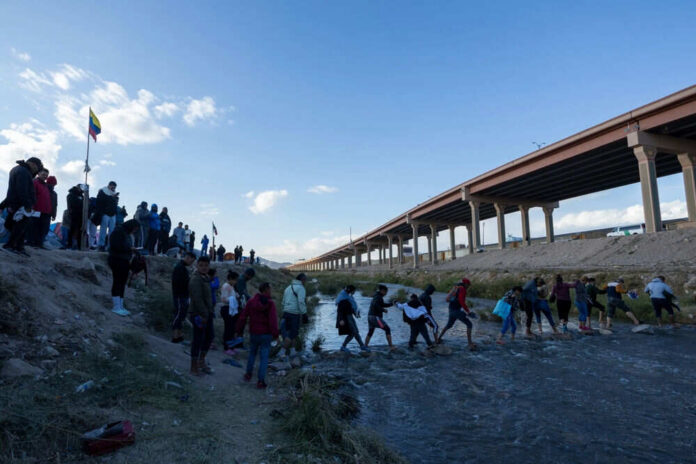
A Honduran-led caravan called “Faith and Hope” is marching through southern Mexico toward the United States border, and officials on both sides are watching every mile.
Story Snapshot
- The “Faith and Hope” caravan left San Pedro Sula on September 20 and entered Mexico days later.
- Reports place the group in Chiapas, moving north toward the United States border.
- United States officials say they are tracking the caravan’s progress through Mexico.
- Caravans form often near Tapachula, a chokepoint where migrants get stuck for months.
Caravan’s route, size, and official tracking
Organizers and local reports say the caravan began in San Pedro Sula, Honduras, on September 20 and crossed Guatemala before entering Mexico via the Rodolfo Robles bridge into Chiapas on September 24.
Coverage identifies the group as “Faith and Hope,” and estimates ranged from several hundred to over 600 as it advanced north through southern Mexico.
The Department of Homeland Security and United States Border Patrol are tracking the caravan’s movement toward the southern border, according to national reporting that cites department statements.
🚨Alert: Invasion Coming!! Thousands of illegal aliens march from Honduras through Mexico towards the US southern border, in hopes of entering the United States illegally!! Reports are coming out from southern Mexico!! pic.twitter.com/vNkQCei2Nb
— US Homeland Security News (@defense_civil25) September 27, 2026
Numbers at different points often shift as people join or leave. Some reporting has cited thousands in other recent caravans, but this caravan’s most consistent figures cluster in the hundreds so far, with growth possible as it advances through Chiapas and beyond.
Media have described participants from Honduras and neighboring countries, which aligns with past patterns where groups pick up travelers from El Salvador, Guatemala, Haiti, and elsewhere while moving north.
Why caravans build in southern Mexico
Tapachula, a city near Mexico’s border with Guatemala, acts like a holding pen for regional migration. Research shows many people get stuck there while they wait on the National Institute of Migration or the Mexican Commission of Aid for Refugees to process papers.
The delays can last months. That limbo creates pressure and insecurity, which often pushes people to band together for safety and attention in large groups known as caravans.
Policy signals and choke points fuel these formations. A policy study found at least 30 caravan iterations crossed Mexico between 2017 and 2022, with many forming in just one year. The study ties caravan behavior to perceived shifts in United States and Mexican policies. When people feel trapped or hear mixed signals, they move in groups that promise some safety on the road and a chance to force action at checkpoints.
Security, law, and border readiness
United States officials monitor caravans to plan for arrivals, direct resources, and guard against criminal exploitation of the flow. Past Department of Homeland Security summaries have flagged individuals with criminal histories found along caravan routes, a reminder that cartels and gangs look for cover in crowds. That risk makes tracking essential, even as many travelers are families or single adults seeking work or asylum.
#News A migrant caravan of about 400 migrants is marching through Mexico on their way to the United States.
They left San Pedro Sula, Honduras, on Sept. 20 and are now in Tapachula, Chiapas, Mexico.#honduras
The caravan is reportedly being funded American NGOs that operate out… pic.twitter.com/5MjsSwldco
— Christina Aguayo (@ChristinaNewstv) September 29, 2026
Common sense and conservative priorities line up on two basics here. Borders need order, and laws must be enforced without apology. Humanitarian needs still matter, but they cannot replace clear rules.
The best approach is simple: deter unlawful crossings, expand fast processing to cut backlogs, and work with Mexico to stop caravans from forming in the first place. That is not cruelty; that is how you stop smugglers from profiting and reduce chaos for everyone.
What to watch next on the road north
Mexican authorities often respond by escorting, splitting, or offering documents that redirect people to other states. Watch for decisions in Chiapas and Oaxaca that either slow the march or help it disperse.
Also track whether the group swells near Tapachula, the usual pressure point. On the United States side, look for sector-level surges in Texas and Arizona that match this caravan’s pace and route. The timing and location of any mass arrival will drive local impacts.
Caravans are not new, but each one tests the same system weak points: slow paperwork, mixed policy signals, and thin enforcement along long routes. The fix is not a mystery.
Set firm consequences for illegal entry, stand up rapid decisions for those with claims, and lean on bilateral cooperation to end the bottlenecks. Do those three things well, and the incentive to join the next “Faith and Hope” march fades fast.
Sources:
kratko.news, newsweek.com, pbs.org, tandfonline.com, bakerinstitute.org, dtm.iom.int