
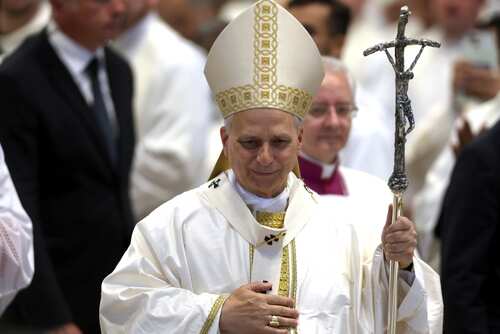
Pope Leo XIV chose America’s birthday, a storm-tossed migrant island, and the language of “life” to challenge how the United States treats immigrants.
Story Snapshot
- The first American-born pope tied U.S. immigration policy to core pro-life Catholic teaching.
- He urged Americans to “welcome, protect, and defend immigrants” as a matter of human dignity, not charity.
- He spoke from Lampedusa, a frontline migrant landing point, as President Trump’s hardline policies reshaped U.S. law.
- He praised America’s immigrant legacy while warning that current enforcement is “inhuman” and “extremely disrespectful.”
The July 4 message that put immigration at the heart of pro-life
Pope Leo XIV did not deliver a vague holiday blessing; he delivered a moral test. Speaking from Lampedusa on July 4, 2026, he urged the United States to “welcome, protect, and defend immigrants,” tying that duty directly to the Catholic command to defend life from conception to natural death.
He framed care for migrants as part of the same moral fabric as opposing abortion or euthanasia, not an optional social program or partisan cause.
Pope Leo marked the 250th anniversary of U.S. independence on Saturday with an appeal to Americans to welcome and protect immigrants. MORE: https://t.co/XXrK11KyP4 pic.twitter.com/CDNkj89xVJ
— NEWSMAX (@NEWSMAX) July 4, 2026
Leo’s choice of words challenged a familiar gap in American politics. Many claim a “pro-life” label while backing policies that treat desperate families at the border as problems to be removed, not people to be protected.
In November 2025, he warned that “inhuman treatment of immigrants” in the United States is not compatible with a genuine pro-life stance, calling out Catholic politicians who support harsh enforcement while speaking about the sanctity of life.
Lampedusa and the power of seeing suffering up close
The setting of the July 4 homily carried its own message. Lampedusa is one of Europe’s main landing points for boats crowded with migrants and refugees from Africa and the Middle East. Leo spoke after seeing what he called “enormous suffering,” including lives lost at sea and survivors stuck in limbo.
By standing there, not in a quiet Vatican chapel, he signaled that immigration is not an abstract policy debate but a life-and-death drama unfolding every day.
Leo has repeated that migrants must never be reduced to numbers or categories. During a visit to Spain’s Canary Islands, another migrant gateway, he urged leaders to create “legal and safe pathways” and warned against reducing human beings to statistics.
That theme echoed at Lampedusa. The United States, he argued, is built on immigrants who brought hope and energy; forgetting that legacy while people drown trying to move today shows a crisis not only of policy, but of memory and identity.
An American pope, a hardline president, and a clash of narratives
The appeal landed in a country where President Trump was pressing one of the most aggressive immigration agendas in modern U.S. history. His administration backed the Secure the Border priority package, poured tens of billions into enforcement, and signed executive orders restricting refugee admissions and reshaping legal pathways.
Supporters framed these moves as necessary to restore sovereignty, reduce crime, and protect workers, often painting critics as naive or “open borders.”
Leo’s response was sharp but rooted in long-standing Catholic teaching. He repeatedly endorsed the United States bishops’ pastoral message on immigration, urging Americans “of goodwill” to study it and change practices they described as “extremely disrespectful” toward migrants.
He insisted that no one is calling for open borders and affirmed every nation’s right to decide who enters and how. His real target was the way enforcement treats persons: the separation of families, roundups of the undocumented, and rhetoric that labels them criminals by status alone.
Human dignity, national sovereignty, and conservative values in tension
For many conservative Americans, including some Catholics, the instinct is to hear a papal immigration homily as foreign interference in domestic policy.
Leo addressed that concern head-on by grounding his words in principles that conservatives often claim: ordered borders, rule of law, and family responsibility. He argued that defending borders and defending migrants are not opposites but two duties that must be held together. Charity, he stressed, is never opposed to order.
From a common-sense conservative lens, the core question is simple: can the United States enforce its laws without breaking families, ignoring due process, or treating human beings as disposable?
Catholic teaching says yes, but only if policy starts from the belief that every person, citizen or not, bears God-given dignity. Leo’s criticism bites hardest where enforcement becomes indiscriminate—mass deportation plans, blanket detention rules, and language that inflames hatred against immigrants instead of channeling legitimate security concerns.
A long line of popes, a long American struggle over immigrants
Leo’s July 4 appeal did not appear out of thin air. His intervention fits a decades-long pattern of popes pressing the United States to measure its immigration choices against its founding ideals and Christian claims.
John Paul II urged America to be a “vigilant advocate” for the natural right to move freely and warned against unjust limits on migration. Pope Francis called mass deportation plans “a disgrace” and urged Catholics to resist narratives that cause needless suffering for migrants.
Leo, the first American-born pope, adds a new twist. He speaks as someone formed in Chicago’s immigrant neighborhoods, as a citizen of both the United States and Peru, and as a pastor who has watched deportation raids hit his home city.
That biography makes his July 4 message less like a scolding from abroad and more like a family argument from within. He is saying to his country of birth: remember who you are, remember who built this place, and make sure your immigration laws look like you still believe that.
Sources:
cnbc.com, vaticannews.va, vatican.va, reuters.com, cnn.com, youtube.com, facebook.com, aclu.org, nafsa.org, brookings.edu, cliniclegal.org, justiceforimmigrants.org, avemarialaw.edu