

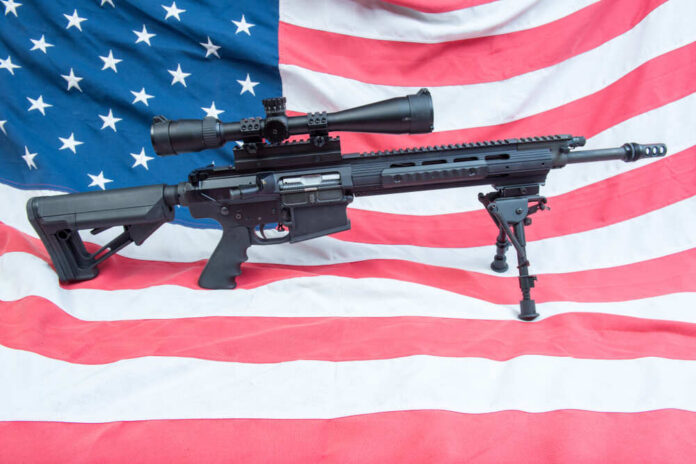
America’s rifle is headed back before the Supreme Court, and the fight could decide whether states can keep banning AR-15-style firearms.
Quick Take
- The Supreme Court will consider challenges to assault weapons bans in Connecticut and Cook County, Illinois.
- Lower courts have upheld those bans, but critics say they clash with the Second Amendment.
- The cases center on AR-15-style rifles, which supporters of the bans call dangerous and opponents call common arms.
- The dispute also raises a bigger question about whether judges should rely on history, not balancing tests, in gun cases.
Supreme Court Takes Up the Ban Fight
The Supreme Court agreed to review whether laws often called assault weapons bans violate the Second Amendment. The cases come from Connecticut and Cook County, Illinois, and both lower courts upheld the laws.
That matters because the Court has spent years reshaping Second Amendment law, and this new fight could show how far those changes now reach. For gun owners, the issue is simple: can a state ban a class of rifles that millions of Americans legally own?
US Supreme Court to hear challenge to state-level assault rifle bans https://t.co/FrA8hDV4DX https://t.co/FrA8hDV4DX
— Reuters (@Reuters) July 1, 2026
The challenge now sits at the center of a long-running split between state lawmakers and gun rights advocates. Supporters of the bans say the laws target military-style weapons and fit a public safety role after mass shootings.
Opponents say the Second Amendment protects arms in common use, and they point to AR-15 ownership across the country. That is why this case has drawn so much attention from both sides.
Why Connecticut and Cook County Passed Their Laws
Connecticut revised its gun law after the Sandy Hook Elementary School shooting, and supporters tied that change to life-saving protection. Mark Barden of Sandy Hook Promise said states have the right to adopt stricter firearm rules in line with the Second Amendment.
Cook County’s ban followed a similar public-safety argument, with lower courts accepting the idea that these rifles are too dangerous for civilian use. That framing is now under direct Supreme Court review.
Those arguments have not gone unchallenged. Gun rights advocates say “assault weapon” is a political label, not a technical term, and they say courts used the wrong legal test. They argue that *Bruen* requires text, history, and tradition, not interest balancing.
They also point to *Heller*, which held that the Second Amendment protects “arms” commonly chosen for lawful use, including self-defense. That is the core clash now before the Court.
The Legal Question Could Reach Beyond Rifles
Lower courts have split over these bans for years. Some courts upheld them by treating AR-15-style rifles as outside Second Amendment protection, while others focused on public safety and military-style features.
The Supreme Court has denied review in similar cases before, which left the lower court rulings in place. The new review means that delay has ended, at least for these two laws.
𝐒𝐔𝐏𝐑𝐄𝐌𝐄 𝐂𝐎𝐔𝐑𝐓 𝐀𝐆𝐑𝐄𝐄𝐒 𝐓𝐎 𝐃𝐄𝐂𝐈𝐃𝐄 𝐈𝐅 𝐓𝐇𝐄 𝐂𝐎𝐍𝐒𝐓𝐈𝐓𝐔𝐓𝐈𝐎𝐍 𝐏𝐑𝐎𝐓𝐄𝐂𝐓𝐒 𝐀𝐑-𝟏𝟓 𝐎𝐖𝐍𝐄𝐑𝐒𝐇𝐈𝐏
The Court announced it will take up whether cities and states can ban Americans from owning AR-15s and similar semi-automatic rifles — a… pic.twitter.com/HfbBFwIlm9
— M.A. Rothman (@MichaelARothman) July 1, 2026
There is also a practical question behind the legal one. AR-15s are the most popular rifle in America and are owned by millions of law-abiding citizens. Opponents of the bans argue that a weapon in common use should not be treated like contraband.
Supporters answer that these firearms have been used in high-profile mass shootings and should be limited for public safety. The Court’s ruling could shape gun law far beyond Connecticut and Illinois.
Sources:
apnews.com, youtube.com, instagram.com, firearmslaw.duke.edu, supremecourt.gov, supreme.justia.com, reddit.com