
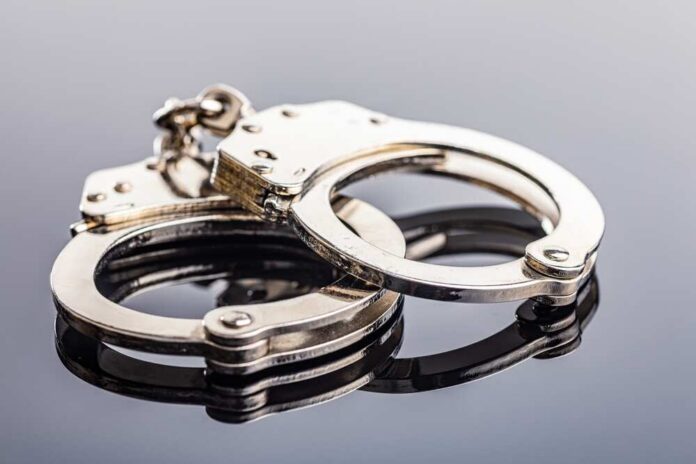
A single off-duty decision in a hotel hallway can punch a hole in the credibility of the agency tasked with guarding America’s leaders.
Quick Take
- John Spillman, a 33-year-old U.S. Secret Service employee, was arrested in Miami-Dade for alleged indecent exposure at a DoubleTree hotel near Trump National Doral.
- The arrest happened around the time of a Trump-associated golf event, but it occurred off-site and is separate from an unrelated disturbance at the Doral property.
- Miami-Dade police handled the criminal booking; the Secret Service placed the employee on administrative leave and opened an internal review.
- The case spotlights a persistent institutional challenge: elite protective work demands personal discipline when no one is “on camera,” because the public assumes you always are.
The Miami arrest that collided with a high-visibility security weekend
John Spillman, identified as a U.S. Secret Service employee from the Miami field office, was arrested at the DoubleTree by Hilton Hotel Miami Airport & Convention Center on an indecent exposure allegation.
The timing made headlines because Secret Service personnel had deployed to the area for security tied to President Trump’s presence at Trump National Doral during a golf-related event. That proximity created instant political heat, even though the alleged conduct occurred away from the protectee.
Full wrap on the US Secret Service officer jailed and accused of masturbating naked in a hotel hallway and following a woman and others in “fear for their lives.” @MiamiDade_SO arrested John A. Spillman, 33. @wsvn #Exclusive story: pic.twitter.com/4TD2llE8u7
— Sheldon Fox-7 News (@fox_sheldon) May 5, 2026
The most important factual split got lost in the noise: two different incidents circulated online. One involved a disturbance at the Doral property and the arrest of a man who was not Secret Service.
Spillman’s case, by contrast, centered on alleged sexual misconduct and a local indecent exposure charge, handled by Miami-Dade authorities. That distinction matters because it changes the question from “Was security breached?” to “Why did a federal employee behave like this at all?”
What Florida indecent exposure law signals for real-world consequences
Florida treats indecent exposure seriously because it usually involves unwilling witnesses, and that brings a public-order element beyond simple embarrassment. Under Florida’s indecent exposure framework, the charge can land as a misdemeanor and escalate based on circumstances and prior history.
People often assume a “minor” charge evaporates with a fine. The practical consequence often comes from employment, licensing, and background checks—especially for anyone inside law enforcement.
That employment side is where the Secret Service operates with a different kind of gravity. Protective work runs on trust: teammates share hotel floors, rental cars, shift handoffs, and proximity to the people they guard. A case like this forces management into a narrow lane.
The agency can’t litigate criminal guilt in public, but it also can’t shrug and say “personal time.” The badge doesn’t clock out in the public’s mind.
Why “off-duty” rarely exists for protective details in the public imagination
The Secret Service has two institutional identities: a federal law enforcement body and a protective service that embodies national stability. The public expects a visible moral floor because the agency’s mission sits inches from presidents, candidates, and their families.
When a scandal breaks, critics reach for a story they already know: that power produces entitlement, and entitlement produces misbehavior. Sometimes that’s lazy politics. Sometimes it’s an honest pattern-recognition response from taxpayers.
Common sense cuts through the spin: personal responsibility isn’t optional in public service, and standards should rise with authority, not fall.
If a federal employee can’t manage basic self-control in a public setting, voters have every right to doubt that employee’s judgment under real pressure. At the same time, fairness matters. The system should punish proven misconduct, not rumors, and it should avoid smearing colleagues who did nothing wrong.
The internal review problem: accountability without turning into a PR circus
The Secret Service confirmed the matter went under internal review and that administrative steps followed, which is standard when an employee faces an arrest that could compromise the mission. That process tends to move slower than news cycles, and the gap invites conspiracy thinking.
People fill silence with whatever fits their politics: critics paint systemic decay; defenders insist it’s a one-off. Neither side gets to skip due process, but neither side should pretend reputation damage is imaginary.
Past scandals hang over today’s response, whether leaders like it or not. The Colombia prostitution scandal in the early 2010s and later misconduct headlines created a template the media reuses: “Secret Service” plus “hotel” equals a predictable storyline.
That doesn’t prove Spillman’s case represents the agency as a whole. It does mean leadership must show competence fast—clear discipline, clear training standards, and clear boundaries—because the institution can’t afford drift.
What this episode reveals about vetting, stress, and the thin line of discipline
Protective assignments produce odd living conditions: travel, hotel blocks, rotating shifts, boredom punctuated by bursts of intensity, and a culture that prizes toughness. Stress explains nothing and excuses nothing, but it does predict failure points.
Agencies that treat “resilience” as a slogan instead of a measurable requirement invite preventable scandals. The fix usually looks unglamorous: tighter supervision during travel, clearer conduct rules, better reporting channels, and consequences that land consistently.
Spillman’s case also shows how quickly the public blends unrelated events into one political narrative. Trump’s name near a headline operates like gasoline; everything catches. A functioning justice system separates facts, timelines, and individuals, then applies the law cleanly.
Secret Service officer arrested for indecent exposure in Miami after Trump golf event https://t.co/Uj8jERAlNP
— CNBC Politics (@CNBCPolitics) May 5, 2026
The open question that lingers isn’t tabloid curiosity; it’s institutional confidence. If the charge stays in misdemeanor territory or gets resolved quietly, the agency still must answer for the lapse in judgment that put it here.
The Secret Service protects symbols of the republic, and symbols require credibility. The public doesn’t need theatrics. It needs evidence that standards mean something, even when the only “witness” is a hotel hallway and a career about to collapse.
Sources:
Secret Service arrests man after disturbance at Trump Doral in Miami
Donald Trump’s Secret Service Employee Busted for Lewd Act at Florida Hotel