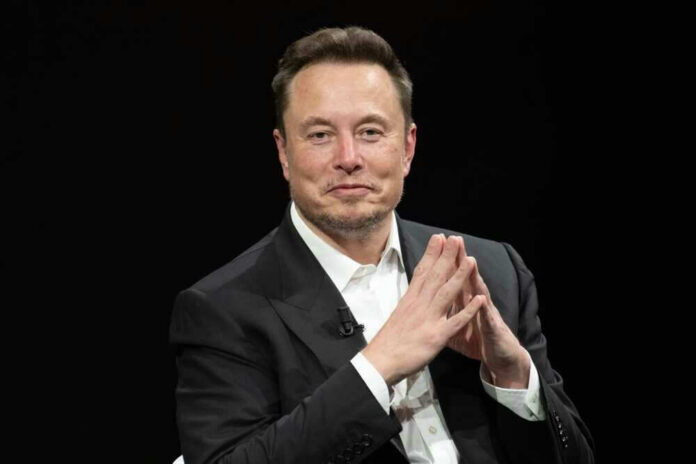
Elon Musk’s latest proposal for government-funded “universal high income” to combat AI-driven job losses sounds less like free-market innovation and more like a page from the socialist playbook, raising alarm bells for Americans who question whether tech billionaires and Washington elites truly understand the consequences of mass dependency on federal checks.
Story Snapshot
- Musk proposes federal “universal high income” checks as AI threatens to eliminate 17-25 million U.S. jobs within five years
- Tech mogul claims AI abundance will prevent inflation, sparking fierce debate among economists and critics who warn of fiscal recklessness
- The plan mirrors rival Sam Altman’s OpenAI policy proposal, raising questions about the tech industry’s alignment on expanding government control
- Experts are split between endorsing AI-funded income redistribution and demanding focus on workforce retraining instead of handouts
Musk Elevates UBI to “Universal High Income”
Elon Musk posted a statement on X late Thursday calling for “Universal HIGH INCOME” through federal government payments, a dramatic escalation from traditional Universal Basic Income proposals.
The tech entrepreneur asserts that artificial intelligence and robotics will produce goods and services far exceeding money supply growth, theoretically preventing inflation even as Washington cuts checks to millions.
This represents a significant shift from his earlier UBI support, reframing government dependency as prosperity rather than survival. The post remains pinned to Musk’s X profile, signaling his commitment to pushing this vision into mainstream policy debates despite mounting skepticism from fiscal conservatives.
Elon Musk says Universal High Income from the Federal government is the best way to deal with AI-driven unemployment.
"AI/robotics will produce goods & services far in excess of the increase in the money supply, so there will not be inflation." pic.twitter.com/TAmw5QlWM1
— The Crypto Times (@CryptoTimes_io) April 17, 2026
Mass Job Displacement Looms as AI Advances
Boston Consulting Group forecasts that artificial intelligence will eliminate between 10 and 15 percent of American jobs—approximately 17 to 25 million positions—within the next five years. This projection fuels Musk’s argument that traditional employment models face obsolescence, necessitating radical income solutions.
OpenAI recently released a detailed policy proposal addressing AI’s societal impacts, which aligns with Musk’s stance despite his ongoing rivalry with CEO Sam Altman. Andrew Yang, who championed UBI during his 2020 presidential campaign, quickly endorsed Musk’s concept, stating that AI will fund universal income and urging implementation as soon as possible.
The convergence of tech leaders and progressive politicians around government-funded income raises concerns about expanding federal power under the guise of economic necessity.
Economic Experts Clash Over Feasibility
Peter Diamandis, a futurist entrepreneur, supports Musk’s vision but argues that “universal high income” will emerge from AI-driven cost reductions in food, energy, healthcare, and education rather than larger government payments. Georgetown professor Karl Widerquist agrees that AI could lower the GDP cost of UBI, validating Musk’s economic logic.
However, University College London economist James Ransom counters that policymakers should prioritize workforce retraining to capture AI’s productivity windfall instead of distributing checks.
Critics dismiss Musk’s inflation claims as dangerous and misleading, noting that past economic growth failed to end poverty without proper wealth distribution mechanisms. Some economists warn the plan could bankrupt governments, directly contradicting Musk’s abundance theory.
Government Dependency Concerns Escalate
The proposal ignites fundamental questions about American values of self-reliance and limited government that transcend traditional partisan divides. While Musk frames universal high income as liberation through technological abundance, skeptics see a troubling expansion of federal control over individual livelihoods.
The concept remains purely theoretical with no legislative movement, yet its promotion by influential tech billionaires signals a coordinated push among elites to reshape economic structures.
For millions of Americans already frustrated by government overreach and fiscal mismanagement, the idea of mass dependency on Washington checks—regardless of AI justification—conflicts with principles of personal initiative and earned success.
The debate underscores growing tensions between technological inevitability and constitutional governance, leaving citizens to wonder whether innovation serves freedom or consolidates power among the few who control both the algorithms and the policy proposals.
As this proposal gains media attention without concrete policy action, Americans face a critical choice about the nation’s economic future. The question is not whether AI will disrupt labor markets—that appears inevitable—but whether the solution lies in government intervention expanding federal authority or in preserving opportunities for individuals to adapt, retrain, and thrive through their own efforts.
Musk’s vision, while technologically optimistic, may ultimately test whether abundance created by machines strengthens individual liberty or deepens dependence on an already bloated federal bureaucracy that struggles to manage current obligations effectively.
Sources:
Elon Musk backs ‘universal high income’ to combat AI job losses
Elon Musk floats ‘universal high income’ as the answer to AI job losses