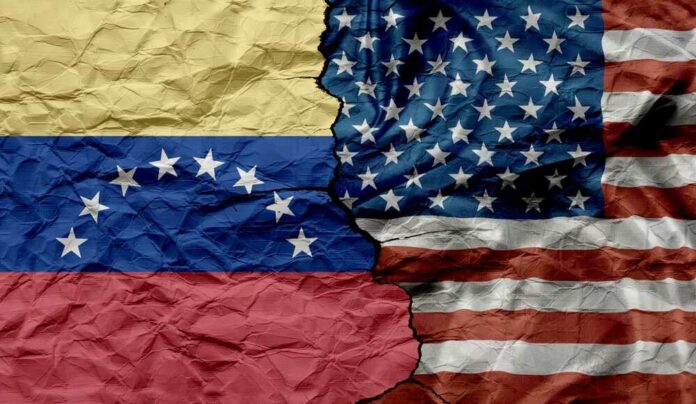
Venezuela mobilized 200,000 troops in a massive military exercise as America’s most advanced nuclear aircraft carrier entered Caribbean waters, escalating tensions in a region where U.S. anti-drug operations have already killed 76 people.
Story Highlights
- Venezuela launches a major military exercise with 200,000 troops as USS Gerald Ford enters the Caribbean.
- U.S. anti-drug operations have targeted 20 vessels since September, killing at least 76 people.
- Trump administration deploys F-35 stealth fighters to Puerto Rico alongside naval flotilla.
- Colombia cuts intelligence sharing with U.S. over controversial boat strikes in international waters.
Venezuela Responds to Growing U.S. Naval Presence
Venezuela launched a comprehensive military exercise on Tuesday, November 11, 2025, deploying 200,000 forces across land, air, and sea assets.
Defense Minister Vladimir Padrino announced the massive mobilization on state television as the USS Gerald Ford, America’s largest and most technologically advanced aircraft carrier, entered the Southern Command’s area of responsibility covering Caribbean waters.
The timing underscores Venezuela’s determination to project strength against what Caracas views as escalating American military pressure in the region.
Venezuela has announced a major military exercise, reportedly involving 200,000 troops, as a U.S. Navy flotilla nears Caribbean waters. https://t.co/nvAT6Luekm
— CBS News (@CBSNews) November 12, 2025
Trump’s Anti-Drug Campaign Draws International Criticism
The Venezuelan military exercise comes amid mounting controversy over U.S. strikes against suspected drug trafficking vessels. Since September, American forces have targeted approximately 20 boats in international waters, resulting in at least 76 deaths.
Defense Minister Padrino condemned these operations, stating, “They are murdering defenseless people, whether or not they are drug traffickers, executing them without due process.”
The Trump administration maintains these strikes target criminal organizations smuggling drugs into America, though operational details remain classified.
Massive U.S. Military Deployment Signals Serious Intent
The USS Gerald Ford represents unprecedented firepower projection in the Caribbean, carrying four squadrons of F/A-18 Super Hornets, electronic warfare variants, Airborne Warning systems, and helicopter combat squadrons.
The deployment extends beyond the carrier, with F-35 stealth fighters positioned in Puerto Rico and six additional Navy vessels patrolling Caribbean waters.
This coordinated military presence demonstrates President Trump’s commitment to dismantling drug trafficking networks that have flooded American communities with deadly narcotics during years of weak enforcement.
Regional Allies Question American Tactics
Colombia’s President Gustavo Petro ordered his nation to cease intelligence sharing with the United States, declaring the directive would “remain in force as long as the missile attacks on boats in the Caribbean continue.”
Petro argued that anti-drug efforts “must be subordinated to the human rights of the Caribbean people,” calling the strikes illegal and ineffective in a CBS News interview. Venezuela’s Defense Minister warned that any foreign military attack would encounter “a community united to defend this nation, to the death.”
Trump Takes Hardline Against Maduro Regime
President Trump has consistently accused Venezuelan President Nicolas Maduro of complicity with armed criminal gangs smuggling drugs into America. While Trump hasn’t explicitly called for regime change, he has stated that Maduro’s days in office are numbered.
Former Ambassador James Story, who served in Trump’s first term, recently told 60 Minutes that the U.S. could remove Maduro through military force. This escalating pressure reflects Trump’s America First approach to eliminating threats that have devastated American families through the ongoing drug crisis.