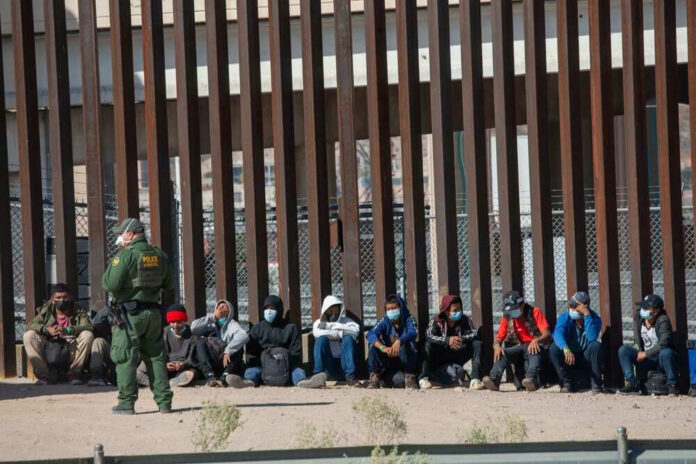
Twenty people touched down in Liberia, marking the United States’ first deportation flight under a pact that could redirect up to 1,200 non-Liberians there over the next year.
Story Snapshot
- First flight carried 20 deportees to Roberts International Airport in Liberia.
- Liberia agreed to take up to 1,200 third-country deportees over 12 months.
- The deal is part of a broader U.S. push for “third-country removals”.
- Critics warn of legal and human costs; officials frame it as enforcement.
What Happened: The First Flight Landed
The United States flew 20 deportees to Roberts International Airport near Monrovia, Liberia, completing the first removal under a new agreement with Liberia.
A news outlet reported their arrival and identified the operation as the opening step in a plan that could send many more in the coming months.
Liberia announced days earlier that it would accept up to 1,200 non-Liberians from the United States within a year, setting expectations for more flights and a steady intake pipeline. Authorities presented this as an orderly, government-to-government transfer.
The U.S. carries out its first deportation under an agreement for Liberia to accept up to 1,200 people who are not from the West African country, one of the Trump administration’s largest efforts yet to deport people to countries other than their own. https://t.co/ZmawRHYEbl
— NBC News (@NBCNews) August 21, 2026
Officials in Liberia said the group would be processed and allowed to move freely after arrival, with onward travel possible. That approach sets Liberia apart from nations that detain such arrivals for long periods.
It was also noted that the agreement’s scope and the government’s public commitment remove guesswork about whether more flights will follow.
American immigration enforcement agencies view this channel as a pressure release when returns to the person’s home country stall due to safety concerns, bureaucratic hurdles, or breakdowns in cooperation.
What This Deal Is — And What It Is Not
This pact is a “third-country removal,” not a routine return to someone’s country of nationality. The American Immigration Council defines third-country removals as deportations following a formal order to a destination with no meaningful ties to the person removed. That distinction matters.
It signals a strategic shift: when direct repatriation to the home country is blocked, the United States can maintain enforcement by sending people elsewhere through bilateral agreements. Supporters see this as smart leverage to restore credibility at the border.
Rights advocates see risks. Nonprofits and legal experts warn that opaque deals can evade routine review, miss red flags, and create “chain” expulsions from one country to another.
A Senate letter from named lawmakers raised concerns about the secrecy and costs associated with these agreements, arguing that taxpayers should know the terms and oversight rules.
Why Liberia Said Yes
Liberia’s government publicly embraced the agreement and set the 1,200-person ceiling for the next year. That clarity suggests coordination on logistics, vetting, and intake capacity. Liberia has historic links to the United States and often signals openness to strategic partnerships.
For Monrovia, a formal deal may promise support, investment, or closer security ties. Reuters’ reporting framed the pact as one of the largest Africa-based arrangements in the current U.S. network of third-country transfers. That scale implies serious planning on both sides.
Laws must mean something. If a person receives a final removal order and their home country will not take them back, the government needs options. Third-country agreements supply those options and help deter repeat illegal entries.
The Bigger Trend To Watch
This flight fits a wider pattern. The United States has sought third-country removal agreements with dozens of nations since 2025, building a broad array of pathways to carry out final orders when direct returns stall.
The U.S. Committee for Refugees and Immigrants described a growing universe of such deals, noting how they differ from standard returns and why that difference raises legal and humanitarian stakes. The Liberia pact now sits in that expanding map, with outcomes that will shape future deals.
US carries out its first deportations under pact for Liberia to accept 1,200 non-Liberians
Source: https://t.co/ij7fPRhYpp https://t.co/IVp9ss922j— zim!! (@1nv4d3r_z1m) August 22, 2026
Two scorecards will matter. First, enforcement results: fewer absconders after final orders, faster case closures, and fewer border reentries. Second, safeguards: credible risk screening, fair treatment upon arrival, and independent checks to prevent abuse.
If those boxes get checked, Americans will see a firm but fair system. If they do not, the policy will draw sharper scrutiny and invite courts or Congress to intervene. Liberia’s first flight is the pilot test.
Sources:
apnews.com, npr.org, reuters.com, semafor.com