
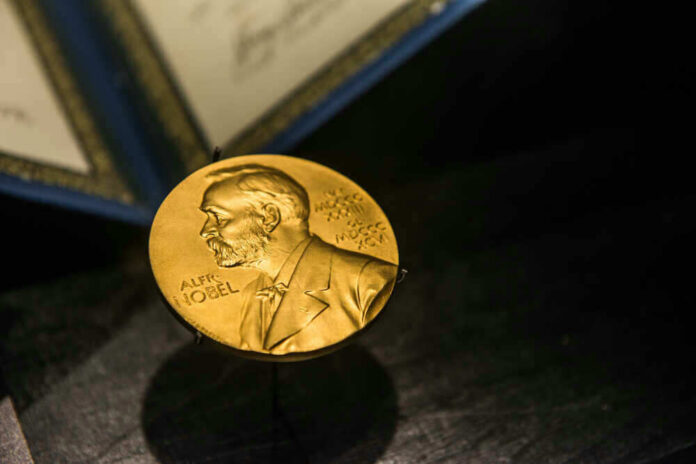
The South Pole just turned into a window on the universe, and a quiet professor now has a Nobel to prove it.
Story Snapshot
- Francis Halzen won the 2026 Nobel Prize in Physics for IceCube and cosmic neutrinos.
- IceCube, buried in Antarctic ice, caught high-energy “ghost particles” from space.
- The work launched a new way to do astronomy, using neutrinos instead of light.
- A global team spent decades building, calibrating, and analyzing to reach this point.
Nobel Committee’s Call: A Telescope Made of Ice
The Royal Swedish Academy of Sciences awarded the 2026 Nobel Prize in Physics to Francis Halzen “for decisive contributions to the IceCube Neutrino Observatory and the discovery of high-energy neutrinos of astrophysical origin.” The press release tied Halzen’s leadership to a clear scientific payoff: IceCube turned a cubic kilometer of Antarctic ice into a working detector that caught particles long thought impossible to harness for astronomy. That sentence locks a once-fringe idea into the canon.
IceCube’s core idea sounds like science fiction. Drill deep holes in South Pole ice. Lower strings of light sensors. Wait for a neutrino to hit a rare atom and make a flash. Read the flash to trace the particle back to its source. The method depends on pure, stable, cold ice and a lot of patience. It also took years of engineering grit to make the array survive a brutal environment and return clean, timed signals.
From First Ghosts To A New Branch Of Astronomy
The IceCube team announced the first solid evidence of high-energy astrophysical neutrinos in 2013. That paper broke a decades-long stalemate and gave astronomers a new messenger beyond light, radio, and gravitational waves. A decade later, the collaboration mapped neutrino signals from within our own Milky Way, showing that the approach can trace real structures in the sky, not just rare one-offs. Those two steps built the case that neutrino astronomy is here to stay.
Neutrinos pass through the Earth like wind through a screen door. That makes them perfect messengers from violent places where light gets trapped or scrambled. It also makes them maddening to detect. IceCube solved that with scale: thousands of sensors watch an immense, dark volume for the faintest blue glow. When one event lines up, analysts work backward to estimate its energy and path. The result is a kind of cosmic forensics that points to extreme engines far beyond our reach.
Halzen’s Role And The Power Of Long-Haul Science
Halzen championed the ice approach when many thought water or mines were the only way. He also rallied agencies, universities, and companies to back the South Pole build. That took vision and thick skin. Big-science wins often rest on a single leader who sets the bar and keeps the money, teams, and timelines in sync. This prize reflects that reality while everyone knows hundreds of people kept the hardware alive and the analysis honest.
🔭 “Ghost particle” hunter Francis Halzen wins the 2026 Nobel Prize in Physics for pioneering IceCube, the Antarctic observatory detecting elusive high-energy neutrinos from the cosmos.
🔗 https://t.co/ACTXQcyayA#NobelPrize #Physics #Neutrinos #IceCube pic.twitter.com/bcaDfhzZQi
— MSN (@MSN) October 6, 2026
The neutrino story also shows how patience pays off. The experiment needed years of steady funding, careful calibration, and repeat checks before the first claim stood up. That is a model worth copying in other complex fields. It respects taxpayers by aiming at clear, high-value questions and delivering proof step by step. When people ask what government-backed science is good for, pointing to a telescope made of ice that reads the universe’s most elusive messengers is a strong answer.
Why This Matters Beyond Physics Circles
Neutrino astronomy can find hidden engines of cosmic rays, flag black hole feasts, and test ideas about dark matter. It can also partner with radio arrays and gravitational wave detectors to give a fuller picture of the same event. That teamwork makes discovery faster and more certain. The method also trains a rare kind of talent: builders who think like analysts, and analysts who respect bolts and ice. Those people end up solving hard problems in energy, defense, and health, too.
Americans appreciate returns on investment and credit to doers. IceCube shows both. The United States hosted the site, backed the logistics, and anchored the build. A legal, orderly process moved fuel, gear, and people to the harshest place on Earth and kept them safe. The result is a durable asset that any free scientist can join and question. That is how open, merit-driven systems outpace command-and-control labs over time.
What Comes Next: Sharper Maps, Faster Alerts
IceCube will keep stacking events to sharpen sky maps and tie neutrino tracks to known sources. Planned upgrades aim to catch lower-energy events and improve timing and direction. Better alerts will let other telescopes swing fast to the same patch of sky and watch a flare unfold in real time. Each gain in precision turns vague hints into hard links, which is how theories live or die and how new physics sneaks into view.
The Nobel seal does not end the hunt; it greenlights the next phase. Halzen’s win fixes a milestone on a long road that started with a risky bet on ice and ends, maybe, with a full neutrino atlas of the sky. That picture will tell us how nature builds its biggest engines. It will also remind us that quiet, steady work can reveal the wildest truths, even when the messengers ghost through matter like it is not there.
Sources:
bbc.com, sciencedaily.com, biz.chosun.com, icecube.wisc.edu