

President Trump demonstrated decisive American strength by obliterating over 90 military targets on Iran’s strategic Kharg Island, signaling that years of weak foreign policy are over while warning the regime that its economically vital oil infrastructure could be next if the Strait of Hormuz blockade continues.
Story Snapshot
- U.S. forces struck over 90 military targets on Kharg Island on March 13, 2026, targeting Iran’s primary oil export hub that handles 90% of the regime’s crude exports
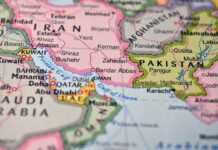
- Trump publicly warned that oil infrastructure remains vulnerable if Iran persists in blockading the Strait of Hormuz, which has driven crude prices to $100 per barrel
- The administration is deploying thousands of additional troops and the USS Tripoli to the Gulf as Iran continues attacks on U.S. facilities and tankers
- Trump called for UK and allied naval support to secure shipping routes, emphasizing burden-sharing over endless American commitments in the Middle East
Trump Takes Direct Action Against Iranian Aggression
President Donald Trump announced Friday night via Truth Social that U.S. forces had “totally obliterated” military installations on Iran’s Kharg Island, a critical chokepoint for the regime’s oil exports. Trump shared video footage of the bombardment, describing it as one of the most powerful military operations in recent history.
U.S. Central Command confirmed strikes on over 90 military targets, while Iranian media reported 15 explosions across the island. The president emphasized that only military sites were destroyed, deliberately sparing oil infrastructure to avoid further destabilizing global energy markets already reeling from Iran’s Strait of Hormuz blockade.
Strategic Escalation in Three-Week Conflict
The Kharg Island strikes mark a significant escalation in the three-week conflict that began in late February 2026 when Iran closed the Strait of Hormuz, crippling global oil supplies. The regime has launched relentless missile and drone attacks on U.S. facilities, including the Baghdad embassy and a Saudi air base, while targeting over 16 commercial tankers.
Recent U.S. casualties include six service members killed in an Iraq refueling crash and five damaged Air Force planes in Saudi Arabia. Trump’s decision to target Kharg Island—Iran’s economic lifeline controlling 90% of crude exports—represents a strategic shift toward pressuring the regime’s survival capabilities rather than engaging in tit-for-tat exchanges.
US President Donald Trump is threatening more strikes on Iran's Kharg Island and pressing allies to send warships to the Strait of Hormuz. Find out more on today's Reuters World News podcast https://t.co/cHInVJgduY pic.twitter.com/E92o8FuoL2
— Reuters (@Reuters) March 15, 2026
Military Buildup and Allied Support Requests
The Pentagon is preparing to deploy thousands of additional troops to the Persian Gulf region, including a Marine expeditionary unit of approximately 2,500 personnel aboard the USS Tripoli.
Trump has publicly called for the United Kingdom and other allied nations to contribute naval vessels to secure shipping lanes through the Strait of Hormuz, reflecting his campaign promises to avoid open-ended Middle East commitments while ensuring allies share security burdens.
Iran has responded with defiant rallies in Tehran led by President Masud Pezeshkian and threats from Hezbollah proxies to turn U.S.-linked facilities to “ashes,” demonstrating the regime’s determination to resist despite mounting military losses.
Economic Warfare and Energy Market Disruption
Iran’s blockade of the Strait of Hormuz has driven benchmark crude oil prices to approximately $100 per barrel, triggering a global energy crisis that threatens economic stability worldwide. Kharg Island serves as Iran’s primary oil export terminal, handling the vast majority of revenue that sustains the regime’s military operations and regional proxy networks.
Trump explicitly warned that continued blockade activities would result in strikes on oil infrastructure itself, a calculated threat designed to force Tehran into reopening shipping lanes.
Experts note this strategy targets what one BBC analyst called Iran’s “beating heart”—the revenue stream funding ballistic missile programs and terrorist proxies that diplomacy failed to address during Geneva talks two weeks prior.
The conflict’s trajectory remains uncertain as Iran shows no signs of capitulating despite U.S. military dominance. Trump stated the war will last “as long as necessary” to achieve objectives, rejecting the prolonged Middle East entanglements that frustrated American voters.
The administration’s approach balances overwhelming force demonstrations with restraint on civilian infrastructure, seeking to compel regime concessions without assuming nation-building responsibilities.
Success ultimately depends on whether military pressure can accomplish what diplomatic intimidation could not—forcing Iran to abandon its nuclear ambitions, ballistic missile expansion, and Strait of Hormuz closure that threatens global commerce and American energy security interests.