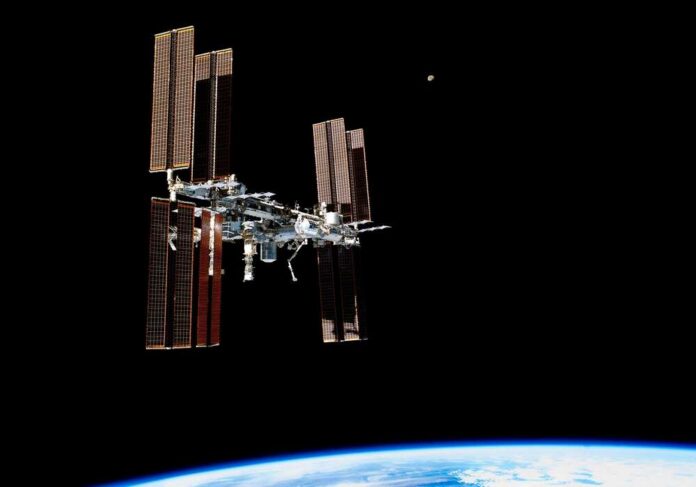
A 1,300-pound NASA satellite plummeted back to Earth after 14 years in orbit, exposing how even well-intentioned government space programs leave Americans vulnerable to falling debris—while taxpayers foot the bill for missions that end with uncontrolled reentries.
Story Snapshot
- NASA’s Van Allen Probe A reentered Earth’s atmosphere on March 10, 2026, after solar activity accelerated its orbital decay by a decade.
- The 1,323-pound spacecraft posed a 1-in-4,200 risk to humans, with NASA and the U.S. Space Force tracking its descent in real-time.
- Most of the satellite burned up during reentry, though dense components like titanium tanks may have survived and landed in the ocean.
- The incident highlights growing concerns about space debris and the lack of mandatory deorbit systems for government-funded satellites.
Solar Activity Speeds Up Satellite’s Demise
NASA’s Van Allen Probe A, launched in August 2012 to study Earth’s radiation belts, reentered the atmosphere around 7:45 p.m. ET on March 10, 2026.
The spacecraft exceeded its two-year mission design, operating until October 2019, when fuel depletion ended its ability to orient toward the sun for power.
Originally projected to remain in orbit until 2034, the satellite’s descent accelerated dramatically due to the 2024 solar maximum. This peak in solar activity expanded Earth’s upper atmosphere, increasing drag on objects in low and medium-Earth orbit and pulling the probe down years ahead of schedule.
1,300-pound NASA satellite re-enters Earth's atmosphere after 14 years in space. https://t.co/TeFeARe9z1
— CBS News (@CBSNews) March 11, 2026
Taxpayer-Funded Mission Ends With Uncontrolled Fall
The Van Allen Probes mission cost American taxpayers hundreds of millions of dollars to map radiation belts that shield Earth from cosmic threats affecting satellites, power grids, and GPS systems.
While the science proved valuable, the mission’s end raises questions about government accountability.
NASA designed the probe without a controlled deorbit system, relying instead on natural orbital decay. This approach left the 1,300-pound spacecraft hurtling toward Earth with no ability to steer it away from populated areas.
NASA reassured the public that most of the satellite would disintegrate at temperatures exceeding 1,500 degrees Celsius, with only dense components, such as titanium tanks, potentially surviving to splash down into the ocean.
Low Risk to Public, High Cost of Government Waste
NASA calculated the risk of debris striking a person at 1 in 4,200—roughly 0.02 percent—with Earth’s 70 percent ocean coverage favoring a water landing.
The U.S. Space Force tracked the reentry through its Space Surveillance Network and coordinated with international partners to alert aviation and maritime operators. While the immediate danger remained negligible, the incident underscores a broader pattern of government inefficiency.
Thousands of defunct satellites and debris now clutter orbit, many from federally funded programs that lack end-of-life disposal plans. This negligence burdens future generations with cleanup costs and collision risks, threatening critical infrastructure that supports national security, communication, and commerce—all while bureaucrats shrug off responsibility for proper stewardship of space.
Space Debris Crisis Demands Accountability
The Van Allen Probe A reentry occurs amid an exploding satellite population, driven by commercial ventures like SpaceX’s Starlink alongside government programs.
Aerospace experts note that atmospheric drag from solar maxima is predictable for unpropelled satellites, yet NASA failed to incorporate affordable deorbit propulsion into the probe’s design.
This oversight reflects a government mindset prioritizing upfront mission goals over long-term consequences—a pattern conservatives recognize from decades of fiscal mismanagement. The probe’s twin, Van Allen Probe B, remains in orbit until approximately 2030, setting up another uncontrolled reentry.
Industry leaders now push for “design-for-demise” standards requiring self-deorbit capabilities and materials that burn up completely, protecting Americans from avoidable hazards caused by government shortcuts.
Lessons for Limited Government and Innovation
The Van Allen mission delivered critical data on space weather that still informs forecasts protecting communications, GPS, and power systems worth trillions of dollars.
However, its uncontrolled end illustrates why bloated government agencies resist common-sense solutions. Private-sector innovators already demonstrate superior space stewardship through reusable rockets and planned satellite disposal, in sharp contrast to NASA’s “throw-it-up-and-hope” approach.
As President Trump’s administration works to streamline federal operations, NASA’s debris problem demands attention. Mandating deorbit systems for all federally funded spacecraft protects American families from falling junk while holding bureaucrats accountable for waste.
Space exploration should inspire confidence, not anxiety about government-created hazards raining down from orbit—a principle rooted in responsible stewardship and respect for taxpayers who fund these missions.
Sources:
1,300-Pound NASA Satellite To Fall From Orbit, Re-Enter Earth’s Atmosphere
1,300-pound satellite expected to re-enter Earth’s atmosphere tonight
NASA Satellite Set for Fiery Earth Reentry
NASA satellite crash alert: 1300-pound spacecraft set for fiery reentry