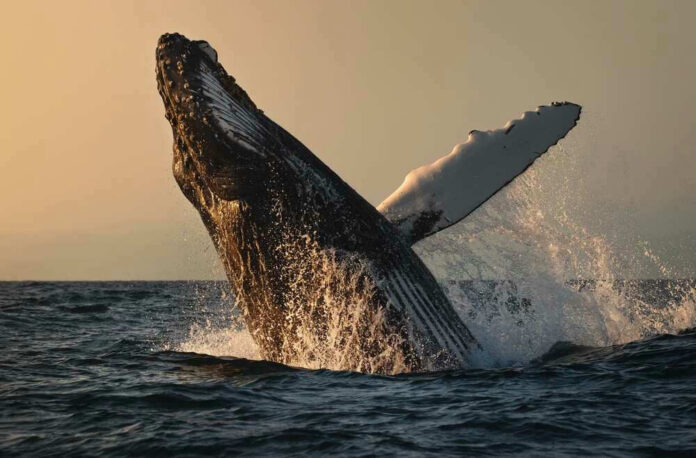
Rescuers in Germany abandoned all hope for a humpback whale trapped in the inhospitable Baltic Sea, choosing nature’s course.
Story Snapshot
- Humpback whale repeatedly stranded despite initial rescue success, now expected to die near Poel island.
- Baltic Sea’s low salinity, lack of food, and skin disease doomed the whale’s survival prospects.
- Experts shifted to “maximum rest and respect for nature,” halting active efforts to avoid prolonging suffering.
- Incident gripped German public but highlights limits of human intervention.
Rescue Timeline Unfolds
The humpback whale first stranded in late March 2026 at the Timmendorfer Strand resort town. Rescuers used an excavator to dig an escape channel after waves failed to free it.
Friday, the whale swam through the channel and escaped temporarily. Saturday, it re-stranded near Wismar, 50 kilometers east. By this week, it entered a Poel island inlet and stuck again. German coast guard and fire departments led operations amid public fascination.
Environmental Mismatch Seals Fate
Humpback whales belong in the Atlantic Ocean, not the Baltic Sea, which lacks sufficient salinity for their physiology. Experts theorize that the likely male whale chased herring shoals off course. Nutrition scarcity and observed skin disease accelerated the decline.
Survival demanded hundreds of kilometers through German and Danish waters back to the open ocean. Such misplacements underscore nature’s boundaries, where human habitats encroach on wild realms without mercy.
A young humpback whale, named Timmy by rescuers, was struggling to find its way out of shallow bays off the Baltic coast of Germany after a week-long ordeal that has put its survival in doubt pic.twitter.com/rmrkcAPLwY
— Reuters (@Reuters) March 29, 2026
Experts Call Off the Effort
Moreover, the scientific director, Burkard Baschek of the Ocean Museum in Germany, declared that the whale would die in place. Drone footage showed irregular breathing, minimal movement, and unresponsiveness.
Rescuers switched from intervention to providing quiet, using boats sparingly to nudge escape. Baschek noted that the whale’s weakness surpassed that of prior escapes, worsened by falling water levels. Mecklenburg-Pomerania Environment Ministry oversaw the shift.
Greenpeace confirmed re-stranding, aligning with the consensus that further action risked added stress without viable outcomes. Baschek emphasized respecting nature’s limits over futile prolongation.
Lessons from a Doomed Struggle
The saga captivated German media and public with live updates, yet ended in acceptance of inevitable loss. In the short term, the whale faces death in the Poel inlet. Long-term, it prompts a review of rescue protocols and questions ocean shifts pushing species astray.
Conservation groups like Greenpeace and officials gained hard-earned wisdom on when to withdraw. This case reminds conservatives of timeless truths: nature defies overreach, much like bloated bureaucracies fail against unyielding realities.
Sources:
Rescuers lose hope for the humpback whale stranded in the Baltic Sea
Rescuers give up hope for humpback stranded in Baltic Sea
Rescuers lose hope for the humpback whale stranded in the Baltic Sea
Humpback whale freed by rescuers in Baltic Sea has become stranded again