
Iran’s calculated assault on Gulf energy infrastructure marks a dangerous escalation that threatens global oil supplies and exposes how the Biden administration’s appeasement emboldened Tehran’s aggression before President Trump could restore deterrence.
Story Snapshot
- Iranian drones struck a UAE-registered tanker near the Strait of Hormuz and hit facilities near Dubai International Airport, wounding four civilians in brazen retaliation attacks
- Iran’s Foreign Minister accused the UAE of hosting US strike operations against Iran’s Kharg Island oil terminal, threatening further energy infrastructure assaults across the Gulf
- The International Energy Agency released 400 million barrels from strategic reserves as Qatar halted LNG production and Saudi refineries shut down amid the crisis
- Tehran’s weaponization of energy choke points aims to fracture US alliances by imposing economic pain on Gulf states hosting American military bases
Iran Strikes Energy Assets in Coordinated Retaliation
Iranian Revolutionary Guard Corps forces launched drone attacks on the UAE-registered tanker Athena Nova near the Strait of Hormuz on March 1-2, part of coordinated strikes targeting energy infrastructure across the Gulf region.
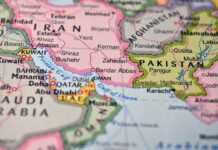
The Islamic Republic simultaneously hit critical facilities at Ras Tanura in Saudi Arabia and Ras Laffan in Qatar, disrupting liquefied natural gas production and threatening the waterway through which 20 percent of global oil transits daily.
Iranian Foreign Minister Seyed Abbas Araghchi justified these attacks by accusing Washington of launching strikes on Iran’s Kharg Island oil terminal from UAE territory, specifically from Ras Al-Khaimah and locations near Dubai.
Iran targets UAE energy infrastructure as gas field set ablaze, tanker struck near Strait of Hormuz https://t.co/y52BJ4n968
— CNBC (@CNBC) March 17, 2026
UAE Faces Direct Threats as Regional Proxy Conflict
Drone strikes near Dubai International Airport on March 2 wounded four people and ignited blazes at a residential tower, bringing the conflict directly to civilian areas in one of the region’s most prominent commercial hubs. Iran’s threats to force evacuations of UAE ports underscore Tehran’s strategy of targeting US allies who provide basing rights for American military operations.
The UAE has denied Iranian accusations of complicity in strikes against Iranian territory, yet finds itself caught between maintaining its security partnership with the United States and avoiding becoming a direct target in an escalating regional war that threatens its economic stability and civilian population.
Global Energy Markets Reel From Supply Disruptions
The International Energy Agency executed its largest-ever emergency oil release of 400 million barrels as Qatar declared force majeure on LNG shipments and multiple Saudi refinery units shut down operations. Oil prices surged as shipping companies hesitated to traverse waters where the Iranian military claimed to have closed the Strait of Hormuz and threatened additional vessel strikes.
Energy giants including Aramco, QatarEnergy, and Chevron faced production halts while Israel closed its Leviathan gas fields in response to the widening conflict. This economic warfare strategy exploits global dependence on Gulf energy supplies, creating inflationary pressures that ripple through supply chains worldwide and demonstrate the vulnerability created by insufficient American energy dominance.
Trump Administration Inherits Biden’s Appeasement Consequences
The current crisis stems from years of failed Obama-Biden policies that enriched Tehran through sanctions relief while tolerating Iranian aggression across the Middle East through proxy forces.
The Trump administration’s return comes as this appeasement strategy collapsed into open warfare following US-Israeli strikes on February 28 that killed Iran’s Supreme Leader Ali Khamenei, triggering retaliatory waves targeting American allies.
President Trump now faces the challenge of reestablishing deterrence against an emboldened Iranian regime that spent years building asymmetric warfare capabilities with drone and missile arsenals specifically designed to target energy infrastructure. This situation validates conservative warnings that weakness invites aggression and that energy independence remains essential to national security and economic prosperity.
Regional Stability Threatened by Iranian Economic Warfare
Iran’s parliament leadership declared there would be no regional calm while US military bases operate in Gulf states, explicitly linking attacks on energy facilities to America’s forward presence. The Soufan Center intelligence analysis confirmed these strikes represent deliberate escalation designed to impose costs on US allies and fracture coalition support through economic pain.
Amnesty International called for all parties to cease unlawful attacks on energy infrastructure that risk civilian casualties and environmental damage, while Bahrain’s UN ambassador condemned Iran’s “egregious” actions threatening global trade.
The strategy exposes how adversaries exploit energy choke points to undermine American interests, reinforcing the imperative for robust military deterrence and strategic energy policies that reduce vulnerability to hostile actors controlling critical supply routes.
Sources:
IntelBrief: Iran escalates energy infrastructure strikes across Gulf region – The Soufan Center
Middle East: Stop unlawful attacks on energy infrastructure – Amnesty International
Iran keeps up pressure on oil infrastructure as concerns of global energy crisis grow – WTOP
Iran continues strikes on Gulf states day after US threatens oil facilities – Euronews