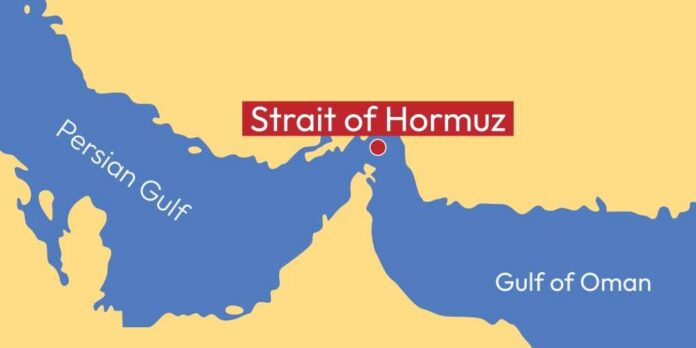
The United States has resumed powerful strikes on Iran after tanker attacks in the Strait of Hormuz, pushing a fragile ceasefire to the edge of collapse.
Story Snapshot
- U.S. Central Command says Iran attacked three commercial vessels in the Strait of Hormuz, breaking the ceasefire.
- American forces answered with “powerful strikes” on Iranian missile, drone, air defense and naval assets.
- Iran denies direct responsibility for some ship attacks and claims the United States is the real treaty violator.
- The clash fits a larger pattern of low-level maritime conflict that keeps war hot without going total.
U.S. Strikes Cast Tanker Attacks As Clear Ceasefire Violation
U.S. Central Command says this latest wave of strikes began after Iran targeted three commercial vessels transiting the Strait of Hormuz, including the Singapore-flagged cargo ship Ever Lovely on June 25. American officials call those attacks a “clear violation” of the ceasefire deal that was supposed to keep this key waterway open to normal shipping.
Central Command framed the response as a “series of powerful strikes” meant to impose “heavy costs” on Iran for hitting ships crewed by civilians in international waters.
Central Command’s first release after the Ever Lovely attack said U.S. aircraft hit Iranian missile and drone storage locations and coastal radar sites along the Strait of Hormuz and near Qeshm Island.
A second round of strikes followed Iran’s drone attack on another tanker, M/T Kiku, on June 26, with U.S. military aircraft expanding the target set to include surveillance infrastructure, communication systems, air defense sites, drone storage, and minelayer capabilities.
Officials describe these actions not as new offensives, but as direct retaliation for “continued Iranian aggression against commercial shipping.”
What Was Hit And Why It Matters For Maritime Power
The July 7 operation went further, with Central Command saying U.S. forces hit more than 80 Iranian targets after the three-vessel incident. Those included air defenses, radar sites, anti-ship missile locations, and over 60 small boats used by Iran’s Revolutionary Guard for fast attack tactics.
A U.S. official also pointed to strikes on coastal surveillance, surface-to-air missile systems, drone launch sites, and port facilities, suggesting a broad attempt to weaken Iran’s ability to threaten traffic through the strait. This shows Washington is not just answering one attack; it is trying to reshape the whole risk picture for shipping and for Iran’s navy.
BREAKING: U.S. Central Command says American forces launched a new wave of strikes Tuesday, hitting more than 80 targets across Iran after Tehran’s latest attacks on commercial vessels in the Strait of Hormuz. The operation targeted Iranian air defenses, command-and-control… pic.twitter.com/cqiZ3wNsMt
— Breaking911 (@Breaking911) July 8, 2026
The Ever Lovely case matters because it undercuts Iran’s public claim that a vessel ignored warnings and used unauthorized routes. Reports say the cargo ship was following a route recommended by United Kingdom Maritime Trade Operations, and the owner’s account backs that up.
If a ship is on the accepted track and still gets hit, the U.S. narrative of “unwarranted aggression” gains weight. For Americana who see free navigation and honest commerce as non‑negotiable, this looks less like a gray-area skirmish and more like a clean test: Is Iran allowed to bully civilian shipping in a vital trade lane and call it regulation?
Iran’s Narrative And The Built-In Ambiguity Of This War
Iranian state media did not clearly claim responsibility for all three tanker attacks. Coverage emphasized that one vessel ignored warnings, and reported that Iranian naval forces struck U.S. targets only in response to earlier American action.
Tehran insists it has the right to control shipping in the strait and warns Gulf states not to side with Washington, casting itself as a defender of regional rules against U.S. interference. Its foreign ministry now calls the United States a “treaty-breaking regime,” accusing Washington of blowing up key parts of the ceasefire with new strikes and renewed oil sanctions.
This dispute plays out inside a wider pattern that has defined the 2026 Iran war: low-intensity maritime coercion in the Strait of Hormuz. Iran fires drones, missiles, and uses fast boats to test limits, while the United States answers with “retaliatory” strikes that are big enough to hurt but calibrated to stop short of full-scale war. Attribution is often fuzzy by design.
Earlier clashes in May saw both sides trade fire and then argue over how much damage was done. That base level of ambiguity lets Iran posture as the victim and lets critics of U.S. policy paint every response as escalation, even when civilian shipping is clearly in the crosshairs.
Ceasefire Frays, Markets Shudder, And Allies Hedge
The United States did not just fire missiles; it also clawed back a key concession by reimposing limits on Iranian oil sales right as these new strikes began. That combination hits Iran’s wallet and its military at the same time, a move many hawks see as overdue pressure after months of harassment in the strait.
Iran answered by targeting sites in Bahrain and Kuwait, widening the battlefield and putting more U.S.-aligned states at risk. Each cycle of strike and counterstrike pulls more actors into a conflict that was supposed to be cooling down.
Global oil markets reacted almost instantly, with reports of price spikes as traders watched the strait’s stability wobble yet again. NATO allies remain divided. Some European governments are more focused on Russia and are slow to line up behind U.S. moves against Iran, especially when Iranian media and some Western outlets highlight Tehran’s denial of direct responsibility for the tanker hits.
That leaves Washington in a familiar spot: carrying the burden of keeping sea lanes open, juggling military risk, economic shock, and a media narrative that often blurs the line between justified defense and “American aggression.”
The core question is simple: if Iran keeps testing the rules with drones and missiles against civilian ships, how long can the world afford to pretend this is anything but deliberate coercion?
Sources:
cnbc.com, cbsnews.com, centcom.mil, reuters.com, youtube.com, bbc.com, facebook.com