

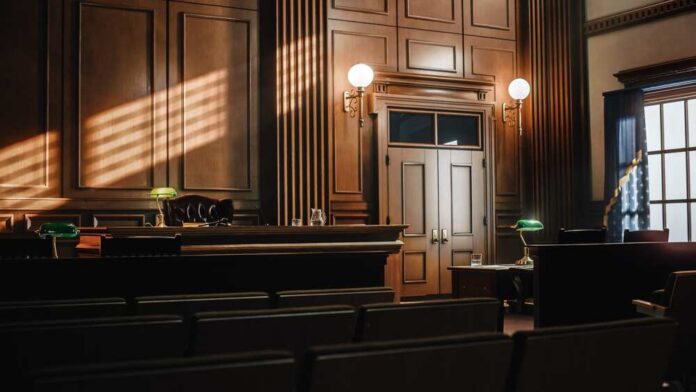
A once-private Hollywood family tragedy is now a public courtroom test of whether California’s justice system can move quickly and credibly when the stakes include two brutal deaths and a possible capital case.
Quick Take
- Nick Reiner pleaded not guilty on Feb. 23, 2026, to murder charges in the stabbing deaths of his parents, Rob and Michele Reiner.
- Prosecutors filed special-circumstances allegations, making the case potentially eligible for the death penalty, though the district attorney has not decided whether to seek it.
- The killings allegedly occurred Dec. 14, 2025, inside the family’s Brentwood home; a daughter reportedly discovered the bodies about 12 hours later.
- Authorities arrested Reiner the night of the killings near a South L.A. gas station, according to reporting on the case timeline.
- Proceedings have already faced delays tied to the review of extensive records, and the next court date is set for April 29, 2026.
Not-Guilty Plea Locks In the Next Phase of a High-Profile Case
Nick Reiner, the son of filmmaker Rob Reiner and Michele Reiner, entered a not-guilty plea during an arraignment hearing on Feb. 23, 2026, in Los Angeles Superior Court.
Reporting on the hearing said he appeared in jail clothing and acknowledged routine procedural waivers as the court set the next appearance for April 29.
Prosecutors have charged him with murder under special-circumstances allegations, a charging posture that can make a case death penalty eligible under California law.
Los Angeles County District Attorney Nathan Hochman has not yet decided on whether to seek the death penalty, and he indicated the case is not moving toward a preliminary hearing immediately.
The court calendar reflects a familiar tension in major cases: the public wants clarity and accountability, while the justice system often moves at the speed of evidence processing, motions, and scheduling. For families watching from the outside, those delays can feel like another layer of unresolved grief.
What Investigators Say Happened in Brentwood
According to the reported timeline, the stabbings occurred in the early morning hours of Dec. 14, 2025, inside the master bedroom of the family’s Brentwood home. About 12 hours later, the victims’ daughter reportedly discovered the bodies.
Later that same night, Los Angeles police arrested Nick Reiner near a gas station in South Los Angeles. Public reporting has described an argument shortly before the incident, but an official motive has not been publicly detailed beyond that.
Rob Reiner, 78, was known for major films including When Harry Met Sally…, Stand by Me, and This Is Spinal Tap, and Michele Reiner, 70, met him through the film world.
Brentwood is a high-profile neighborhood, but violent crime can reach any zip code, and celebrity status does not insulate a family from the consequences of addiction, mental health collapse, or domestic conflict. The case’s notoriety should not distract from the basic question: what evidence supports the state’s charges.
Nick Reiner, the 32-year-old charged with two counts of first-degree murder in connection with the fatal stabbing of his parents, famed director Rob Reiner and photographer Michele Singer Reiner, pleaded not guilty in a Los Angeles courtroom on Monday. https://t.co/crN4MJofoW
— WPSD Local 6 (@WPSDLocal6) February 23, 2026
Attorney Turnover and the Slow Grind of Court Delays
The defense team has already shifted. High-profile attorney Alan Jackson withdrew in January 2026, citing circumstances beyond his and Reiner’s control, and the Los Angeles County Public Defender’s Office took over representation, with Deputy Public Defender Kimberly Greene identified as a key attorney on the case.
Greene did not comment to reporters about potential defenses, and public reporting indicates no formal claims have been made in court about an insanity plea or similar mental-health strategy.
Delays before arraignment were attributed to the review of extensive records, an explanation prosecutors have also emphasized. That may be routine in complex homicide cases, but it also underscores a broader public concern about whether large jurisdictions can handle major prosecutions efficiently.
For a conservative audience that values order and equal justice, the priority is straightforward: move methodically, but do not let bureaucratic drag substitute for resolution—especially when the allegations involve two deaths and special-circumstances charges.
Mental Health and Addiction History: Relevant, But Not a Verdict
Public reporting has linked Nick Reiner to long-documented struggles involving addiction and mental health, including his work with his father on Being Charlie (2015), a semi-autobiographical film centered on addiction and recovery.
Reports also said he lived in a guesthouse on the family property and had previously caused destruction there. Those facts may become relevant in sentencing arguments or in the defense’s approach, but they do not, on their own, prove or disprove the charged conduct.
At this stage, the strongest confirmed facts are procedural: a not-guilty plea has been entered, special-circumstances allegations are on the table, and the district attorney’s decision about capital punishment remains pending.
Until a preliminary hearing or other evidentiary proceeding clarifies what prosecutors intend to show, the public is left with limited verified detail on motive and the underlying confrontation. That lack of clarity is exactly why timely court transparency matters in a case this serious.
The next milestone is April 29, 2026, when the case returns to court, and the path toward a preliminary hearing may be clarified. Californians will also be watching how Hochman approaches the death penalty question, because a decision either way carries political and moral weight in a state that has long wrestled with capital punishment.
Whatever one thinks of Hollywood, the principle should be the same for everyone: due process for the accused, and firm, transparent accountability if the charges are proven.
Sources:
https://www.latimes.com/california/story/2026-02-23/nick-reiner-murder-charges-arraignment-hearing