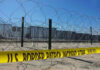


Eighteen Ebola patients are now missing after an angry mob stormed a treatment tent in eastern Congo, set it on fire, and scattered into a region already hemorrhaging from one of the worst Ebola outbreaks in years.
Story Snapshot
- A second Ebola treatment center in eastern Congo was burned by residents within days of the first attack, sending 18 suspected patients fleeing into the surrounding community.
- The attack was triggered after family members were denied access to retrieve a loved one’s body, a standard Ebola burial protocol that locals interpreted as disrespect and coercion.
- The World Health Organization (WHO) had already declared the outbreak a public health emergency of international concern, with 671 suspected cases and 160 suspected deaths reported.
- Burials in the region were being conducted under armed escort due to escalating community resistance, a detail that tells you everything about how completely trust had collapsed.
A Deadly Outbreak Meets a Furious Community
Eastern Congo’s Ebola outbreak was already a crisis before the fires started. Congolese authorities reported 671 suspected cases and 160 suspected deaths across two provinces, and WHO warned the real numbers were likely higher. [1]
Health workers on the ground described dire shortages of supplies and staff. [1] The disease spreads through contact with bodily fluids including blood, vomit, and feces, making isolation facilities not a bureaucratic preference but a hard biological necessity. [1] The treatment tents were not symbolic. They were the frontline.
The Rwampara health center had set up tented wards with eight beds specifically dedicated to Ebola response. [2] That is not a large operation by any standard, but in a fast-moving outbreak with overwhelmed infrastructure, eight isolation beds represent lives that do not spread the virus further. When the mob arrived, those beds burned. And 18 people carrying a disease with no guaranteed cure walked out into the open population.
The Spark That Lit the Tent
The attack was not random. A grieving father came to retrieve his son’s body and was turned away. What followed was stones, then fire. The father later told reporters: “We came to bury my son. They started throwing stones and set fire to the tents, and my son’s body was left burned there.” [2]
That account is both heartbreaking and clarifying. The conflict was not about Ebola being fake. It was about a family being told they could not bury their dead the way their community had buried the dead for generations.
Health authorities attributed the violence to local youth who “do not understand the reality of this disease.” [2] That explanation is medically accurate yet politically tone-deaf.
Secure burial protocols exist because Ebola-laden bodily fluids remain infectious after death. But telling a father he cannot touch his son’s body, enforced by armed escorts, is the kind of intervention that shatters community trust faster than any pathogen. The clinical rationale and the human cost of enforcing it were on a collision course, and nobody defused it in time.
When the Response Becomes the Enemy
Two of three Ebola treatment centers in the region had now been burned by the time this second attack occurred. [3] That is not a coincidence or a one-off act of grief.
That is a pattern, and patterns in public health carry their own mortality rate. Every burned tent is a gap in the containment perimeter.
Every escaped patient is a potential link in a transmission chain that contact tracers must now race to reconstruct. The disease does not pause while communities process their anger.
🚨18 EBOLA PATIENTS ESCAPE AFTER ANGRY MOB STORMS HOSPITAL AND SETS TREATMENT TENT ON FIRE
Young men stormed Mongbwalu General Hospital in eastern DR Congo, demanding the bodies of relatives who died from Ebola.
They set a treatment tent on fire, forcing staff to evacuate… pic.twitter.com/LlHW2d5ekQ
— NewsForce (@Newsforce) May 25, 2026
What makes this situation genuinely difficult, rather than simply tragic, is that both sides of the conflict had legitimate stakes. Ebola isolation and controlled burial are not colonial impositions invented to humiliate grieving families. They are the specific interventions that stopped previous outbreaks from becoming continental catastrophes.
But legitimacy without trust is just coercion with better paperwork. When communities watch armed soldiers escort their neighbors’ bodies to unmarked graves, the public health argument, however sound, loses the room entirely.
The lesson from eastern Congo is not that communities are irrational. It is that outbreak response without community buy-in is infrastructure waiting to be burned.
Sources:
[1] Web – Residents burn an Ebola treatment center in Congo as anger grows …
[2] Web – 18 Ebola patients flee as second treatment tent is set on fire in …
[3] YouTube – Angry residents burn a second Ebola treatment center in eastern …