
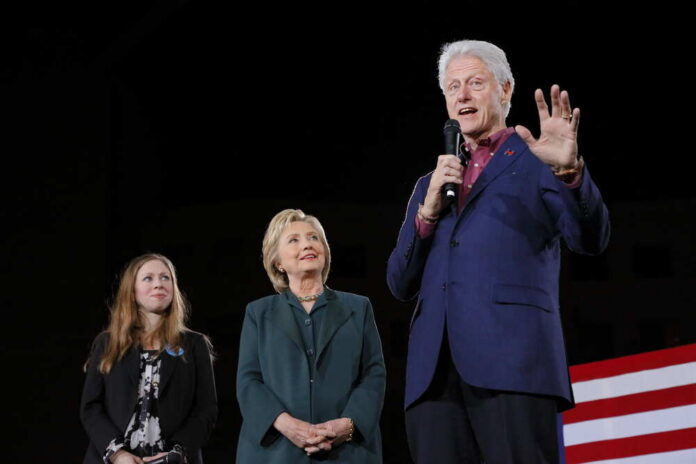
On America’s 250th birthday, Bill Clinton used the moment to take a public shot at the people currently running the country.
Story Snapshot
- Clinton posted a July 4, 2026 message calling out “people in charge” as America marked its 250th anniversary.
- He acknowledged “deep division” and “renewed questions about America’s future” while still saying the country’s best days are ahead.
- His message urged Americans to look left and right, embrace the moment, and stay united.
- Conservative commentators fired back, with some accusing him of “crapping all over America” on its birthday.
What Clinton Actually Said on July 4
Clinton posted his remarks on social media as part of the America250 celebration marking the country’s semiquincentennial. His message did not name names. It pointed at “people in charge” as the source of the division he described.
He called the moment one of “renewed questions about America’s future and role in the world.” Then, in the same breath, he said America’s best days are still ahead. That is not the language of someone trying to burn the house down.
Bill Clinton calls out 'people in charge' in July Fourth message https://t.co/ZpA1JKWpUY
— Bo Snerdley (@BoSnerdley) July 5, 2026
The most quoted line from his post reads: “Turn to your left, turn to your right. Embrace this moment.” That is a call to community, not a call to arms. Whatever you think of Clinton’s record or his motives, the words themselves lean forward, not backward. Critics who read that as an attack are working hard to get there.
Why “People in Charge” Is a Pointed but Fair Target
Clinton did not say America is broken. He said the people running it right now are making things harder. That is a real distinction. Critiquing leadership is not the same as trashing the country.
Abraham Lincoln used his own July 4 message to Congress in 1861 to challenge the direction of the nation’s leadership during its worst crisis. Former presidents have always used national milestones to weigh in. That is not new, and it is not radical.
Clinton’s record gives him standing here that most critics lack. He worked across the aisle, balanced the federal budget, and left office with a strong economy.
You do not have to like the man to admit that his critique of current leadership comes from someone who has actually governed. That context matters when judging whether the words are cheap shots or something more serious.
The Bigger Pattern Worth Noticing
This back-and-forth follows a pattern that repeats every election cycle and every major national anniversary. A Democratic former president speaks. Conservative media calls it an attack on American values. Liberal media calls it a brave truth-telling moment.
Almost nobody reads the actual words. Media framing shows that partisan outlets consistently reshape political messages to match what their audience already believes, regardless of what was actually said. The message becomes whatever the outlet needs it to be.
That is the real story here. Clinton said something measured, forward-looking, and deliberately unifying in its language. The reaction split entirely along partisan lines before most people had read past the headline.
At 250 years old, America deserves a better class of political debate than that. Whether Clinton’s critique lands or not, the reflex to skip the argument and go straight to the insult says more about the current moment than anything Clinton wrote.
Sources:
twitchy.com, abcnews.com, instagram.com, millercenter.org, youtube.com, facebook.com