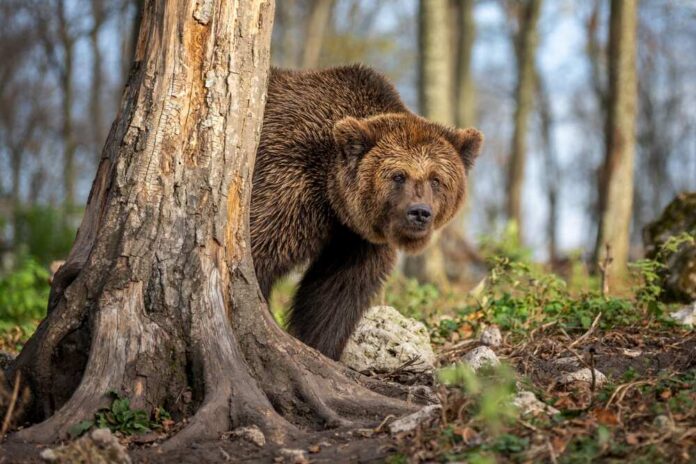
Yellowstone’s first grizzly bear of 2026 emerges five days early, feasting on a bison carcass and signaling potential risks to backcountry adventurers who cherish America’s wild heritage.
Story Snapshot
- Park biologists confirmed a male grizzly scavenging a bull bison carcass on March 9 in northern backcountry, the official first sighting of the year.
- Event beats 2025’s first sighting by five days, aligning with typical early March emergence despite a warm winter.
- National Park Service warns of aggressive bear behavior at food sources, urging bear spray and distance for safety.
- Distinguishes from unconfirmed January video, emphasizing official monitoring for public protection.
- Healthy grizzly population over 1,000 in the ecosystem supports conservation efforts without overreach.
First Official Sighting Confirmed
Yellowstone National Park biologists observed a grizzly bear on March 9, 2026, feeding on a bull bison carcass in the northern backcountry. The park issued a news release on March 10 confirming this as the first official sighting of the year. This male bear, likely emerging from hibernation, sought post-winter nutrition from a winter-killed animal. Park spokesperson Linda Veress highlighted the timing as typical for boars, which exit dens in early March ahead of females with cubs.
Distinction from Unverified January Report
A January 26 video captured by wildlife photographer Rob Harwood showed a possible grizzly in Lamar Valley, drawing expert attention from bear biologist Frank van Manen as potentially the earliest on record. Park officials did not confirm or track this sighting, classifying the March 9 observation as the first verified event. The unconfirmed video sparked discussion but lacked biologist follow-up, underscoring the need for official validation in remote areas.
Safety Warnings for Outdoor Enthusiasts
Bears at carcasses defend food aggressively, according to National Park Service guidelines. Visitors must carry bear spray, hike in groups, and maintain 100 yards distance. Custer Gallatin National Forest enforces food storage orders from March 1 to December 1 in adjacent areas. Winter park closures limit general access to snowmobile and snowcoach users, reducing encounters. These measures protect both wildlife and Americans enjoying public lands responsibly.
Thawed winter-killed bison and elk attract multiple bears, raising inter-bear conflict risks as more emerge. The park promotes self-reliance with tools like bear spray over dependency on rangers, aligning with conservative values of personal responsibility in nature.
First grizzly bear of 2026 spotted at Yellowstone, feeding on bison carcass https://t.co/klYjkHDNTV
— CBS Sunday Morning 🌞 (@CBSSunday) March 11, 2026
Historical Patterns and Population Health
First sightings typically occur early to mid-March: March 14 in 2025, March 3 in 2024, and March 7 in 2022-2023. An abnormally warm 2025-2026 winter may influence activity, yet the March 9 event fits norms. Over 1,000 grizzlies thrive in the Greater Yellowstone Ecosystem, indicating robust populations. Experts like Montana Fish, Wildlife and Parks’ Lori Roberts note grizzlies as light sleepers, active even in dens during mild conditions.
Sources:
Yellowstone Confirms First Grizzly Sighting of 2026
Yellowstone records first grizzly bear sighting of 2026, five days ahead of last year’s first spot
Yellowstone’s First Grizzly Of 2026 Spotted Feasting On A Bison
Local Lookout: Yellowstone spots first griz in 2026; farm annexation stalls; police officer resigns